

E-bike with chain or belt drive: What costs really arise in everyday use?
A chain drive is affordable, versatile, and repairable almost anywhere, but requires regular maintenance; a belt drive stays cleaner and requires less maintenance, but requires a suitable bicycle design and usually involves higher upfront costs.
How do chain and belt drives differ?
For this guide, I first separated two things that are often mixed up in everyday use: the drive transfers pedal power, while the gearing determines the gear ratio. A chain can be combined with derailleur systems such as the Shimano 7-Gang-Schaltung on the C10. A belt, by contrast, typically runs with an internally geared hub or a gearbox and requires a frame designed for this purpose.

Chain drive: flexible and widely available
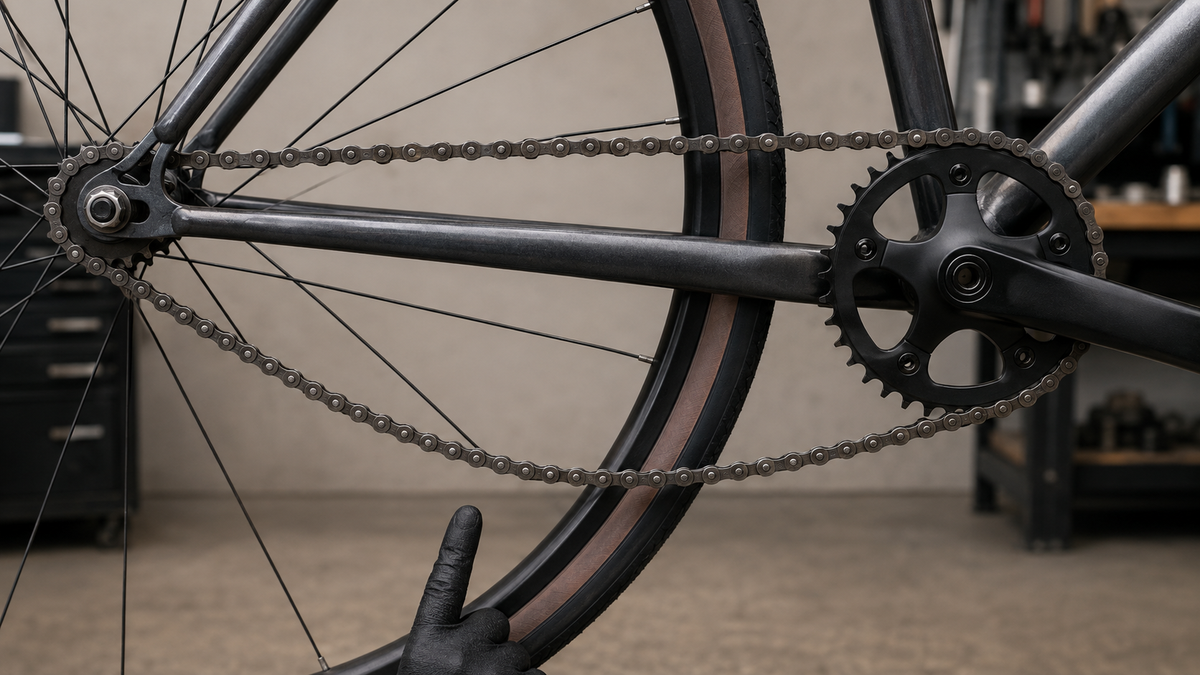
A bicycle chain is an open metal system. This makes it affordable, easy to replace, and compatible with many gear ratios. At the same time, water, dust, and road dirt reach the rollers, sprockets, and chainring directly.
- Replacement parts are available almost everywhere.
- A derailleur gear system offers multiple gears with manageable weight.
- Care and wear checks are part of regular operation.
Belt drive: clean, quiet, and more demanding in terms of design
A modern bicycle belt uses tensile fibers and runs on special pulleys. It needs no chain oil and does not rust. However, the belt line and tension must be correct, and the frame must allow the installation of a closed belt.
- No lubricant and less dirt on clothing.
- Usually combined with hub or internal gearing.
- Components and workshop expertise are less universally available.
What costs actually arise?
A reliable cost calculation does not begin with a flat per-kilometer price. Mileage, rain, road salt, storage location, rider weight, motor assistance, and maintenance can significantly affect wear. That is why I compare types of costs here rather than inventing annual amounts.
| Cost factor | Chain drive | Belt drive |
|---|---|---|
| Purchase | Usually less expensive; many bicycle and gearing options are available. | Often more expensive because the belt, pulleys, frame, and compatible gearing are designed as a system. |
| Ongoing maintenance | Cleaner, brush, cloth, and suitable chain oil; more frequently in wet conditions. | Remove dirt with water and a soft brush; do not lubricate according to Gates' specifications. |
| Wear parts | Replace the chain first; if replacement is delayed, the cassette and chainring may wear more quickly as well. | Belt and pulleys are matched components; correct tension and alignment are crucial. |
| Workshop | Almost any bicycle workshop can inspect the chain and gears. | Depending on the system, specific tools or experience with belt tension may be required. |
| Breakdown while traveling | Chains and master links are often available at short notice in many places. | The right belt is more specialized; when traveling, planning is worthwhile. |
| Cleanliness | Oil and road dirt can soil clothing or storage areas. | No chain oil; convenient for apartments, offices, or motorhomes. |
The most common calculation error: comparing only the chain and belt. Total costs also include the gears, sprockets or pulleys, frame design, access to a workshop, and the time you spend on maintenance.
What does the chain drive mean for the Cyseekin C10?
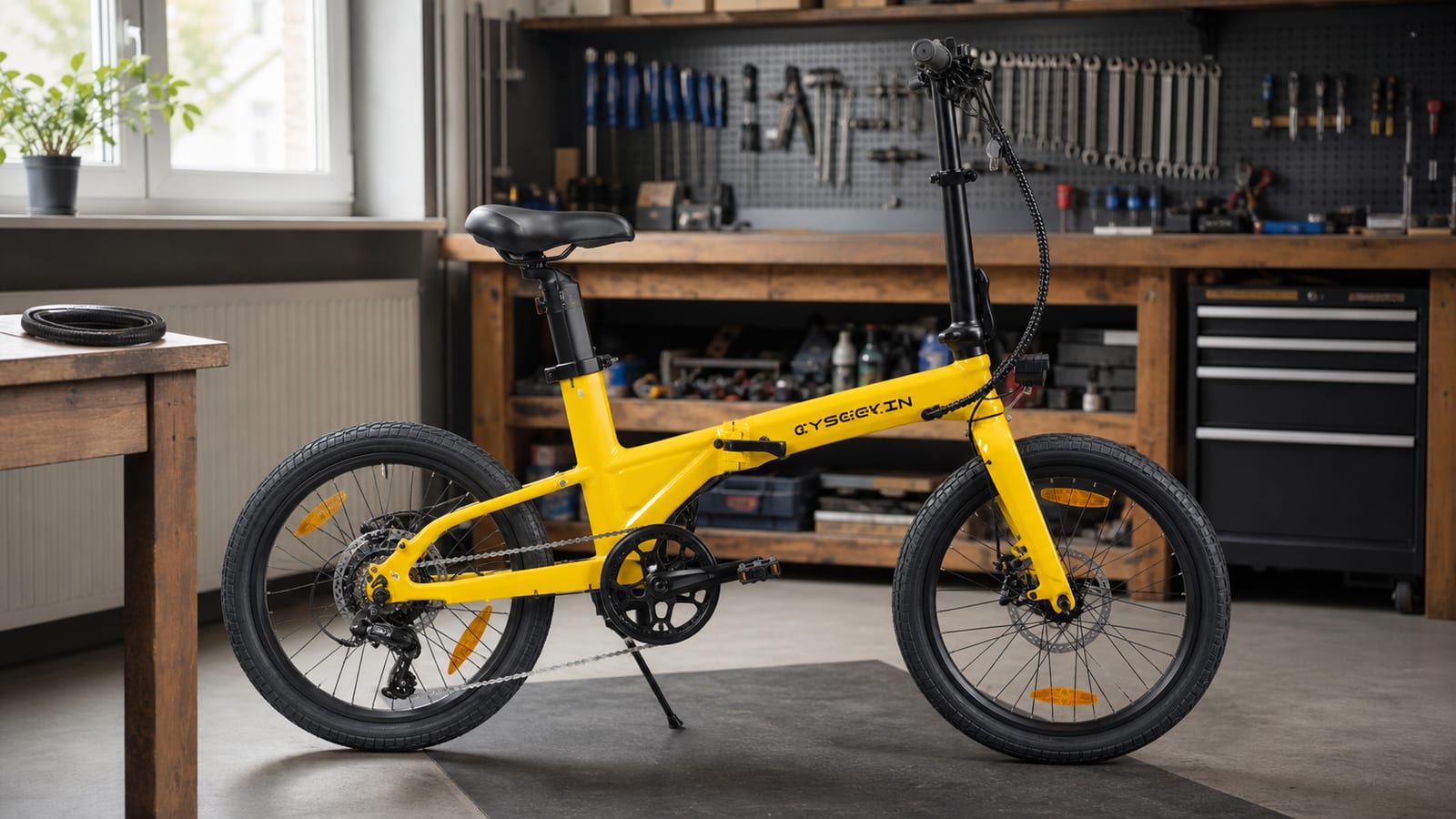
According to the current product specifications, the C10 is a lightweight, compact 20-inch folding e-bike weighing 18.6 kg, equipped with Shimano 7-Gang-Schaltung. This exact combination explains why a chain drive makes sense: several practical everyday gear ratios, a manageable system weight, and readily available replacement parts suit a bike designed for the city, car, motorhome, and flexible travel.
It is important to have the right expectations. The C10 does not have a belt drive, and a belt is not a component that can simply be fitted like a new chain. A frame for an enclosed belt usually requires an opening or a special construction; in addition, the gears, pulleys, belt line, and tension would all need to be compatible. Anyone specifically wanting to ride with a belt should therefore choose a bike designed for it ex works.
Why the C10 chain is practical
- Shimano 7-Gang-Schaltung for changing urban routes.
- Repairs and replacements are possible in many workshops.
- The open system can be visually inspected and specifically maintained.
What owners should plan for
- Do not leave it unattended for weeks after riding in the rain or through dirt.
- Lubricate the chain sparingly and wipe off excess oil.
- Check wear in good time to protect the sprockets and chainring.
How to keep the running costs of an e-bike chain low
The cheapest chain is not the one that is never replaced, but the one that is maintained in good time and replaced when worn. A severely stretched chain wears into the sprockets and chainring; a small wear item then turns into a more extensive drivetrain repair.
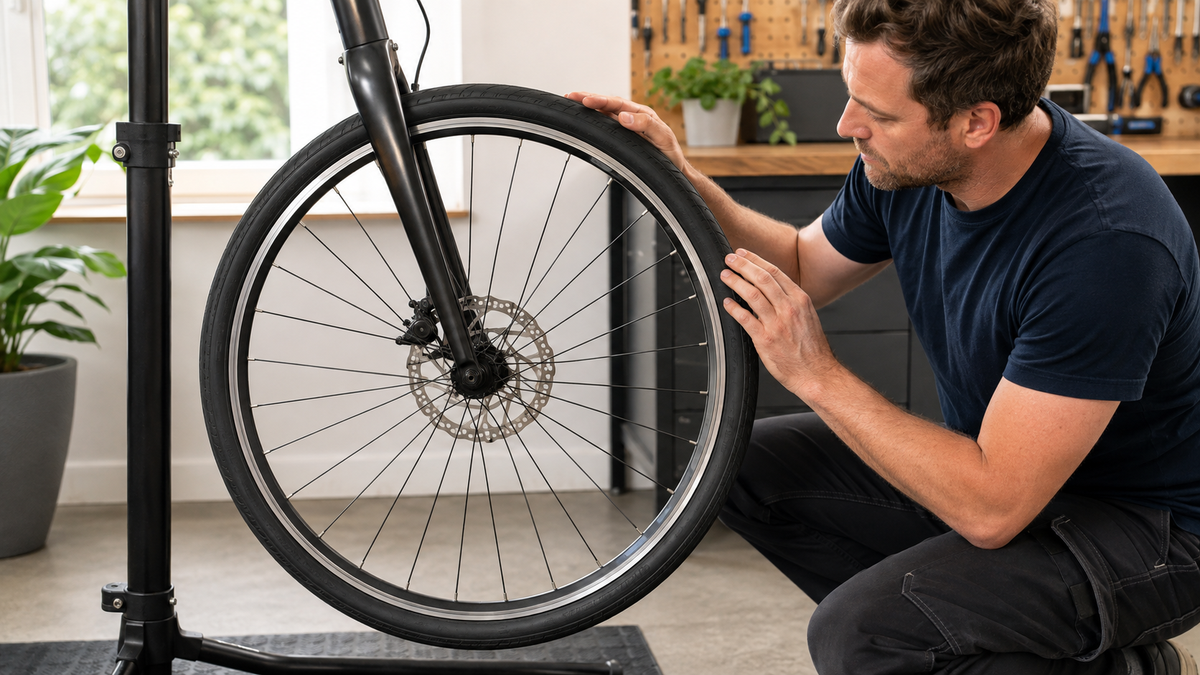
- Inspect after the ride: Moisture, sand, salt, and black residue are signs that maintenance is needed.
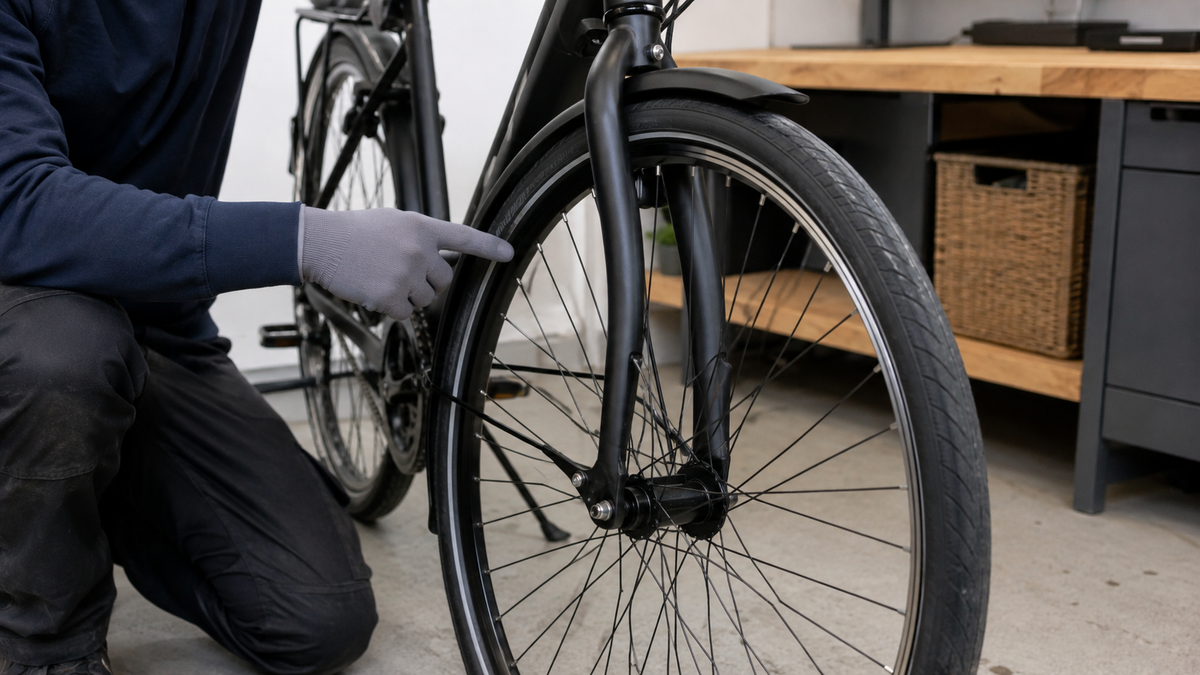
- Clean gently: Remove coarse dirt with a brush and cloth. Do not treat electrical components with a pressure washer.
- Dry and lubricate sparingly: Apply one small drop to each roller, work it in briefly, then wipe the outside clean again.
- Monitor the gears: Have skipping gears, unusual clicking, or a chain running roughly checked at an early stage.
- Measure wear: A chain wear gauge costs little and helps protect the cassette and chainring.
Shimano recommends regularly cleaning and lubricating the metal chain on e-bikes. The ADFC also points out that maintenance improves performance and extends service life. This is not a rigid mileage rule, but rather a recurring visual and functional inspection.
Chain or belt: Which solution is right for whom?
| Usage profile | Chain preferred | Belt preferred |
|---|---|---|
| Budget-conscious entry | Yes: a wide range of models and affordable parts. | Only if the higher system price is consciously budgeted for. |
| Multiple gears with low weight | Yes: derailleur gears are widely available. | Possible, but usually with a different and often more expensive drivetrain. |
| Year-round commuting in the rain | Good if regular maintenance is not an issue. | Strong: little maintenance and no rust on the belt. |
| Apartment, office, or motorhome | Easy to manage with a clean chain and protection. | Comfortable: no oily chain contact. |
| Travel with on-the-spot repairs | Strong: Parts and know-how are widely available. | Plan for the correct replacement belt and servicing in advance. |
| Compact folding e-bike like the C10 | Suitable: The Shimano 7-speed drivetrain and existing frame are designed for it. | Not intended as a simple retrofit replacement. |
My practical conclusion is therefore: Do not choose the drivetrain with the better marketing promise; choose the complete bicycle that suits your routes, your willingness to maintain it, and your service situation. For the C10, the chain is not a disadvantage that needs to be “optimized away,” but part of a deliberately simple, widely used, and repairable drivetrain concept.
FAQ: E-Bike Chain and Belt Drive
Is a belt drive always cheaper?
No. It reduces maintenance and lubricant use, but as a complete system it often costs more. Whether it becomes cheaper depends on mileage, workshop costs, and length of use.
How often does an e-bike chain need lubrication?
There is no universal interval. Check after wet conditions, cleaning, or noticeably dry running; with a dry, clean chain, lubricate sparingly and wipe off any excess.
Can I convert the Cyseekin C10 to a belt drive?
Not as a simple standard conversion. The frame, drivetrain, pulleys, belt line, and tension would all need to be structurally compatible.
Does a bicycle belt need oil?
No. Gates explicitly advises against lubricating the Carbon Drive. Remove dirt with water and a soft brush.
How can I tell if a chain is worn?
Imprecise shifting, skipping, or rough running can be signs. Regular measurement with a chain wear checker is more reliable.
Which drivetrain is easier to repair while traveling?
Usually the chain, because chains, locks, and workshop expertise are more widely available. For a belt, you should know the exact compatible replacement.
Conclusion
The chain requires somewhat more routine maintenance, but remains affordable, flexible, and easy to repair. The belt mainly reduces cleaning work and keeps clothing clean, but requires a bike designed for it and a compatible drivetrain. On the C10, the Shimano 7-speed chain drive fits the overall compact, mobile, and service-friendly concept.
Verified sources (accessed August 3, 2026): Cyseekin C10 Product Data; Shimano: E-Bike Care; ADFC: Bicycle Chains; Gates Carbon Drive Owner’s Manual.
Discover the C10 as a compact chain-drive e-bike
Compare the technical specifications, folded dimensions, range, and included items directly.
Still unsure about the model? On the All E-Bikes page, you can also directly compare the C10, C20, and S10.
Share:
Storing an E-Bike in an Apartment, Basement, or Motorhome: What Really Matters Before Buying
What tire pressure should you use for an e-bike? How to find the right pressure