

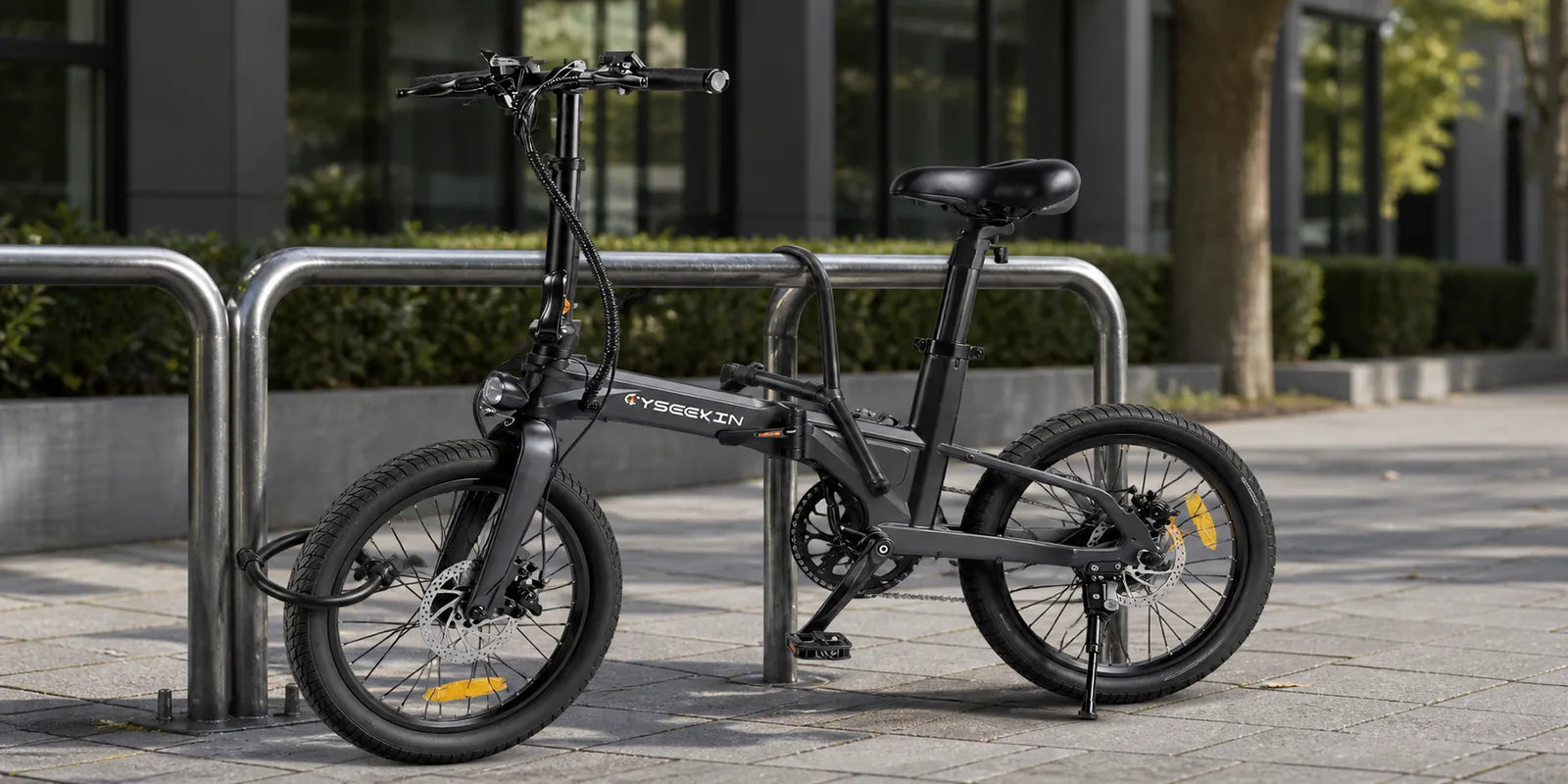
An e-bike is properly locked when the frame is attached to a fixed object with a high-quality lock—not just one wheel. Removable parts need their own protection. For longer stops, a clearly visible parking spot, documented frame numbers, and a quick look at the insurance terms and conditions also help.
The decision in 30 seconds
| Risk | What makes sense | What is not enough |
|---|---|---|
| Bike is carried away | Secure the main frame to a firmly anchored shackle | Lock attached only through the front or rear wheel |
| Wheel or accessory is stolen | Second lock or additional security for easily removable parts | Frame lock as the only security measure |
| Battery is stolen | Lock the battery and take it with you when parking for a long time unattended | Rely solely on the battery lock |
| Bike remains difficult to identify after theft | Keep the frame number, proof of purchase, and current photos | Record only the color and model name |
Locking the bike to something matters more than merely locking the lock
A wheel lock or frame lock initially prevents the bike from simply rolling away. However, it does not prevent two people from lifting and carrying away the entire e-bike. Therefore, a load-bearing part of the frame should be secured together with a sturdy, firmly anchored object inside the lock shackle or chain.
The fixed object should not be removable, unscrewable, or easy to cut through. A low bollard over which the locked lock can be lifted is also not a reliable choice.

Which type of lock suits which daily routine?
The design alone does not determine security. The material, locking cylinder, workmanship, and proper use are equally important. The police point out that manufacturers’ security classes are not standardized and can therefore only be compared to a limited extent. Independent certification, such as by VdS, can make the selection easier.
| Lock type | Strength | Typical compromise | Suitable use |
|---|---|---|---|
| U-lock | Rigid, compact design; little room for attack when fitted tightly | Limited diameter | Rigid shackle close to the frame |
| Chain lock | Flexible around thick or awkwardly positioned objects | High-quality models are heavy | Everyday use with changing parking locations |
| Folding lock | Compact to carry on the bike | Joints and length vary by model | City rides with suitable bike racks |
| Frame lock | Quickly for a very brief stop | Does not secure the bike to a fixed object | Only as a supplement to a main lock |
A reliable five-step routine
Choose a visible parking spot
Busy, well-lit locations increase the risk of discovery for thieves. This does not replace a lock, but it is an important part of overall protection.
Securely connect the frame
Position the main lock high and as tightly as possible around the frame and bike rack. Locks lying on the ground provide more leverage and a larger striking surface.
Secure the wheels and accessories too
Quick-release mechanisms, easily accessible wheels, bags, or displays should be secured or removed. In higher-risk situations, using a second type of lock is worthwhile.
Handle the battery deliberately
A locked battery is practical for everyday use, but it is not an insurmountable theft deterrent. When stopping for longer periods or in exposed locations, taking it with you is the safer choice.
Secure the data in advance
Store the frame number, proof of purchase, and photos separately from the bike. The police's free bicycle record helps you record the information in a structured way.
Battery and Cyseekin models: lockable does not mean untouchable
The current product pages for Cyseekin C10, Cyseekin S10, and Cyseekin C20 each describe a removable or lockable battery. This makes everyday use easier: For a quick shopping trip, the battery can remain locked in place; when leaving the bike parked for longer, it can be taken with you.
The correct order remains important: First lock the main frame securely, then assess the battery and attached components. A battery lock does not protect the entire e-bike, and removing the battery is no substitute for a high-quality bicycle lock.
GPS trackers and insurance: useful, but no substitute
The ADAC expressly recommends GPS systems only as a supplement to a good lock. Insurance terms and conditions should be read before purchase or before leaving the bike parked for an extended period: There is no blanket rule that applies to all policies.
FAQ: Common mistakes in e-bike theft protection
Is it enough to lock only the front wheel?
No. On many bicycles, a wheel can be removed quickly. At least one load-bearing part of the frame must be secured to a fixed object; easily removable wheels should also be secured.
Should the e-bike battery always be taken with you?
Not for every brief stop. However, when away for longer periods, at night, or in an exposed location, taking a removable battery with you reduces the additional risk. The manufacturer's instructions on removal, transport, and storage remain authoritative.
Is a GPS tracker better than a second lock?
A tracker does not prevent theft. It can support the search, while a second high-quality lock makes an attack more difficult. Both measures can be combined for valuable e-bikes.
Does the e-bike also need to be locked in a basement or garage?
If a sturdy, firmly anchored point is available, locking the bike to it remains advisable. Doors, access points, and easily removable components should also be secured, and the terms of any existing insurance should be checked.
Which information helps after a theft?
The frame number, manufacturer, model, color, distinctive features, proof of purchase, and current photos are particularly important. The police bicycle pass compiles this information for a police report.
Planning the right e-bike and everyday security together
Weight, folded dimensions, and a removable battery affect not only the ride but also where the bike is parked and the security routine. The overview of all Cyseekin e-bikes leads to the current models; the C10/S10/C20 buying guide helps with model selection.
Sources and testing criteria
- Police Crime Prevention: Finding secure bicycle locks, accessed on 10 August 2026.
- Police Crime Prevention: Bicycle Pass, accessed on 10 August 2026.
- ADAC: GPS trackers for bicycles, accessed on 10 August 2026.
- Current Cyseekin product pages for C10, S10 and C20, accessed on 10 August 2026.
Editorial note: This article provides context for current official, consumer, and product information. No lock, tracker, or insurance product was tested firsthand. No lock offers complete protection; individual manufacturer and insurance terms take precedence.
Share:
Which Cyseekin e-bike is right for me? Choosing the C10, S10, and C20 correctly
Metal Bike Phone Mount: What Really Matters