

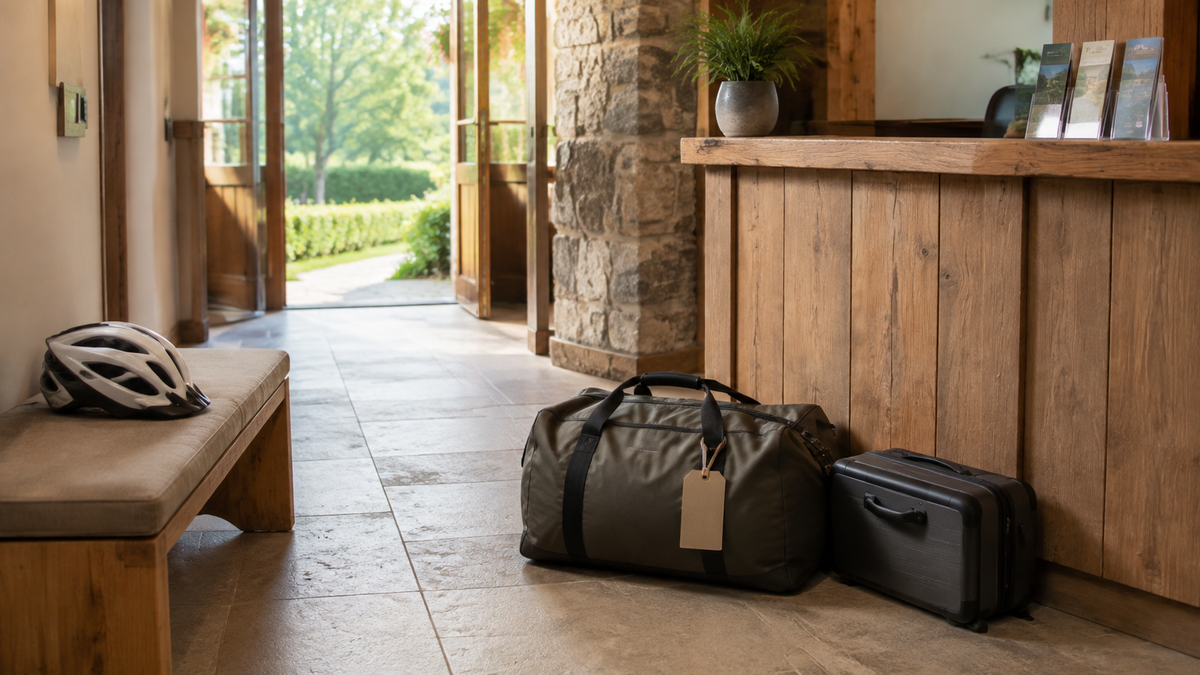
On a cycling trip with luggage transport, your large suitcase is taken to the next accommodation while you carry only what you need for the day on your bike. This can make the trip more enjoyable. However, it does not mean that your luggage is accessible at all times or that it will automatically follow every spontaneous route change. Clear handover points, time windows, and enough day luggage to last until the evening are crucial.
Which type of trip is right for you?
A tour operator can organize accommodations, route information, and luggage transfer as a package. For an individual cycling trip, this does not necessarily mean that a guide will accompany you. Wikinger describes its individual cycling trips, for example, as including prearranged accommodations and luggage transport, while guests ride at their own pace.
Alternatively, you can contact accommodations and a regional transport provider separately. You then have to ensure yourself that both parties know the same addresses, days, and handover times. For a holiday with a fixed accommodation, daily hotel-to-hotel transport is usually not the right service at all: the suitcase stays at the accommodation. Clarify the type of trip first before comparing services.
Check the scope of services before the price
Compare offers based on the same trip: the same number of overnight stays, a similar room category, and the same number of transport days. A low starting price is not very meaningful if arrival, rental bike, or return transfer are included differently. Ask for an offer based on your actual number of people, dates, and your own or rented bicycle.
This self-created checklist helps with comparisons. It describes questions for the provider, not services that are generally included everywhere.
| Point | Clarify before booking | Important for your plan |
|---|---|---|
| Transport route | Which accommodations and travel days are included? | Do not forget the first and last overnight stay |
| Luggage limits | How many pieces, what weight, and what type of luggage? | Weigh each fully packed suitcase individually |
| Drop-off and arrival | By when must it be provided, and by when can it be expected at the destination? | Plan your day luggage until the end of the delivery window |
| Special items | What is excluded or must be registered in advance? | Clarify batteries, valuables, and sensitive electronics separately |
| Change of plans | Who confirms a different destination address or an additional rest day? | Do not inform only the hotel |
| Return journey | Are passenger and bicycle transport also booked? | Do not confuse luggage transfer with return transport |
Expect a delivery window, not your arrival time
Your suitcase does not necessarily travel the same route or in the same order as you do. An early arrival at the next hotel therefore does not mean that your suitcase is already waiting there. Velociped states in its FAQ, for example, that luggage is made available by 9 a.m. and delivered by 6 p.m. at the latest. This is a specific provider example, not a general rule for cycling trips.
Plan the day so that you do not need anything from the suitcase between handing it over and the end of the confirmed delivery window. If you want to swim in the afternoon or walk straight through the city after a short stage, put the necessary items in your day luggage. If you arrive early, also ask whether your room is available; luggage delivery and check-in are two different processes.
What stays on the bike or with you
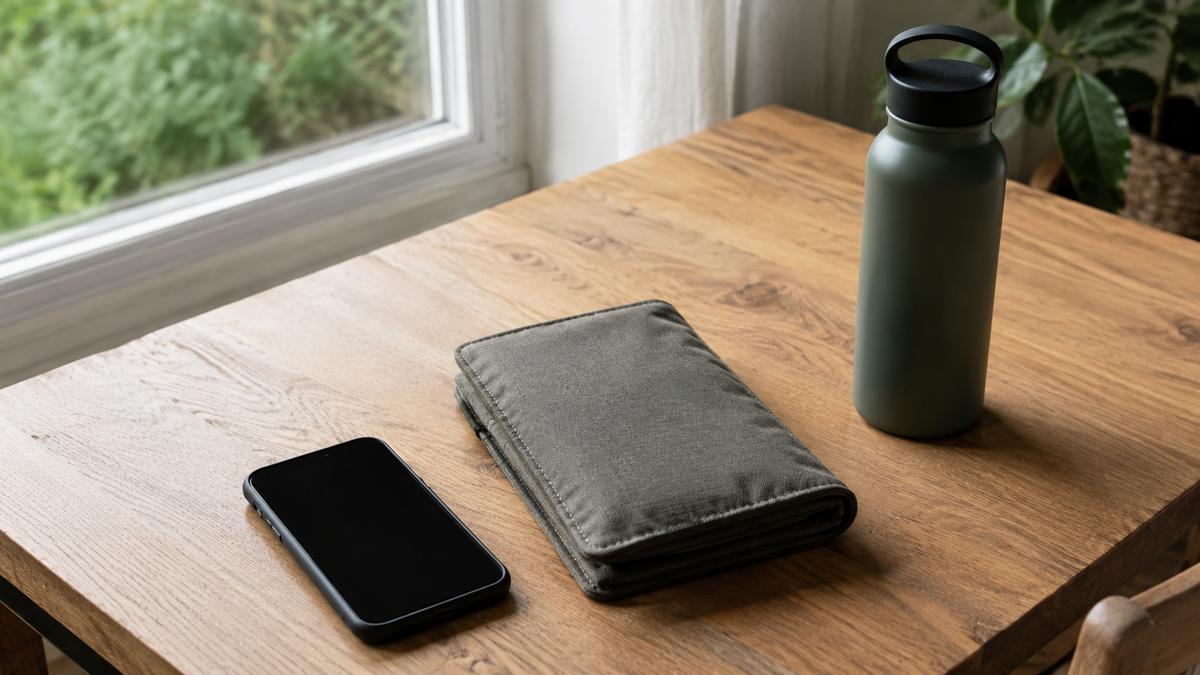
Your day luggage should contain things you cannot do without while on the road: ID, means of payment, phone, keys, travel documents, drinks, and weather-appropriate clothing. Any personally necessary medication should also remain accessible. Only add the tools or repair supplies that suit your bike and that you know how to use.

On an e-bike tour, keep the battery key and, if applicable, the original charger needed for a planned charging stop with you. Do not place an e-bike battery in the transfer suitcase without asking first. Whether and under what conditions a provider will accept such items must be explicitly clarified. A general luggage service does not answer this question.
Our practical test the evening before: Close the suitcase and mentally put it out of reach until the following evening. Then go through breakfast, the cycling stage, a break, rain, and an early arrival at the hotel. Add anything that is missing now. This is more reliable than searching between two bags for the charger or room key in the morning.
Prepare each piece of luggage individually
Check the requirements of your specific booking. For example, Eurobike distinguishes in its travel information between original and partner trips: the permitted number of pieces may vary; for individual pieces of luggage, the provider specifies a limit of 20 kilograms. Do not apply these conditions to other tour operators without checking.
Use closed, easy-to-handle pieces of luggage. Shoes loosely attached, open bags, and items placed on top of the suitcase make an unambiguous handover more difficult. Attach the tags provided by the provider and check that the trip, name, and destination are correctly assigned. Follow the provider’s labeling system instead of adding your own labels with unnecessary personal data.
The morning handover in five steps
- Check the day’s destination in your travel documents and clearly match it to your current accommodation.
- Close and count all pieces of luggage, and check their labels.
- Keep your daypack, keys, and personal belongings separate.
- Hand over your luggage at the agreed location in good time; do not leave it somewhere in the hallway.
- In the event of a deviation, inform the responsible contact and wait for their response.
A photo you take yourself of the luggage left at the designated location may help you describe the situation later. Do not photograph other people’s luggage tags or personal data. However, a photo does not replace an agreed handover or confirmation from the provider.
If you want to change the stage
Inform the transport contact before choosing a different hotel as your day’s destination. Clarify whether the luggage can be redirected, by when a decision must be made, and what additional costs may apply. A message to the previous accommodation alone is not sufficient for this coordination.
If you cannot or do not want to continue, you also need to arrange your own way to the destination. The luggage transport driver is not automatically a passenger or bicycle shuttle. Explicitly ask about options for you and your specific bike. In the event of immediate danger, finding a safe place to stay comes first—not adhering to the luggage plan.
Luggage missing at the destination: how to make a structured inquiry
First check whether the confirmed delivery window has already expired. Ask at reception where the luggage is intended to be stored and whether baggage was delivered under the name of the travel group. Have the booking number, names, number and description of the suitcases, as well as the drop-off location and time, ready.
Afterwards, contact the office named in the documents. Document any responses and observed damage objectively; ask about the intended next steps. Additional expenses, reimbursement, and liability depend on the specific circumstances and terms and conditions. This article therefore promises neither blanket reimbursement for replacement purchases nor any specific compensation.
Frequently asked questions about cycling holidays with baggage transfer
How can I find an affordable cycling trip with baggage transfer?
Compare complete offers for the same dates and services. Pay particular attention to extra nights, single rooms, rental bikes, and return transfers. A shorter section of the trip or a fixed accommodation may also be a better fit for your budget.
Are there also such trips with your own e-bike?
Yes, providers such as Wikinger also allow you to bring your own bike on their customized cycling tours. Nevertheless, clarify the specific stages, any booked bike transport, secure storage, and charging options for your trip.
How many kilometers should I ride each day?
That cannot be determined from the baggage service. Less weight changes the day, but it does not make climbs, terrain, and breaks irrelevant. Choose the stages based on your experience and available time.
Can I spontaneously take an additional rest day during the trip?
Only if the accommodation, other bookings, and baggage transport can be coordinated accordingly. Obtain confirmation from the responsible parties before assuming that the entire trip will be postponed.
Conclusion: Ride lighter, keep handovers clear
Baggage transfer works best for you when you know what it includes and can manage without your suitcase until the evening. Check the limits and time windows, keep personal items within reach, and coordinate changes early. This way, the service makes the cycling stage easier without creating new uncertainty in your daily schedule.
As of September 7, 2026. The times and baggage limits mentioned are examples from the linked providers, not general terms of carriage. The booked offer and its current travel documents are authoritative. The tables, packing test, and handover procedure are planning aids of our own.

Share:
Find bike-friendly accommodation: classify Bett+Bike correctly
Plan a cycling holiday: combining stages, overnight stays, and contingency time