

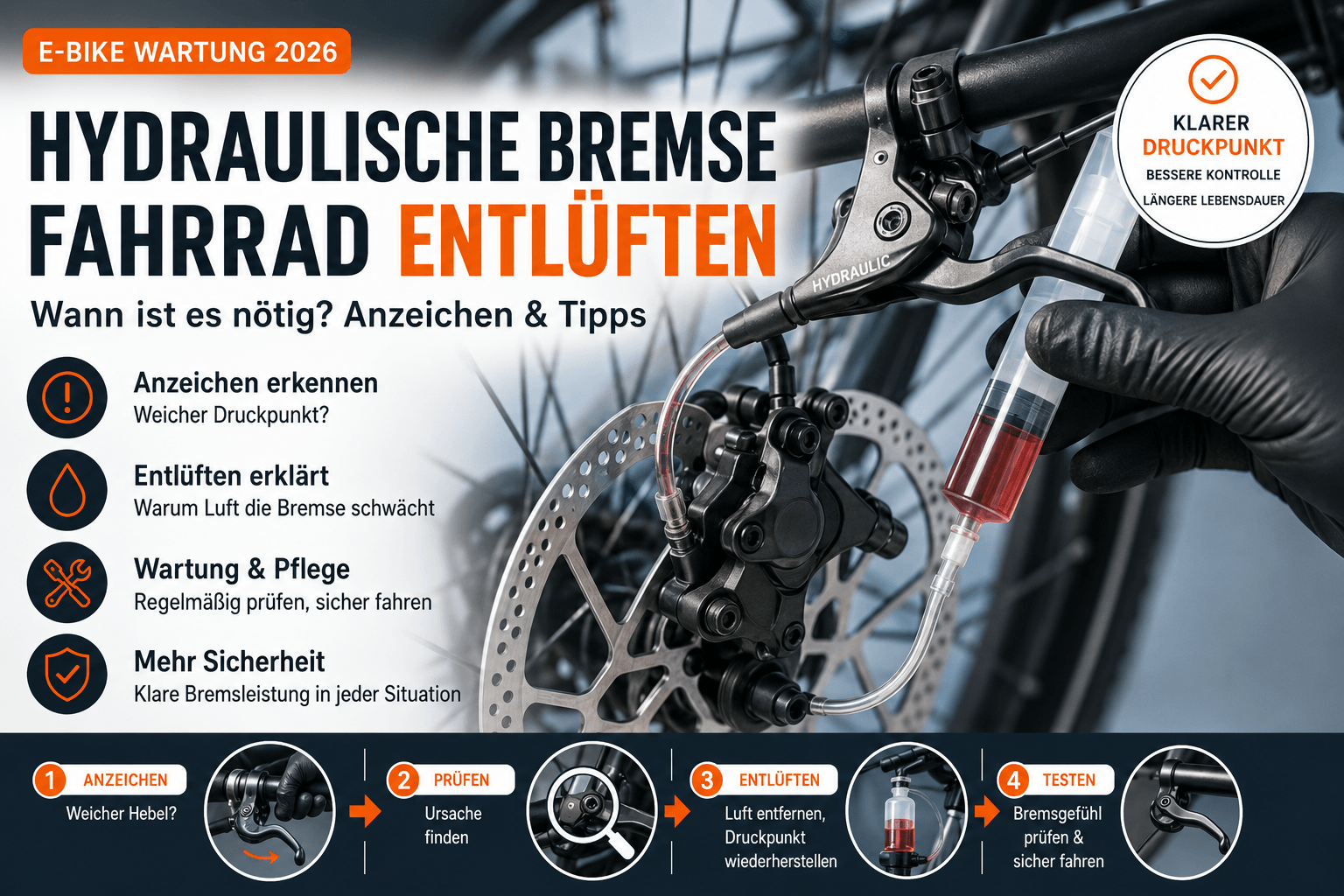
Bleeding a hydraulic brake on a bicycle: When is it really necessary?
Ideally, a hydraulic disc brake feels clear, direct, and controllable. If the bite point feels soft or the brake lever has to be pulled unusually far, many people wonder: Do I need to bleed the hydraulic brake on my bicycle, or is there another problem?
What does bleeding a hydraulic brake mean?
Bleeding removes air from the hydraulic braking system. Air can interfere with pressure buildup because it can be compressed more than brake fluid or mineral oil. As a result, the brake feels softer and the bite point becomes less distinct.
Typical signs: When should you have the brake inspected?
Not every noise or change in braking distance immediately means that the brake needs bleeding. Nevertheless, there are clear signs that make an inspection advisable.
- The brake lever can be pulled unusually far toward the handlebar.
- The bite point moves or feels spongy.
- Braking performance decreases noticeably.
- After transport, a fall, or a repair, the brake feels different.
- The brake was opened or a hose was replaced.
- The braking feel changes noticeably during longer descents.
Bleeding or topping up the oil: What is the difference?
Many users search for topping up oil in hydraulic bicycle brakes, even though the actual problem is not always a low fluid level. It is often air in the system, contaminated brake pads, worn pads, or a misaligned brake.
| Problem | Possible cause | Appropriate response |
|---|---|---|
| Spongy bite point | Air may be present in the system | Have the brake inspected and bled if necessary |
| Squeaking brake | Dirt, moisture, or glazed brake pads | Check the rotor and brake pads |
| Very long lever travel | Air, worn brake pads, or incorrect adjustment | Professional inspection |
| Irregular braking force | Contamination or a system problem | Do not ignore it; check the cause |
| Visible oil loss | Leak in the hose or brake caliper | Do not continue riding; have it inspected by a workshop |
Why using the right brake fluid is important
Hydraulic brake systems do not all use the same fluid. Some systems use mineral oil, while others use DOT brake fluid. These fluids must not simply be mixed indiscriminately. If you are unsure, always check the manufacturer's specifications or ask a professional workshop.
Can you bleed hydraulic brakes yourself?
Technically, this is possible if you have the right tools, the correct fluid, and the necessary experience. For many e-bike users, however, it makes more sense to have the brakes bled by a professional workshop. This is especially true if the e-bike is used regularly for everyday riding or in road traffic.
| Do it yourself | Professional workshop |
|---|---|
| Recommended if you have experience, a suitable bleeding kit, and clear manufacturer instructions | Recommended if you are unsure, have warranty-related questions, or the braking feel has changed significantly |
| Risk: incorrect fluid, air in the system, contamination | Advantage: the pads, rotor, hose, and brake caliper can all be checked |
How often should you check hydraulic brakes on an e-bike?
There is no fixed interval that applies equally to every e-bike. Usage, weather, weight, riding style, and route profile all play an important role. Anyone who commutes daily or frequently rides in wet conditions should check the brakes more often than someone who only occasionally rides short distances.
- Before longer rides: perform a quick brake check
- After transport or a fall: check the braking feel
- If there are noises: check the rotor and brake pads
- If the lever feels spongy: have the system checked and bled
- If there is visible oil leakage: do not continue riding
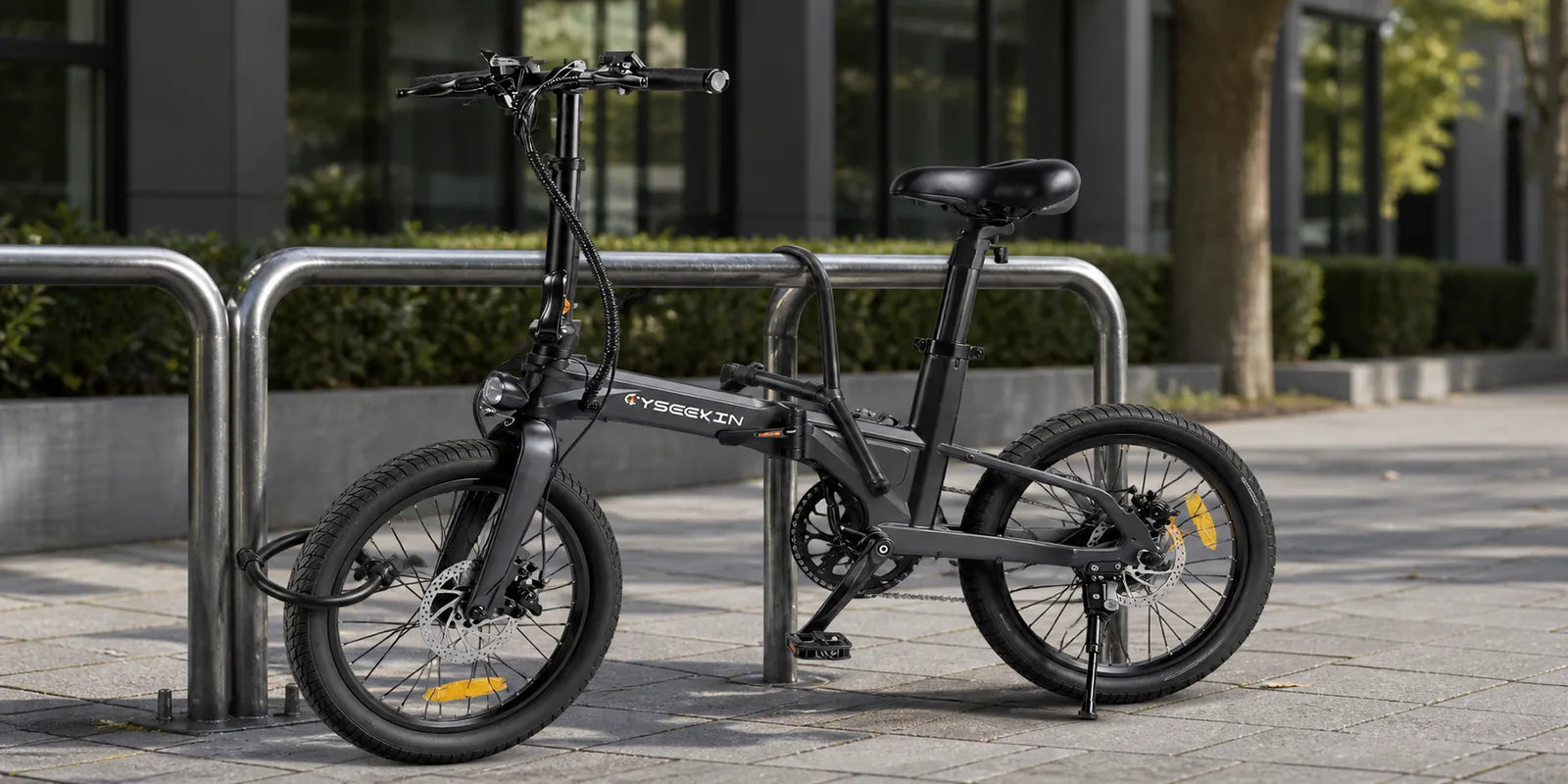
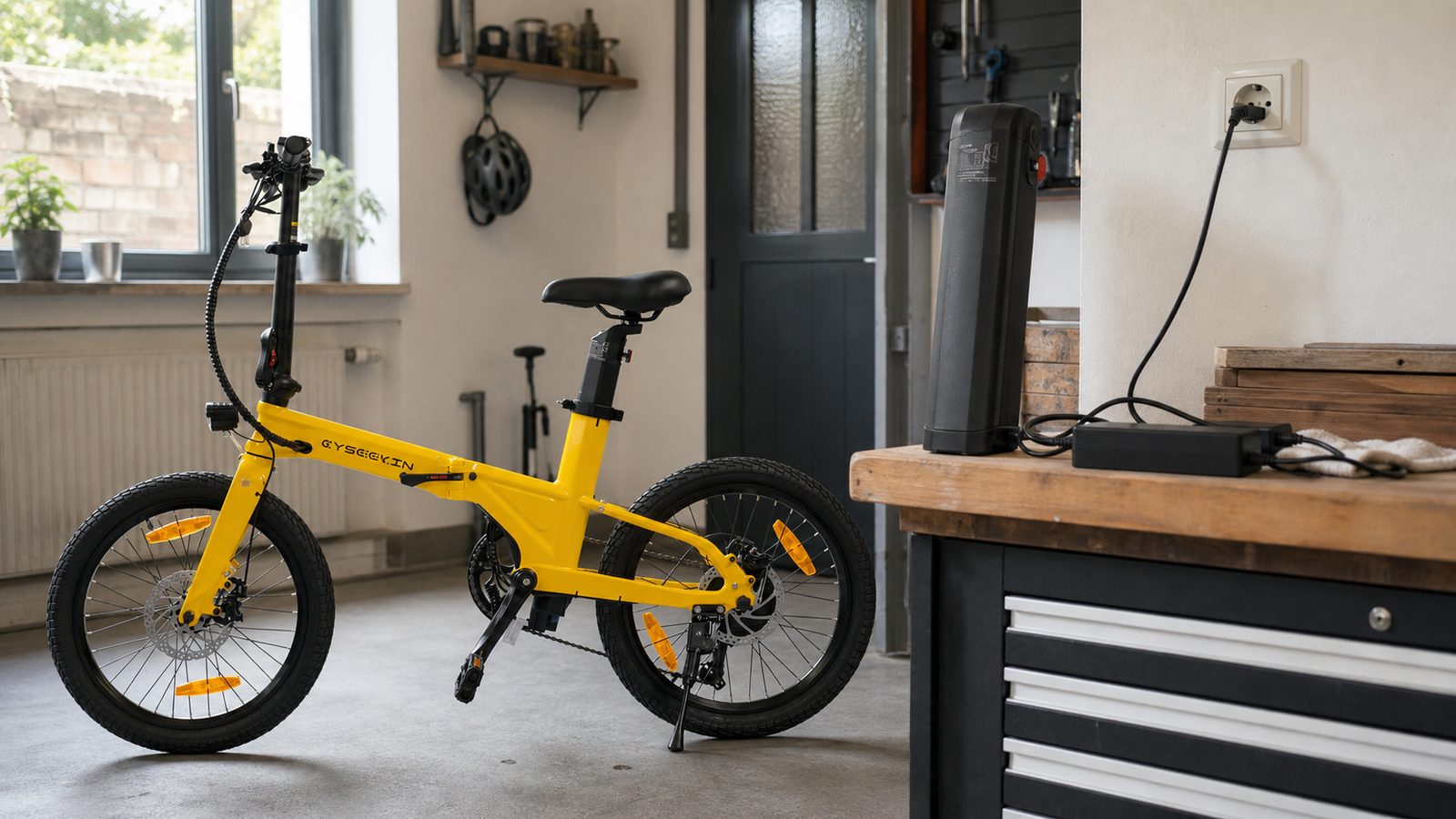
Which Cyseekin models benefit most from well-maintained brakes?
The more intensively an e-bike is used in everyday life, the more important a clear and reliable braking pressure point becomes. The maintenance of the hydraulic disc brakes should therefore always match the usage profile.
Discover Cyseekin E-Bikes for Safe Everyday Rides
Compare models for urban riding, commuting, and practical everyday use directly in the official Cyseekin Shop.
View all Cyseekin E-Bikes →Further Reading
FAQ – Bleeding Hydraulic Bicycle Brakes
How do I know when a hydraulic brake needs bleeding?
Typical signs include a spongy pressure point, an unusually long lever travel, or a noticeable loss of braking power.
Do you need to top up the oil in every hydraulic brake?
No. A change in braking feel does not automatically mean that oil is missing. The brake pads, disc, system tightness, and air in the system should often be checked first.
Can the wrong oil damage the brake?
Yes. Brake systems use different fluids. The wrong fluid can damage seals and impair braking performance.
Is bleeding more important for e-bikes than for regular bicycles?
E-bikes are often heavier and used more intensively in everyday life. As a result, a poor pressure point is noticed more quickly and should be taken seriously.
Should I bleed a hydraulic brake myself?
Only if you have experience, the right tools, and the correct fluid. If you are unsure, a professional workshop is the safer choice.

Share:
Men's E-Bike Price: What Is Affordable, What Is Really Worth It?
Finding the Right Size for Men's E-Bikes: How to Choose the Perfect Model