

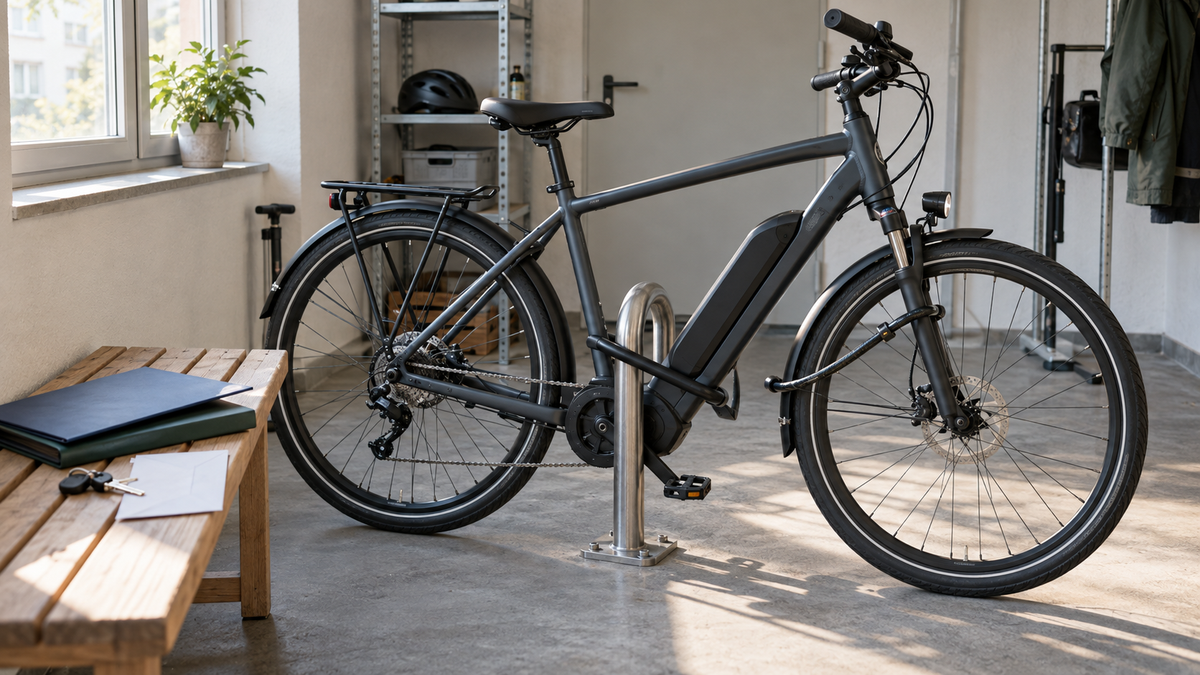
Anyone searching for “e-bike insurance” does not automatically have to take out a new policy: Standard home contents insurance, however, often only covers theft following a break-in from locked premises. If a pedelec is stolen outside a train station, shop, or office, the basic tariff usually does not provide cover. Depending on the policy, a bicycle add-on to home contents insurance or a separate bicycle insurance policy may be suitable. Do not compare only the premium, but above all the insured damage, reimbursement limits, lock requirements, geographical scope, and excess. The currently agreed terms and conditions are always decisive.
Home contents insurance, an add-on, or separate e-bike insurance?
This comparison concerns standard pedelecs whose motor provides assistance while pedaling up to 25 km/h. Different rules apply to S-pedelecs; legally, they are not treated like bicycles and require, among other things, motor vehicle liability insurance. The consumer advice center explains the distinction in detail.
| Solution | Typical core coverage | Check before taking out the policy |
|---|---|---|
| Basic home contents cover | Theft following a break-in from an insured, locked space | Insured location, sum insured, basement and garage conditions |
| Home contents insurance with bicycle add-on | Depending on the tariff, also simple theft outside locked premises | Reimbursement limit, night-time clause, lock, foreign travel, accessories |
| Separate bicycle insurance | Depending on the policy, theft plus selected accident, fall, or repair risks | Insurable bicycles, current value or replacement value, excess, exclusions |
The table describes common tariff structures, not a promise of benefits. The consumer advice center points out that bicycles may be covered under home contents insurance at least against theft following a break-in. Basic tariffs, however, usually do not cover simple theft outside locked premises. Additional conditions can close this gap. What actually applies is stated in the insurance certificate and the terms and conditions of your specific policy.
When basic home contents cover may be suitable
If the e-bike is kept almost exclusively in a locked apartment, garage, or insured basement, your existing home contents cover may be a sensible starting point. Nevertheless, check whether the storage area is insured, what security measures are required there, and whether the sum insured is sufficient for an equivalent bicycle. A shared bicycle storage room may have its own requirements.
When a bicycle add-on may be more appropriate
If you regularly leave your pedelec outside, clarify in writing whether simple theft is included. An add-on can be integrated into your existing home contents policy. This simplifies policy administration, but says nothing yet about the quality of the cover. Limits as a percentage of the home contents sum insured, maximum amounts, or special lock requirements can restrict the protection.
When a separate policy may be worthwhile
Separate bicycle insurance may be relevant if, in addition to theft, you also want clearly defined cover for falls, accidents, vandalism, electronics, or repairs. These components vary greatly. Wear and tear, improper use, moisture, racing, or unauthorized modifications may be excluded or covered only to a limited extent. A long list of benefits therefore does not replace reading the exclusions.
Which policy details really matter?
Location, time, and security
Ask first: Where does the cover apply? Only at your home, throughout Germany, or also while traveling? Does it apply around the clock? The consumer advice center refers to older terms and conditions under which full cover may be limited to certain times. Tariffs also often require a separate bicycle lock; a permanently installed frame lock may not be sufficient. Some insurers even specify certain types of locks or minimum prices.
Regardless of the policy, good security reduces the risk. Our guide to locking your e-bike correctly and protecting it against theft shows how to secure the frame and bicycle to a fixed object and take components into account.
Reimbursement, age, and insured parts
Compare whether the tariff reimburses the replacement value, current value, or a capped amount. Also check whether the battery, display, luggage, permanently mounted accessories, and loose carried items are included. Used e-bikes may be subject to a maximum age or may be excluded from coverage altogether. Therefore, document the purchase date, purchase price, frame number, and condition before the policy begins.
Excess and exclusions
A lower premium may come with a higher excess or narrower benefits. Read which documents are required in the event of a claim and how quickly the police and insurer must be notified. Also clarify whether gross negligence, unauthorized modifications, commercial use, rental, or extended stays abroad are excluded. Have unclear wording answered in writing before taking out the policy.
Which solution suits which usage profile?
Do not start with a tariff name, but with your everyday use. Note the purchase value, usual parking locations, how long the bike is left there, travel, and the types of damage whose costs you do not want to bear yourself. You can then compare existing cover and gaps.
- Mostly stored at home: First check your existing home contents policy, the insured storage area, and the reimbursement limit.
- Daily use at a train station, office, or while shopping: Simple theft, lock requirements, and round-the-clock cover are particularly important.
- Frequent travel: Check the geographical scope, maximum travel duration, and any roadside assistance benefits.
- High replacement value: Compare the maximum reimbursement, excess, and method used to calculate the reimbursement.
- Cover beyond theft: Check individually which accident, fall, electronics, or repair damage is actually insured.
A blanket recommendation would be irresponsible: Two policies with similar names may offer significantly different benefits. The premium also depends on the bicycle, place of residence, scope of cover, and provider. If necessary, obtain several specific quotes and compare the same coverage features.
Prepare documents and proof of theft
What you should document before a claim
Keep the receipt, frame number, model designation, and current photos in a safe place. Also photograph the lock used and save its proof of purchase. If the policy requires coding, registration, or a specific lock, document this requirement as well. The documents should not be kept exclusively in a bag attached to the bicycle.
After a theft, the reporting and documentation obligations of the respective policy apply. The consumer advice center recommends informing the police and insurer without delay. Check the specific deadlines and required documents for your policy; this article does not replace individual insurance or legal advice.
Insurance is not a guarantee
Theft insurance, statutory warranty rights, and a voluntary manufacturer’s warranty address different issues. A warranty does not cover a stolen item, and theft insurance does not remedy a manufacturing defect. For Cyseekin products, you can find the current scope of cover and exclusions in the warranty terms. Check this page again at the time of purchase because the terms may change.
Conclusion: Read your existing cover first, then close the gap
Open your home contents policy and answer five questions in writing: Is simple theft outside locked premises insured? Up to what amount? Which lock is required? Where and when does the cover apply? Which parts and types of damage are included? Only once these answers are clear can a bicycle add-on be meaningfully compared with separate e-bike insurance.
If you are still choosing the right bicycle, you can view the current Cyseekin e-bikes at a glance and consider the purchase price, intended use, and planned parking locations together when making your insurance decision. Make your decision based on the current policy documents, not solely on a tariff name or advertising promise.
Share:
E-bike battery dropped: What to do now
Packing list for a 3-day bike tour: pack light for two nights away