

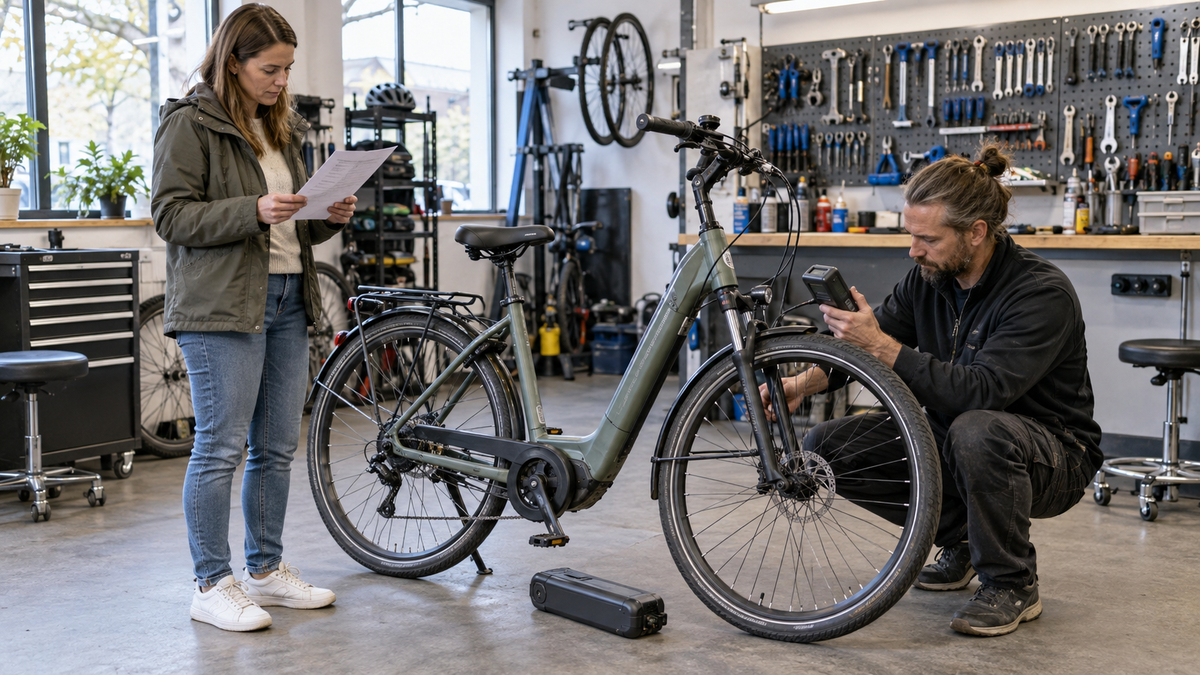
Anyone wishing to buy a used e-bike should not skip three things: have the battery condition verified, take a complete test ride, and document ownership and condition in writing. A short range indicator does not prove that the battery is healthy. If possible, ask for a diagnostic or capacity report, inspect the frame, brakes, gears, and drivetrain, and compare the frame number, original invoice, and purchase contract. If the origin is unclear, the battery is damaged, or a test ride is refused, a low price is not adequate compensation.
Before the inspection: Check the documents and seller
Beforehand, ask for the model, year of manufacture, frame number, mileage, and known damage. Ask for the original invoice, charger, battery keys, owner’s manual, and service receipts. The information in the listing, documents, and on the bike should match. ADAC recommends clarifying the age, previous owners, mileage, service history, replaced parts, and storage conditions.
An exceptionally low price, time pressure, unclear answers, or a missing frame number are warning signs. Do not pay solely on the basis of catalog photos. Arrange the inspection at a safe location and view the bike, seller, and original documents together. For an online purchase, you must also check who is actually selling the bike and which return or defect rights apply to the sale.
| Inspection area | During inspection or test ride | Document or proof |
|---|---|---|
| Origin | Frame number complete and unaltered | Original invoice, seller’s identity, written contract |
| Battery | Housing, mount, charging, and assistance without any abnormalities | Age, keys, original charger, and, if possible, a state-of-health or capacity report |
| Frame and wheels | No cracks, dents, unusual welds, or lateral wheel runout | Document known accidents and repairs in writing |
| Brakes and gears | Brake in a controlled manner, shift through all gears, and check for rubbing or skipping | Service receipts and recently replaced wear parts |
| Electrical system | Test the display, lights, sensors, and motor assistance at several levels | Fault history or workshop diagnosis, where available |
| Fit | Safe mounting and dismounting, steering, starting, and stopping | Frame size and permitted adjustments in the manual |
Check an e-bike battery: SOH instead of range promises
What the State of Health indicates
State of Health, or SOH for short, describes the usable remaining capacity relative to the capacity when new. Depending on the system, this value can be read directly from the battery or with a diagnostic device at a workshop. A controlled discharge can measure the actual available electrical energy. The ADAC recommends measuring the capacity before buying a used e-bike.
Ask in advance which measurement method was used, when the test was conducted, and whether a report is available. A display with many bars mainly shows the current charge level. Even a short test ride does not allow a reliable range estimate: assistance level, rider weight, temperature, tire pressure, route, and maintenance condition affect consumption.
Damage is a stop signal
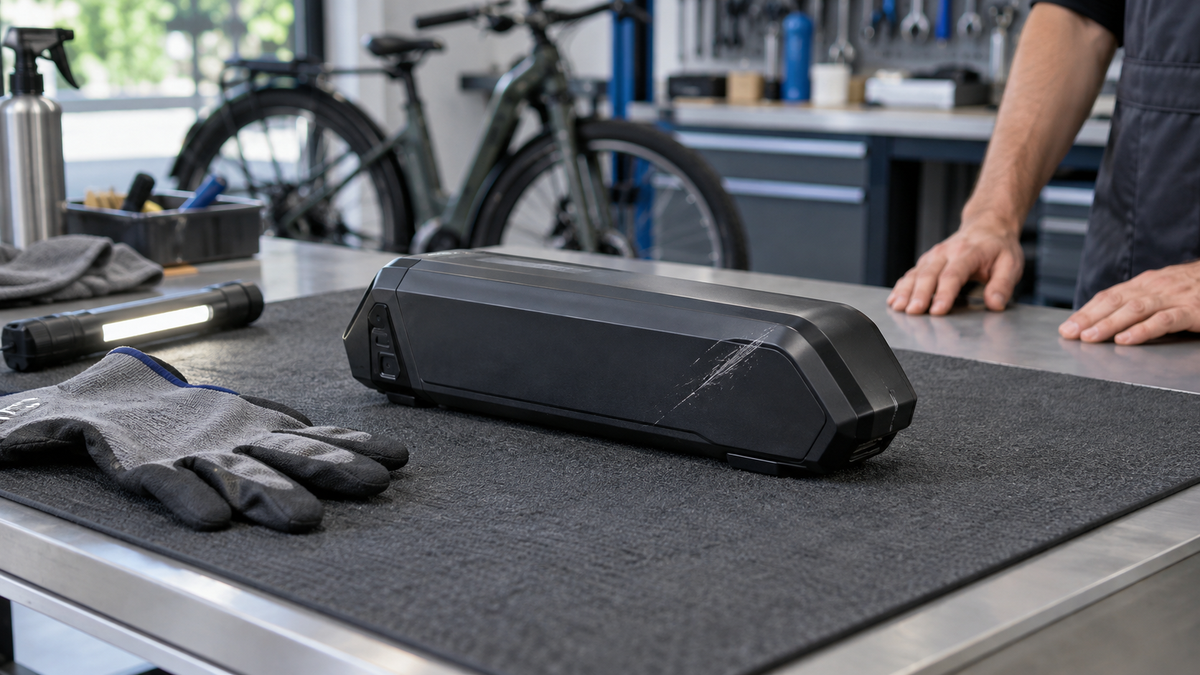
Check the housing for dents, cracks, deep scratches, deformation, unusual heat, or odor. Visually inspect the mount, contacts, lock, and original charger. Do not open, charge, or test a suspicious battery further. The ADAC expressly warns against replacing cells yourself and having batteries repaired by untrained people. Have any damage assessed by a suitable specialist.
Test ride: test the mechanics, drive system, and fit
A test ride is also part of a private purchase. Adjust the saddle and controls only within the permitted range and start on a quiet, level surface. Test starting, straight-line stability, slow steering, and controlled braking. Shift through all gears under moderate load and try several assistance levels. Motor assistance and the display should respond predictably, without interruptions or unusual noises.
Mechanical inspection
- Frame and fork: check for cracks, dents, corrosion, and signs of a crash, especially at welds and transitions.
- Wheels and tires: Check for lateral runout, damaged sidewalls, tread depth, spoke tension, and the correct tire pressure.
- Brakes: Carefully test the bite point, pads, discs or rims, and even braking performance.
- Drivetrain: Check the chain, cassette, chainring, and gears for wear, rust, skipping, and noise.
- Steering and bearings: Check the headset, bottom bracket, and hubs for play, creaking, or stiffness.
- Lighting: Check the front and rear lights, as well as the cables and controls.
Declining braking performance, metallic scraping, or gears that jump are identified by ADAC as clear signs that servicing is needed. If you are unsure about the frame, brakes, or electrical system, arrange an inspection at a workshop before the money and ownership change hands. An inspection costs money, but it can reveal difficult-to-detect subsequent costs.
Does the bike really fit?
A technically sound offer is unsuitable if you cannot safely get on and off, reach the handlebars or brake levers comfortably, or control the bike properly. Check the frame shape, adjustment ranges, and permitted total weight using the documentation. A short test ride cannot replace long-term experience, but it does reveal basic issues with size, riding position, and operation.
Sales contract: Record the condition and accessories in writing
When buying from a private seller, use a written contract. The ADAC sales contract for used e-bikes includes details such as the manufacturer, model, frame number, motor, mileage shown on the display, battery keys, equipment, and known damage. It is expressly designed for private sales; different legal conditions apply when the seller is a business.
Record the purchase price, handover date, included accessories, charger, keys, diagnostic report, and guaranteed specifications. Known accidents, repairs, and defects should also be included in the contract. Ask for the original documents or verifiable copies of the relevant paperwork. This article is a practical inspection guide and not individual legal advice.
Used Cyseekin E-Bike: Clarify the manual, warranty, and service
Compare the model and equipment with the relevant Cyseekin user manual. This helps you identify the controls, permitted settings, and original accessories. For technical questions or a repair request, the service and repair page is available.
The currently published Cyseekin warranty terms state that the remaining voluntary warranty can be transferred to subsequent owners, calculated from the original purchase date and subject to presentation of the original purchase receipt showing the first buyer and order number. This is not a guarantee for every individual case or sales channel. Before purchasing, check the version then in force, the bike's origin, the remaining term, and the required documentation. The voluntary warranty must also be distinguished from statutory rights in the event of defects.
If the model, proof of purchase, or spare-parts question remains unclear, use the Cyseekin contact page before signing the contract. Do not send complete identity or payment details unsolicited; instead, initially provide the model, purchase channel, and specific question.
Conclusion: Evidence first, then a test ride, and the contract last
A reliable used-bike purchase follows a simple sequence: check the origin and documents, have the battery condition measured if possible, inspect the entire bike, take an extensive test ride, and record all details in writing. Include recognizable wear parts and a possible workshop inspection in the total price.
Walk away if the frame number or proof of ownership is missing, the battery appears damaged, a test ride is refused, or important details remain contradictory. The best used e-bike is not the cheapest offer, but a suitable, well-documented bike without unresolved safety risks.
Share:
E-bike battery dropped: What to do now
Packing list for a 3-day bike tour: pack light for two nights away