

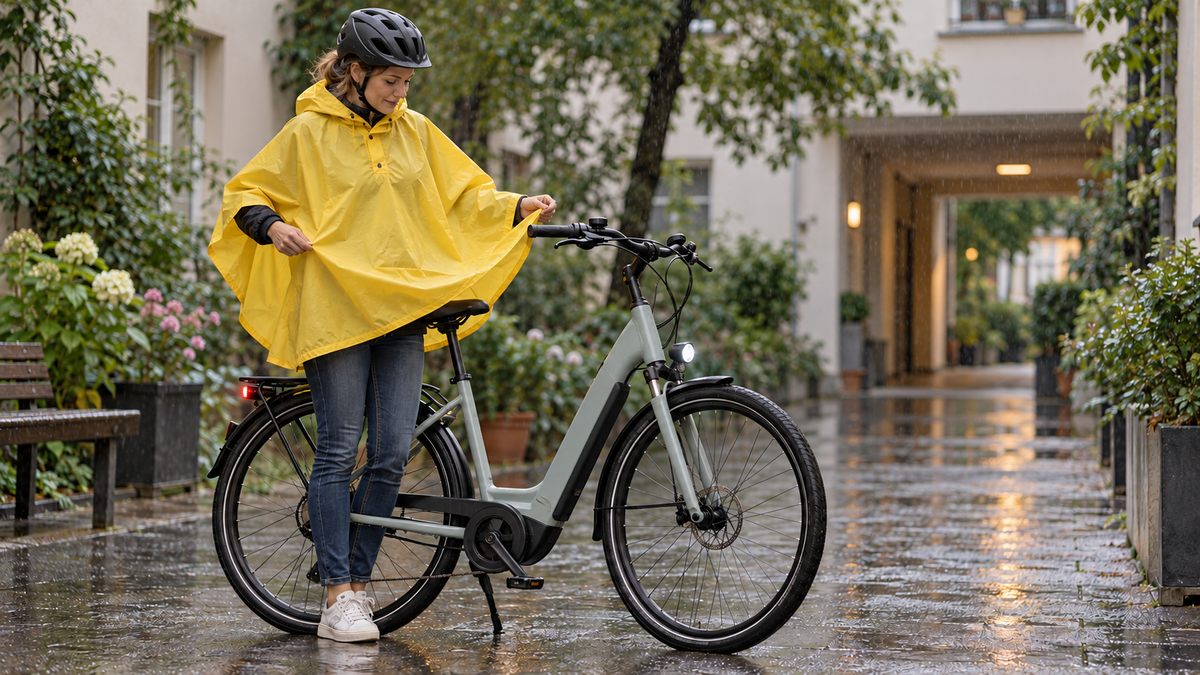
A bicycle rain poncho is quick to pull on and lets more air circulate than a closed combination of rain jacket and pants. But it is only safe if visibility, freedom of movement, and control of the bicycle are maintained, and no loose fabric can get caught in the wheel, chain, or pedals. In strong winds, closer-fitting rainwear is generally more stable.
The buying decision should therefore start with the planned route, not the color or packed size. A well-fitting poncho can be practical for a short ride in moderate rain. For faster rides, exposed bridges, long descents, or strong winds, a jacket and pants combination often offers more control.
Bicycle rain poncho or jacket and pants?
The ADFC describes rain ponchos as quick to put on and relatively breathable. At the same time, they provide less complete protection for the legs from rain and splashes from the side; in windy conditions, their large surface area can act like a sail. The right choice therefore depends more on the route and weather than on any one product being best overall.
| Criterion | Rain poncho | Rain jacket and rain pants |
|---|---|---|
| Getting dressed | Quick to pull on over everyday clothes | Multiple pieces, so usually a little slower |
| Ventilation | Often more breathable thanks to its open design | More dependent on the material and ventilation openings |
| Leg protection | Works against rain from above, but offers limited protection from splashes | Usually more complete, especially with overshoes |
| Wind | Large surface area; flapping can affect control | Closer-fitting and generally more stable |
| Freedom of movement | Only works well if steering, braking, and hand signals remain unobstructed | More predictable when properly sized |
| Best suited for | Shorter, relatively slow rides in light winds | Longer, faster, or windy rides |
Even a high-quality poncho cannot handle every weather condition. If you regularly encounter strong crosswinds on your route, you should not try to compensate with extra clips or tighter loops alone. A closer-fitting combination may then be the simpler and safer solution.
Seven things to check before buying
1. Visibility and looking over your shoulder
The hood must not hold your head in place or slip over your face when you look over your shoulder. Try on the poncho with your usual headwear or helmet. Turn your head fully to the left and right. Your side vision must remain unobstructed; drawstrings and the edge of the hood must not get in front of your eyes.
2. Hands free and brake levers within reach
In your riding position, reach for the handlebars, brake levers, gear shifter, and bell. The fabric must not pull tight or cover your hands. You must be able to signal clearly. Handlebar loops can help keep the front edge in place, but must not tie your hands to the handlebars. You must be able to let go immediately at any time.
3. Clearance from wheels, chain, and pedals
Long sides or a loose rear hem can get caught in moving parts. Check the length on your own bike, not just while standing in front of a mirror. Slowly turn the handlebars and crank while the bike is safely stationary. The fabric must remain clear of the front wheel, rear wheel, chain, spokes, and pedals in every position.
4. Wind-stable design
Side snaps, a shaped back, and well-placed fastenings can reduce flapping. What matters is not the number of fasteners but how well they work: the poncho should sit securely without restricting your upper body or arms. Riding faster will not make a flapping poncho more stable.
5. Visibility without covering the bike lights
Bright or contrasting areas and reflective details can improve visibility. However, they are no substitute for a front and rear light or the required reflectors. Put the poncho on over your clothes and luggage in your riding position, then check from the front, back, and sides whether any lights or reflectors are covered.
6. Room for clothing and small items
The poncho must fit over the clothes you actually wear. A model that works over a thin sweater may be too short over a winter jacket or backpack. Large backpacks can pull the fabric backward and cover the rear light. For regular rides, waterproof panniers are often a more reliable option than carrying gear under the poncho.
7. Material, seams, and care
Check that the seams are neatly finished, the fasteners are sturdy, and the care instructions are clear. A stated waterproof rating alone says little about fit, ventilation, or durability. Before buying, check whether the material can be reproofed and how it should be dried. A wet poncho should not be crumpled up and left in a bag.
The safe fit test at home
Test new rainwear while stationary first. Park the bike securely, switch off the drive, and remove the battery only if the instructions recommend doing so when parking or working on the bike. For the fit test, follow this order:
- Put on your everyday clothes and helmet, and take the luggage you usually carry.
- Fasten all the provided snaps, straps, or loops.
- Grip the handlebars, brakes, bell, and gears, and signal with your hand.
- Turn your head and upper body in both directions to check over your shoulder.
- Slowly turn the handlebars and cranks and check all fabric edges.
- Check from a few meters away that the lights and reflectors remain visible.
- Then ride slowly to test it on a dry, traffic-free surface.
If fabric gets caught, the hood blocks your view, or you cannot reliably reach the brake levers, the fit is unsuitable. Do not suddenly cut off safety-critical parts or improvise long cords near moving components.
What else changes with an e-bike
On a pedelec, motor assistance can quickly bring you to a speed at which flapping fabric pulls more strongly. So start with low assistance and check how it behaves while riding slowly. The poncho must not cover the display, control unit, or light switch.
A rain poncho does not change the approval requirements for electrical components. Follow the manufacturer’s care and charging instructions, and charge only in an approved environment. After your ride, dry the poncho and bike separately according to their respective care instructions.
When to leave the poncho in your bag
A clear point at which to stop is more important than hoping the material will settle down while you ride. Switch to close-fitting rainwear, postpone your trip, or choose another means of transport if:
- strong or gusty winds visibly lift the fabric,
- the poncho could get caught in the wheel, chain, pedals, or brakes,
- the hood or collar restricts your shoulder check,
- you cannot reliably operate the brake levers, bell, or gears,
- the front light, rear light, or reflectors are covered,
- heavy rain, splashes, or cold exceed the protection available.
Before riding in changeable weather, also check your brakes, tires, and lights. A quick pre-ride check doesn’t replace an inspection, but it can help you spot obvious problems before setting off.
Frequently asked questions about cycling rain ponchos
Can I wear a regular hiking poncho on a bike?
Only if it doesn’t restrict your vision, control, or freedom of movement in your riding position, and stays safely clear of the wheels, chain, and pedals. Very loose hiking ponchos are often not designed for this. A dry fit test on your own bike is essential.
Can I wear the hood over my bike helmet?
Follow the instructions from the helmet and poncho manufacturers. The hood must not interfere with helmet fit, hearing, or your ability to look over your shoulder. If it fits tightly, slips out of place, or fills with wind, you need another solution.
What’s better in strong winds?
A close-fitting rain jacket and rain pants usually catch less wind. The ADFC specifically warns that a poncho can act like a sail in the wind and make riding more difficult. Don’t use a ride in gusty conditions as a product test.
Is a poncho enough to keep my shoes dry?
Not reliably. Your legs and shoes remain only partially protected from rain and splashes coming from the side. Depending on your route, rain pants, overshoes, and mudguards may be a better choice. Make sure any extra items also stay clear of moving parts.
How should I store the poncho after a ride?
Shake off any loose water and dry it completely according to the care instructions. Check the seams, loops, and fasteners for damage. Only pack it away once it’s clean and dry; folding it away while damp for long periods can affect the material and cause odors.
Conclusion: The best poncho stays under control
A cycling rain poncho is best suited to short, easy rides in moderate rain and light winds. Don’t buy based on waterproofing alone; check your ability to look over your shoulder, reach the brakes, signal, maintain fabric clearance, use your lights, and carry luggage. As soon as the poncho flaps, restricts your vision or control, or could reach moving parts, a rain jacket and rain pants are the better choice.
Share:
Floor pump or mini pump for your bike: Which is right for home and on the go?
E-bike inspection: How often is it advisable, and what is checked?