

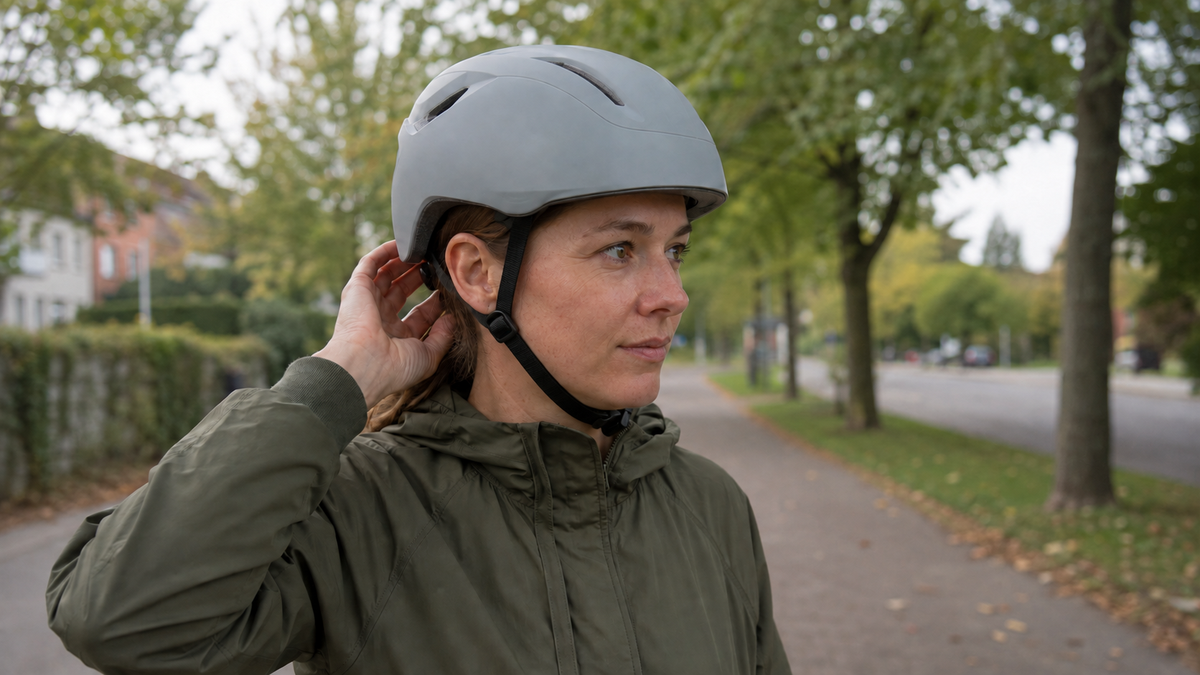
A bicycle helmet fits correctly when it stays level on your head, does not press uncomfortably, and does not shift when you turn your head. The right size, retention system, and straps are crucial. Here is a quick check for your next e-bike ride.
Fit first, then the adjustment dial
Measure your head circumference and compare it with the size chart from the respective manufacturer. The measurement is a starting point, not a guarantee of a good fit: head shape also matters. Try the helmet on for a few minutes with your cycling or everyday glasses. Pressure at the temples or forehead is not a sign of an especially secure fit. The ADAC explains helmet fit, trying it on, and strap adjustment.
How to adjust a bicycle helmet correctly: the order
- Put it on straight. The helmet must not tilt toward the back of your neck. The front edge should sit approximately one to two finger widths above your eyebrows.
- Adjust the retention system. Tighten it evenly without creating pressure points. The adjustment dial is for fine-tuning; it cannot make the wrong helmet size fit properly.
- Arrange the side straps. They should run untwisted around your ears and meet below them. Position the strap splitters according to your helmet’s instructions.
- Close the chin buckle. The strap should fit close to your chin without restricting breathing, speaking, or opening your mouth. Follow the manufacturer’s specified distance.
- Check your movement. Turn and tilt your head. If the helmet shifts noticeably, start again with the fit and retention system. Do not ride with the buckle open.
The ADFC’s information on bicycle helmets can help you assess the fit. For the specific adjusters, your model’s instruction manual remains authoritative.

Check your glasses, thin hat, and jacket too
Test the combination you actually wear. Your glasses must not press uncomfortably. After switching to a thin winter hat, check the retention system and straps again; a thick wool hat is not a suitable solution for a poor fit. The jacket collar should not push the rear adjustment out of position either.
Our everyday tip: Keep your glasses and helmet next to your bicycle bag. That way, you will notice a changed combination before setting off. Adjust the fit while standing still, not while riding.
When readjusting is no longer enough
After an accident involving stress on the helmet or if there is visible damage, readjusting is not enough: the helmet must be replaced. If a used helmet has an unknown history, its integrity cannot be reliably assessed. Also check the manufacturer’s instructions on use and replacement.
The check before leaving home
Level? No pressure? Straps arranged? Buckle closed? Clear visibility? If something is not right, take the time to fix it before setting off. Before your ride, you should also check the correct tire pressure for your e-bike.

Share:
Lake Constance–Königssee Cycle Route in 7 Days: From Lindau to Schönau
Adjust bike lights: See the road without dazzling others