

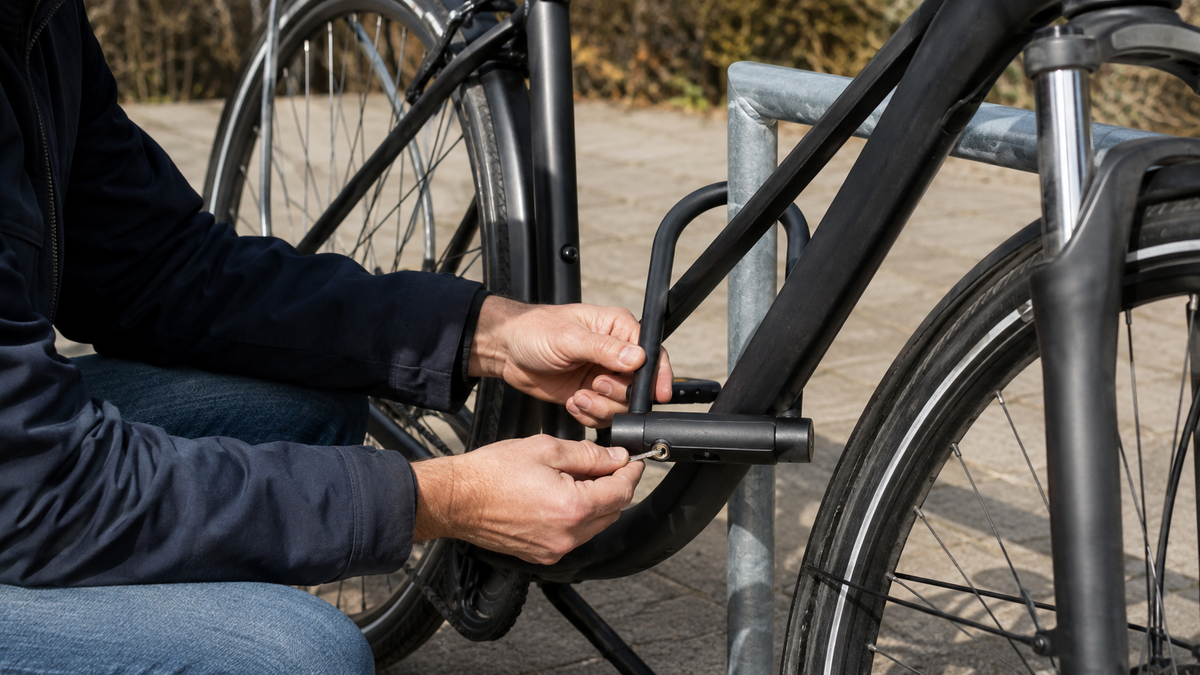
When a bicycle lock jams, force rarely helps. A bent key or a broken-off fragment in the cylinder can quickly turn a maintenance issue into an expensive emergency. Relieve tension on the lock, work only on your own property, and first check whether dirt, moisture, tension in the shackle, or a worn key is blocking its movement.
This guide covers only the gentle operation and care of an intact mechanical bicycle lock. It does not explain how to open a lock without the correct key or how to bypass a locking mechanism. If a lock attached to the bicycle remains closed, the manufacturer’s service department, a specialist retailer, or a reputable locksmith with proof of ownership are the right contacts.
Where is the bicycle lock jamming?
Observe the exact moment when the problem occurs: Can the key not be inserted fully? Does it go in but not turn? Does the cylinder turn while the shackle or chain locking piece remains fixed? Or does the lock work when open but jam under tension on the bicycle? These differences lead to different, safe next steps.
With a U-lock, the frame, a bike rack, or a twisted mount can exert lateral pressure on the lock mechanism. With a folding lock, a misaligned joint can create the impression that the cylinder is blocked. Do not pull on the key of a chain lock. First remove the mechanical tension from the connection without letting the bicycle fall.
| Symptom | Possible cause | Safe next step |
|---|---|---|
| Key cannot be inserted fully | Dirt, ice, a damaged key, or a foreign object | Do not apply pressure; check the entry area externally and clean it gently |
| Key is inserted but does not turn | Tension, a dry or dirty cylinder, or wear | Relieve tension on the lock and use only an approved care product |
| Cylinder turns, but the shackle remains fixed | Misalignment, dirt, or a defect in the locking area | Relieve tension on the shackle without leverage tools; contact service if there is resistance |
| Blocked only in freezing conditions | Frozen moisture | Warm gently; do not use a flame or boiling water |
| Difficult to operate after signs of forced entry or an impact | Structural damage | Do not continue to rely on it; document the issue and have it replaced |
Check the bicycle lock without using force
1. Relieve tension on the bicycle and lock
Hold the bicycle steady and remove any luggage if it is putting pressure on the position. Gently push the shackle, chain, or lock head in the direction in which the parts would normally lie without tension. Then try a normal operating motion with the original key. Do not lift the bicycle by the key or use it as a lever.
If the lock is under tension in a tight spoke-and-frame configuration, avoid any movement that could damage the brake, cable, rim, or frame. With a heavy e-bike, a second person should hold the bicycle. Protecting the bicycle and your hands takes priority over opening it quickly.
2. Check the key
Compare the key in use with an undamaged spare key, if available. Keys that are visibly bent, cracked, or heavily worn should not be inserted into the cylinder. Do not bend them back: The metal may be weakened and could break off on the next attempt. Also check that you are actually using the correct key and that it is oriented properly.
If a spare key works noticeably better, order a replacement in good time through the designated manufacturer channel. Keep the key number or code separate from the bicycle. Do not photograph such information for a public listing or write it on the lock.

3. Clean the outside of the lock opening
Wipe off loose dirt with a dry cloth and carefully remove dust from the opening with a soft brush. Do not insert a needle, wire, or screwdriver into the cylinder. Such objects can damage pins and protective covers or push dirt deeper inside.
If the lock gets wet, let it dry gently in a well-ventilated, dry environment, as far as it can be removed. Do not use a hot-air dryer, an open flame, or boiling water: Excessive heat can damage plastic, seals, coatings, and lubricant. For a bicycle locked outdoors, professional service is safer than aggressive heating.
4. Use only a suitable maintenance product
Lock cylinders require a suitable product approved by the lock manufacturer. The ABUS PS88 maintenance spray, for example, is explicitly intended for lock cylinders and is designed to protect against moisture, among other things. This does not mean that every multipurpose spray, chain oil, or grease is suitable for every bicycle lock.
Apply an approved product sparingly and exactly as stated on the label or in the lock instructions. Wipe off any excess on the outside. Insert the undamaged key fully and move it calmly several times, only within its normal turning range. If you feel hard resistance, stop. More product and more force will not repair a damaged cylinder.
The TRELOCK bicycle lock care guidelines also show that cleaning and product-specific maintenance go hand in hand. Do not mix products. An unsuitable product can bind dirt, damage seals, or cause a new problem in cold weather.
5. Check the shackle, bolts, and joints
If the lock is open, inspect the locking ends and moving parts. Sand, rust, bent bolts, split casing, or a stiff folding-lock joint require separate assessment. Clean only accessible outer surfaces. Do not disassemble the locking head or file the bolts or key.
Lock and unlock the lock several times without the bicycle. The movement must be clear each time; the key should only be removable in the position specified by the manufacturer. If the shackle does not lock securely or its position cannot be clearly identified, no longer use the lock for theft protection.
What to do if a lock is frozen
Frost often indicates moisture in or around the mechanism. If the lock can be removed, take it to a dry, moderately warm environment and give it time. If it is locked to the bicycle, use only a de-icing or maintenance solution approved for the product. Open flames, burners, and very hot water can endanger the lock, bicycle, and surroundings.
After thawing, the cause of the moisture must be addressed. Dry the outer surfaces and service the cylinder according to the manufacturer’s instructions before leaving the bike outside again. A cover for the cylinder opening can help if it belongs to the lock and closes correctly. Plastic bags or adhesive tape can trap water and are not a reliable long-term solution.
When to stop and seek help
Stop immediately if the key visibly twists, cracks, or only engages partially. The same applies if the key has broken off, the cylinder turns freely, the housing is damaged, or there are signs of forced entry. A lock whose security function is unclear after an impact or attempted tampering should be replaced, not merely made operational again.
If the lock is still attached, contact the manufacturer's service department, a retailer, or a locksmith, and have your proof of purchase, frame number, bicycle registration card, or other proof of ownership ready. Do not damage someone else's property at the parking location on your own initiative. If the bike was stolen or the lock was forced open, our guide Bike stolen: how to report it and provide proof can help.
Preventing lock problems
Store the lock in a dry place and do not let it hang loosely against the frame continuously. After rain, wipe off dirt and water, and regularly check the protective cover, key, and locking ends. Maintenance intervals and products depend on the manufacturer, usage, and weather. A lock on a bike used near the coast may need attention sooner than one stored mostly in dry conditions.
Lock the bike so that the lock is not lying on the ground and offers as little access as possible. The ABUS guidelines for locking your bike correctly explain these basic principles. A position with little tension also protects the mechanism and coating.
Frequently asked questions
Can I put oil in a jammed bike lock?
Not just any oil. Use only a product that the specific lock manufacturer approves for the cylinder or mechanism. Chain oil and thick grease can attract dirt.
Does warm water help with a frozen lock?
Hot water can damage components and may cause them to freeze again afterward. Gentle warming or an approved product is safer; fire and intense heat are strictly off-limits.
Why does the key turn but the shackle does not open?
The shackle may be under tension, or the locking area may be dirty or damaged. Carefully relieve the tension. If the resistance remains, contact the service provider with proof of ownership.
Can I continue using a slightly bent key?
No. It can break off inside the cylinder or damage the locking components. Use an undamaged original replacement and arrange a suitable duplicate key in good time.
Conclusion
A jammed bike lock should first be relieved of tension, cleaned on the outside, and maintained only with a product explicitly suitable for it. The key is an operating tool, not a lever. In the event of strong resistance, a risk of breakage, signs of forced entry, or a lock still attached without a safe solution, stop attempting to fix it yourself and contact a reputable service provider with proof of ownership.
Last updated: September 6, 2026. This article covers only care and regular operation of your own lock and does not replace the manufacturer's instructions.
Share:
Bike Handlebars Misaligned After a Fall: How to Properly Check the Stem and Damage
Bike light flickering: Safely check the power source and contacts