

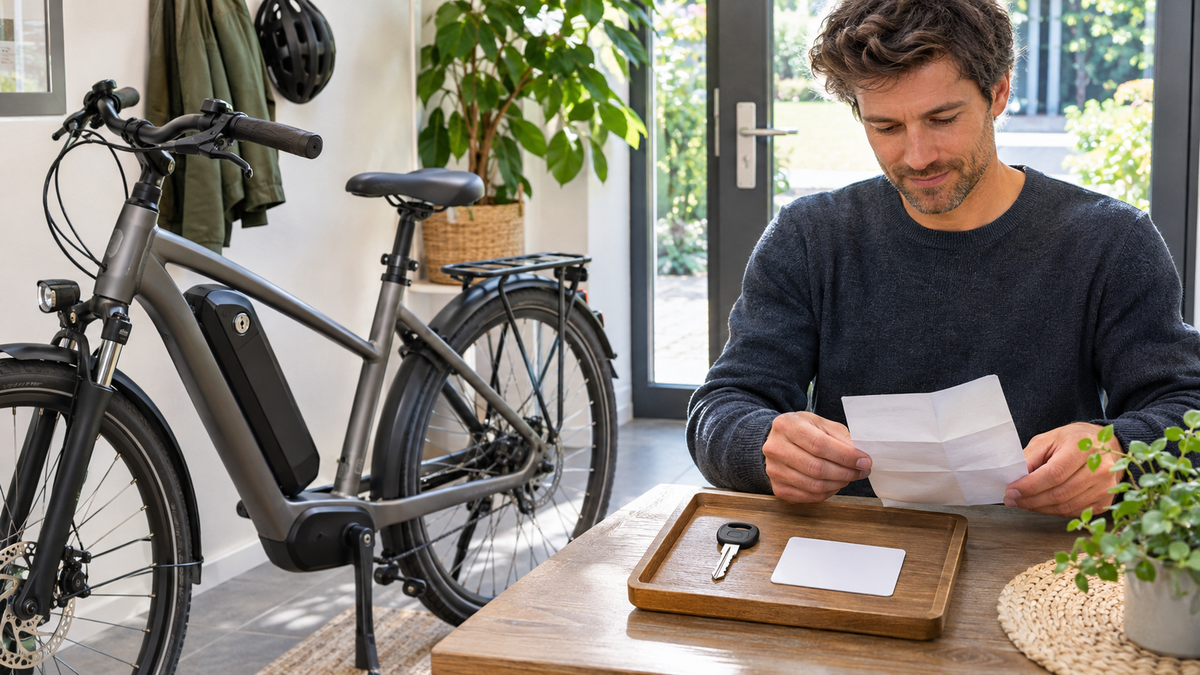
If you have lost your e-bike battery key, the next step should not be to force open the battery lock. First secure the bicycle and documents, look for a spare key, and identify the locking system actually installed. For many locks, a replacement key can only be made using a key number, code card, or existing sample key. The number on the lock is not automatically the key number you need. If both the key and code are missing, the manufacturer, dealer, or specialist workshop must assess the case based on proof of ownership, bicycle model, and lock. This procedure protects the battery, frame, lock, and your proof of ownership.
First steps after losing the key
Leave the e-bike in a safe place and secure it to a fixed object with a separate bicycle lock. Losing the battery key does not automatically mean that the entire bicycle is unsecured. Take your time to check whether the spare key is with the purchase documents, in the original packaging, or stored separately. Ask other authorized users, without sharing the key number publicly.
Do not try to open it with screwdrivers, drills, glue, wire, or a similar-looking key. Do not pull or pry at the battery either. This can damage the lock, battery housing, mount, contacts, or frame. A damaged lithium-ion battery must not be charged or used further.
- Secure the bicycle separately and document its location.
- Look for the spare key, code card, and proof of purchase.
- Do not post the key number or serial number publicly.
- Do not open, drill into, or force the battery or lock.
- If you suspect theft, reassess the security of the lock as well.
Clearly document the locking system and ownership
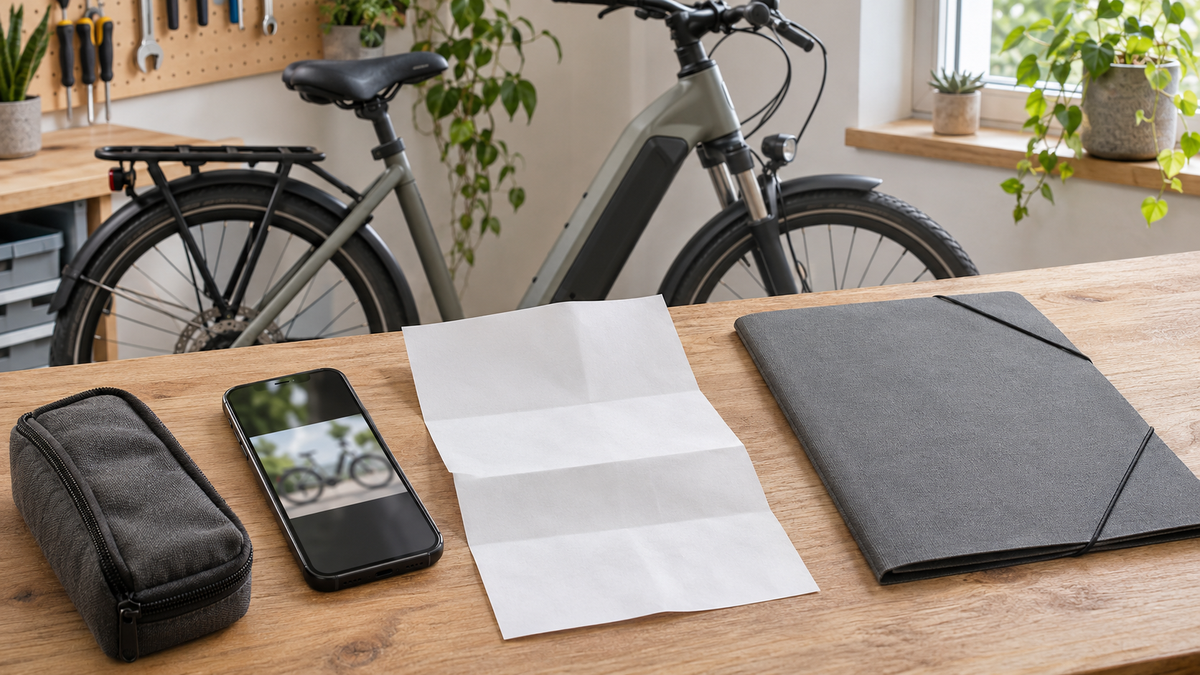
The bicycle manufacturer and the battery lock manufacturer may be different. Therefore, photograph the entire bicycle, the battery in its mount, the lock cylinder, and any visible brand or model information. Note the bicycle model, frame number, battery designation, purchase date, and order number. Have the receipt or purchase contract ready. For a used e-bike, a verifiable purchase contract and the seller’s contact details are especially important.
A number on the frame, battery, or lock housing is not automatically a key number. TRELOCK, for example, explicitly explains that the lock number cannot be used to order a replacement key because it is not linked to the key number. AXA also points out that its key service only works with the number on the bike key. Don’t apply these rules to another system; instead, use them as a reminder to first confirm which type of number you need.
Check the key number, code card, and registration
On some systems, the key number is on the original key; on others, it’s on an included code card. ABUS describes different code card formats for Plus and XPlus cylinders and offers an official key service for many bike and motorcycle locks. Registering in advance can secure the key number in case the card or key is lost later. This is an example for a specific system, not a general guarantee for every battery lock.
If you still have a spare key, don’t photograph its number together with your address, frame number, and bike location. From now on, store the code separately from the bike and your everyday key. Any digital record should be kept in a secure account or password manager, not in a publicly shared photo album.
Which option fits your situation?
| Situation | Next safe step | Don’t |
|---|---|---|
| Spare key and code available | Confirm the key type with official support or a dealer and order a replacement | Share the code publicly |
| Spare key available, code missing | Check the manufacturer’s process; some services read the number from a sample key | Use the number from another lock |
| All keys lost, code available | Contact the manufacturer or dealer with the code, lock model, and proof of ownership | Drill out the lock yourself |
| Key and code missing | Contact the bike manufacturer, lock support, or a specialist shop with proof of ownership | Order a universal replacement key |
| Key is suspected to have been stolen | Also seek professional advice about replacing the cylinder or lock, in addition to getting a replacement key | Order only a copy and ignore the security risk |
The table describes a decision-making process, not a guarantee that a replacement key can be made. ABUS lists a Code Card or an existing key as requirements for some of its systems. According to their current service pages, TRELOCK and AXA require the corresponding key number. Whether the cylinder installed on the e-bike is covered by one of these services must be checked against the actual lock.
Arrange a replacement through the manufacturer, dealer or support
Start with the manufacturer of the locking system if it is clearly identifiable and offers an official key service. Otherwise, contact the bicycle dealer or manufacturer. Send only the information needed for verification: bike model, lock manufacturer, photos, key or code number, and proof of ownership. Redact payment details that are not needed for an initial inquiry.
For a Cyseekin e-bike, the official service page recommends contacting Cyseekin Support first and not sending in parts without prior agreement. Provide the model, order number and battery condition. Support can then clarify whether a replacement key can be ordered, which lock or battery mount is installed, and whether a specialist workshop is needed. General instructions cannot replace identifying the specific model.
If the battery is locked and no key can be made, any further opening or replacement of the lock cylinder should be handled by authorized professionals. Ask for a written description of the work and find out which documents to bring. This helps you avoid an unnecessary trip and prove that the bike belongs to you.
Treat loss and theft differently
A key misplaced at home and a key stolen along with your address details are not the same situation. If the key is simply lost, a suitable replacement key may solve the access problem. If it is stolen, you also need to assess whether someone unknown can associate the key with the bike. In that case, having the cylinder or lock professionally replaced may be more appropriate than simply getting a copy made.
Document the date and circumstances. If you’ve also lost the bike’s papers, frame number or location information, take extra care to secure the bike and discuss what to do next with the dealer, manufacturer and, if appropriate, the police or your insurer. This article is not a substitute for individual legal or insurance advice.
Frequently asked questions about lost battery keys
Can I order a key using the number on the battery lock?
Not necessarily. Some manufacturers include the key number on the key or a code card. TRELOCK and AXA explicitly distinguish between key numbers and lock numbers. Check the process used by the actual lock manufacturer.
Can a regular locksmith help?
This depends on the cylinder, key type and manufacturer’s process. First, use the official key service or a specialist recommended by the manufacturer or dealer. Nobody should work on the battery lock without being able to identify it clearly and verify ownership.
What should I do if the battery is locked onto the bike?
Leave it in the holder and don’t try to pry it out. Secure the bike, gather your documents, and check with the manufacturer or a specialist workshop whether a replacement key or authorized lock replacement is possible.
Is a new key enough if the old one was stolen?
Not always. A replacement restores access, but it doesn’t remove the risk of a stolen key still being out there. Depending on whether the key can be linked to your bike and where you park it, consider having the cylinder or lock professionally replaced.
Conclusion: Keep the code safe, prove ownership, avoid force
If you’ve lost your e-bike battery key, the safest solution is to work through the locking system, key number and proof of ownership. Start by methodically looking for the spare key and code card, and take photos of the bike, battery and lock. Only then request a replacement from the relevant manufacturer, dealer or support team. If you don’t have any codes or the battery is locked in place, have an authorized professional handle the next steps. Drilling, prying or trying an unrelated key can turn a key problem into a battery, frame or security issue.
Share:
Bicycle First Aid Kit: Essentials for Everyday Use and Cycling Trips
Replacing an e-bike charger: Check compatibility before buying