

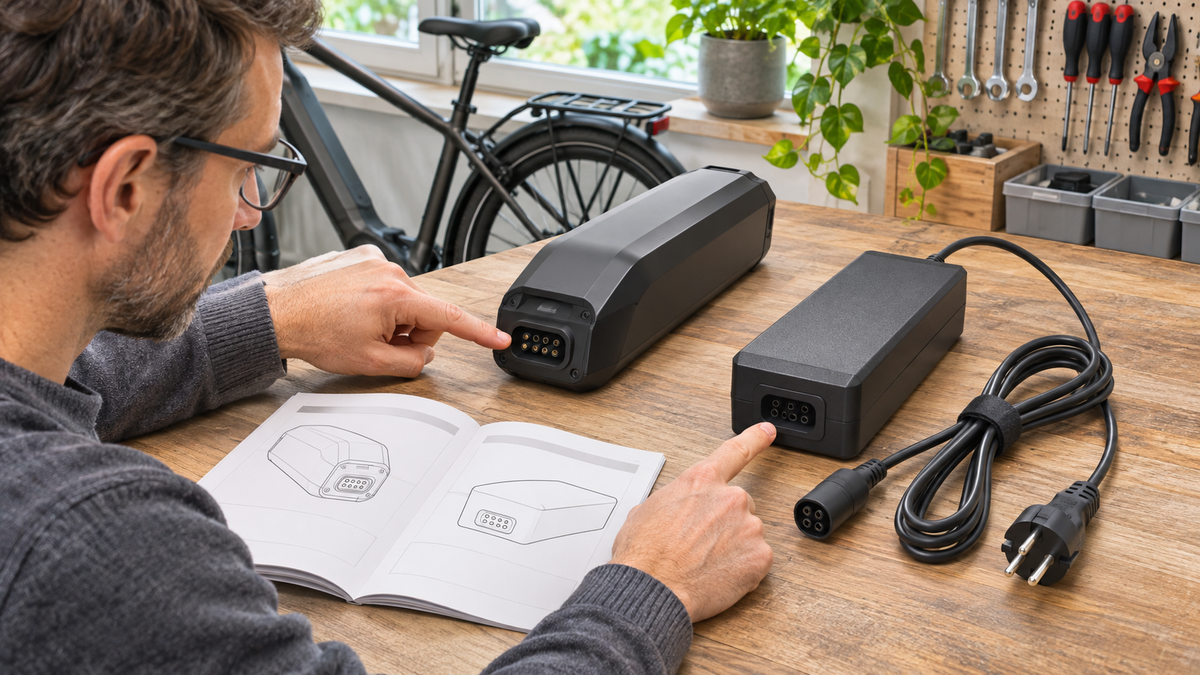
Replacing an e-bike charger involves more than finding a plug with the right shape. The battery, charger, and drive system form an approved combination. Incorrect output specifications, a different plug pinout, or charging electronics not designed for the system can lead to malfunctions, overheating, or damage. Therefore, do not buy based on a photo, plug shape, or general voltage specification. First document the bicycle, battery, and old charger, check the exact approval in the model documentation, and ask the manufacturer or dealer to confirm any unclear combination in writing. Until compatibility has been confirmed, do not test-charge the battery with a different device.
Why a matching plug does not prove compatibility
Two chargers may look similar on the outside and still be intended for different batteries or system generations. In addition to the mechanical fit, electrical output specifications, pinout, charging protocol, and the combination approved by the manufacturer all matter. Bosch notes that its chargers are matched to the respective Bosch eBike System; another charger can reduce service life or cause damage and malfunctions. SHIMANO likewise requires the charger combination intended for each battery in its system documentation.
The specification “36 V” or “48 V” in a listing is not enough either. It does not automatically describe the required charging voltage, permitted current, plug pinout, or system communication. Therefore, do not use adapters or modified plugs to create an apparent fit.
Document the bicycle, battery, and old charger before searching
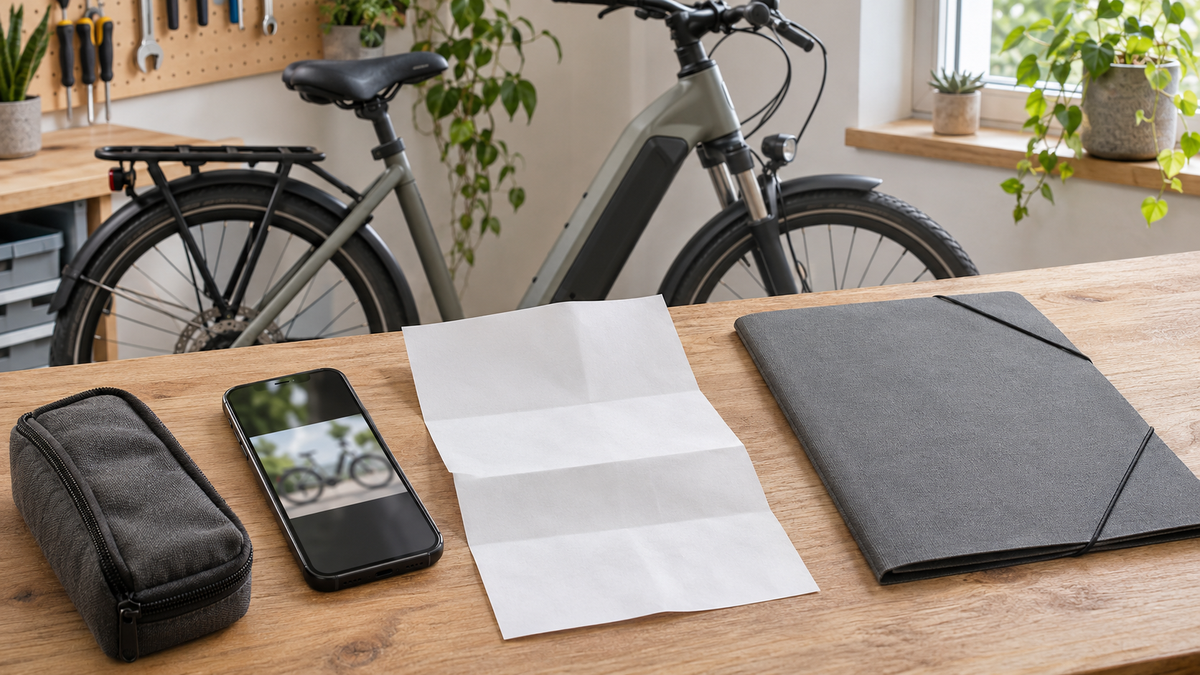
Create a brief record without opening any devices. Take photos of the bicycle’s nameplate, the battery designation, the charging port, and, if available, the complete nameplate of the old charger. Note the brand, model, year of manufacture or system generation, and the bicycle’s order number. Photos must be sharp enough for Support or the dealer to read the details; do not post serial or order numbers publicly online.
- Bicycle brand and exact model
- Battery model or part number
- System family or generation
- Model designation of the previous charger
- Shape and condition of the charging port and plug
- Country and mains connection where charging will take place
- Reason for replacement: lost, damaged, or showing technical issues
For a Cyseekin C10, S10, or C20, first select the specific model on the official manual page. The manual provided there and the actual nameplate on the bike take precedence. If the charger you have differs from these, send the documentation to Cyseekin Support before ordering a replacement.
These specifications must match before purchase
| Check | Where to check | Why is this important? |
|---|---|---|
| Approved battery | Battery and charger instructions | A charger is not automatically suitable for every battery of the same brand |
| System generation | Bicycle documentation and manufacturer overview | Plugs and electronics may differ between generations |
| Input voltage | Rating plate and instructions | The device must be compatible with the local power supply |
| Output specifications | Official approval, not just a retailer photo | Voltage and current must be suitable for the combination |
| Plug and pinout | Manufacturer documentation | The same shape does not mean the electrical connections are the same |
| Power cable and adapters | Package contents and instructions | Use only specified cables and adapters |
Do not compare the specifications in isolation. A device is a reliable choice only if it is listed in the current manufacturer documentation for the exact battery or system, or explicitly confirmed by the manufacturer. A CE mark, a high number of positive reviews, or the wording "universal" does not replace this approval.
How to choose a safe replacement
The easiest option is a new original charger with a clearly matching model or part number from a traceable source. If several original chargers have different charging currents, the manufacturer's overview must show which ones may be used with your battery. For example, Bosch lists chargers separately by system family; the product page makes clear that not all system generations use the same devices.
A replacement device explicitly approved by the bicycle or battery manufacturer may also be suitable. Keep the confirmation and receipt. With a used charger, it is harder to assess its origin, model, cable condition, and hidden damage. Do not buy a device with a cut-off rating plate, a cable that looks repaired, a loose plug, a damaged housing, or an unclear origin.
If the old charger merely shows technical issues, do not open or repair it yourself. SHIMANO warns against disassembling or modifying chargers. Do not use a damaged device until the dealer or manufacturer has provided information about repair, replacement, and disposal.
Prepare for the first charging session with care
Before connecting, check the model approval and the sequence in the specific instructions once again. There is no safe universal connection sequence for all e-bikes. Charge the battery in a dry, stable, non-flammable area, keep ventilation openings clear, and do not cover the charger or battery. Bosch recommends charging its systems in a dry location with a working smoke detector; depending on the instructions, SHIMANO also requires a dry, stable charging environment and the specified combination.
Monitor the plug, display, and surroundings during the first use. According to the relevant instructions, a slight rise in temperature may be normal; however, this does not establish a general temperature limit for other devices. If the display, charging time, or noise does not match the model instructions, stop charging. Repeatedly plugging and unplugging the device will not resolve unclear compatibility.
Stop immediately and contact support if you notice these signs
Do not use the charger if its casing, cable, or plug is damaged, wet, scorched, or loose. Stop charging if you notice smoke, sparks, a pungent smell, unusual noises, visible deformation, or unexpectedly high heat. Disconnect the power supply only if it is safe to do so, keep your distance, and follow local emergency guidance. Do not charge a lithium-ion battery again if it appears unusual or is damaged.
Clear details are all you need for a support request: bike model, battery and charger details, purchase source, photos of the rating labels, and a brief description of the problem. According to Cyseekin’s official service page, contact support first before sending in a part or commissioning a paid repair. Don’t send a charger to a workshop without prior notice.
Frequently asked questions about replacement chargers
Can I use a charger if the plug fits?
No. The plug shape confirms neither the output specifications nor the pinout, charging protocol, or system approval. Use only the combination listed in the model documentation or confirmed in writing.
Is a more powerful charger automatically faster and better?
No. A higher charging current may be used only if the manufacturer approves it for that specific battery and system. Otherwise, the combination has not been verified and must not be used.
Can I use an adapter between the charger and battery?
Only if that exact adapter is part of the current official approval. A generic plug adapter cannot make an incorrect electrical combination safe.
What should I do if the rating label or model number is missing?
Don’t order based on guesswork. Photograph the bike, battery, and connector, and ask the manufacturer, retailer, or specialist workshop to identify the system. A charging attempt is not a suitable way to identify it.
Bottom line: get approval before ordering
When replacing an e-bike charger, base your decision on the system: identify the bike and battery, document the old charger, check the manufacturer’s documentation, and get written confirmation if the combination is unclear. The next step is therefore to take complete photos of the rating labels - not to buy the first device with a matching plug. Use the replacement only once approval is clear, and stop the first charging cycle if anything differs from the instructions.
Share:
Bicycle First Aid Kit: Essentials for Everyday Use and Cycling Trips
Lost your e-bike battery key: How to safely arrange a replacement