

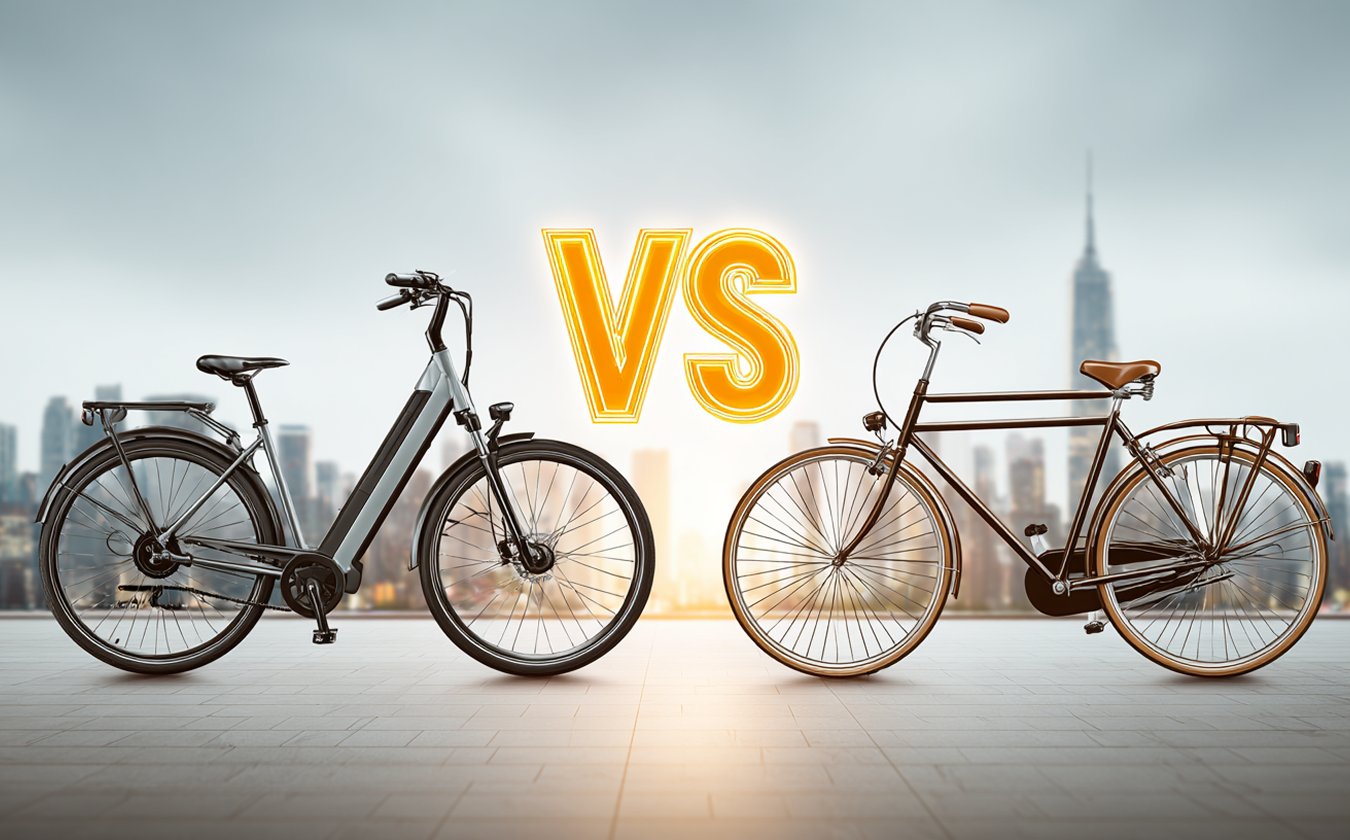
Perhaps you have also wondered: “Is it called an e-bike, a pedelec or an electric bicycle? And aren’t they all the same thing?”
The short answer: In everyday speech, yes; legally, no. What we call an “e-bike” in everyday life is almost always a “pedelec” in Germany. Sounds confusing? Don’t worry, we’ll shed some light on it – simply and clearly.
🚴♂️ What most people mean: the “pedelec”
When you buy a modern electric bicycle today, technically speaking, you are buying a pedelec (Pedal Electric Cycle).
-
How it works: The motor assists you only when you pedal. When you stop pedalling, the motor stops too.
-
The rules: Assistance is provided up to a maximum of 25 km/h, and the motor has a maximum output of 250 watts.
-
The advantage: Legally, it is considered a bicycle. This means:
-
✅ No driving licence required
-
✅ No insurance required (no plate)
-
✅ Cycle paths may be used
-
✅ No helmet requirement (but strongly recommended!)
-
Conclusion: When we refer to “e-bikes” on this website, we mean precisely these comfortable pedelecs for everyday use.
⚡ So what is a “real” e-bike?
Technically speaking, an e-bike is a two-wheeled vehicle that can also travel without pedalling – essentially using a throttle like a moped.
-
The difference: You press a button or twist the grip, and the bike moves on its own.
-
The rules: Since these bikes can travel without muscle power, they are classified as light motorcycles. They require an insurance plate and an operating licence.
-
Reality: These “real” e-bikes are very rare in Germany. However, the term has become established in everyday language: almost everyone says “e-bike” but means “pedelec”.
🚀 And what is an S-Pedelec?
For those in a hurry, there are also S-Pedelecs (speed pedelecs).
-
Speed: They assist your pedalling up to 45 km/h.
-
The catch: Strict rules apply here! You need a driving licence (class AM), a helmet, an insurance plate, and you may not ride on cycle paths.
Why a pedelec (colloquially “e-bike”) is the best choice
For 95% of all cyclists, the classic pedelec (25 km/h) is the perfect choice:
-
Effortless progress: Hills and headwinds lose their sting.
-
No paperwork: Just get on and ride—with no registration or insurance.
-
Healthy exercise: Since you still have to pedal (with assistance), you stay fit but arrive at the office without breaking a sweat.
💬 An everyday example
Take Thomas from Stuttgart. Stuttgart’s “Kessel” is notorious for its steep hills. Thomas used to arrive at the office completely sweaty or take the car out of frustration. Since getting a pedelec, he rides past the traffic jams. The motor gently pushes him up the incline, and he arrives fresh and relaxed. For him, it is pure freedom.
Conclusion
Don’t let the terminology confuse you.
-
In everyday language: We all say “e-bike.”
-
By law: We mostly ride “pedelecs.”
Whatever you call it, it is the smartest way to get around. Are you ready for your first test ride?
❓ FAQs (Frequently Asked Questions)
Do I need a driving licence for an e-bike? For a standard pedelec (assistance up to 25 km/h): No. For an S-pedelec (up to 45 km/h) or a “true” e-bike (rides without pedaling): Yes.
Can I ride without pedaling? With legal pedelecs in Germany: No. The motor only provides assistance when you pedal. Exception: There is a walk-assist function (a button on the handlebars) that propels the bike at up to 6 km/h, for example when you need to push it up a steep ramp.
Do I have to wear a helmet? In Germany, helmets are not mandatory for standard pedelecs (25 km/h), but we always recommend wearing one for your own safety!
Sources & Further Links (Sources & Further Links)
-
ADFC (German Cyclists’ Association). (2024). Pedelec, S-pedelec, e-bike: What is the difference?
-
Fines catalogue. (2025). Difference between e-bikes and pedelecs: Traffic rules.
-
ADAC. (2024, May). E-bikes: An overview of terms and regulations.
-
Link: https://www.adac.de/rund-ums-fahrzeug/zweirad/fahrrad-ebike-pedelec/kauf-beratung/e-bike-begriffe/
-
-
Verbraucherzentrale. (2024). Legal differences between electric bicycles.
Share:
E-Bike Buying Guide: 7 Mistakes to Avoid the First Time
Is an E-Bike Really Worth It? An Honest Cost-Benefit Check