

You see them everywhere: e-bikes on the way to work, in front of the supermarket, or out in nature on the weekend. Perhaps your neighbor has recently been passing you with a broad grin while you're stuck in traffic.
But is an investment of €2,000 or more really worthwhile? We put it to the test using typical everyday German situations.
1. The cost argument: Save on petrol & use JobRad
For example: Julia from Munich. Julia commutes 10 km to the office every day. Previously, she was stuck in traffic on the Mittlerer Ring and paid expensive parking fees.
-
The e-bike advantage:
-
Petrol: With current fuel prices, she saves approximately €100 per month.
-
Leasing (The Game Changer): Julia leased her e-bike through her employer ( company bike leasing ). Through salary sacrifice, she saves almost 35% compared to the purchase price.
-
-
Conclusion: Thanks to leasing and saved fuel, the bike almost pays for itself.
2. The "sweat-free" guarantee for commuters
The example: Thomas from Stuttgart. Thomas had always wanted to cycle to work, but Stuttgart is hilly ("The Basin"). Sitting in a meeting sweaty? Not an option.
-
The advantage of the e-bike: Thanks to the assistance ( turbo mode on hills ), Thomas arrives at the office relaxed and refreshed. On his way home, he reduces the assistance and does his workout.
-
Conclusion: Perfect for anyone who doesn't have a shower room in the office.
3. Mobility in old age: "I feel like I'm 30 again"
The example: Hans (68), a pensioner. Hans used to love cycling, but his knees couldn't handle the inclines anymore. The bicycle gathered dust in the cellar.
-
The advantage of e-bikes: With an e-bike, hills are no longer an obstacle. He rides to the café in the neighboring village every Sunday again and keeps fit in a gentle way.
-
Conclusion: An e-bike is often the key to staying mobile and independent in old age.
4. The time factor: Faster than the car
For example: city traffic in Berlin. During rush hour, the average speed of a car in Berlin is often below 20 km/h.
-
The advantage of an e-bike: You can bypass traffic jams on the bike path. No searching for parking (which often takes 10 minutes), no waiting at traffic lights behind trucks.
-
Conclusion: For distances up to 10 km, the e-bike is almost always the fastest means of transport in the city.
5. A contribution to the environment (transportation transition)
Every kilometer you travel by e-bike instead of by diesel saves CO₂ and reduces noise in our cities. It's your personal contribution to a greener future – and it's much more fun than taking the subway.
✅ The verdict: Is it worth it?
Absolutely. Especially in Germany, where gasoline is expensive , parking spaces are scarce , and leasing offers are attractive , an e-bike often pays for itself after just 1-2 years. It's not just a means of transportation, but an investment in your health and quality of life.
💬 FAQs (Frequently Asked Questions)
How much does a good e-bike cost? In Germany, you should expect to pay around €1,500 to €2,500 for a solid entry-level model with brand-name components. There's no upper limit, however.
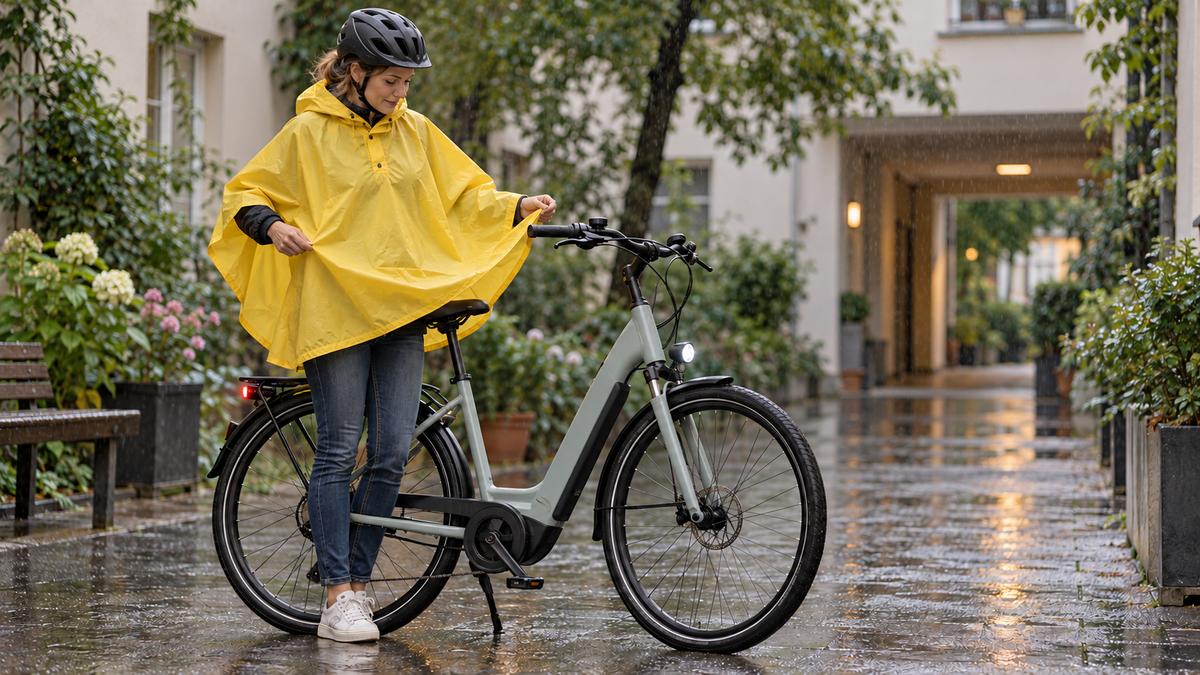
Can I ride in the rain? Yes! German e-bikes are weatherproof (IP certification). Good mudguards and a rain jacket are essential. Just avoid riding through deep puddles to protect the motor.
How often do I need to charge? That depends on your driving style. A modern 500 Wh battery usually lasts for 60 to 100 km . For most commuters, charging once or twice a week is sufficient.
Share:
E-Bike or Pedelec? The Small but Important Difference
Do I need a driver's license for my e-bike? The legal situation in Germany