

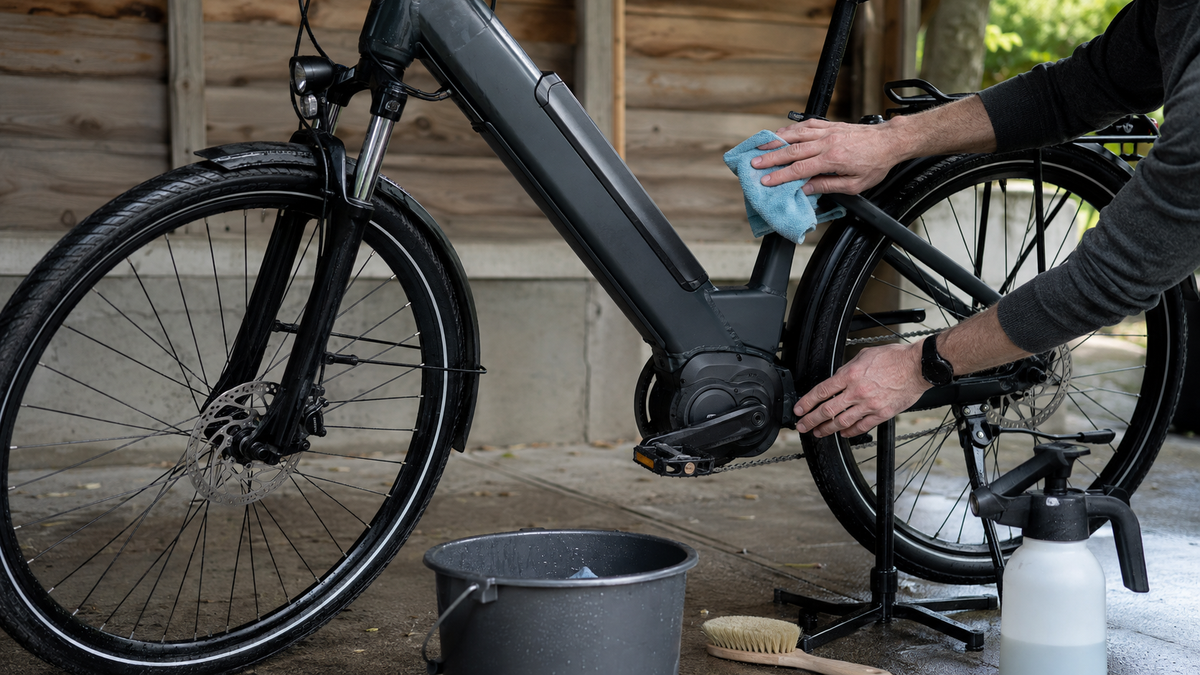
The safest way to clean an e-bike is with low water pressure, soft tools, and clearly separated work areas. Switch off the system, follow the instructions for removable electronics, and never direct a high-pressure or steam jet at the motor, battery mount, display, connectors, bearings, or seals. After cleaning, the bike must dry completely before reinstalling the electronics and performing a function check.
Tools for controlled cleaning
| You need | Suitable for | Important separation |
|---|---|---|
| Bucket of lukewarm water | Controlled wetting and rinsing | Do not use a pressure washer or steam cleaner |
| Soft sponge and soft frame brush | Frame, mudguards, and wheels | Do not use afterward on brake discs |
| Separate drivetrain brush and dark cloth | Chain, sprockets, and chainring | Keep strictly away from brakes and electronics |
| Bicycle-safe neutral cleaner | Loosening stubborn dirt | Check approval for the surface and component |
| Clean, dry cloths | Drying and visual inspection | One separate cloth each for the frame and sensitive areas |
| Operating manuals | Handle the battery, display, connections, and drive system correctly | Model-specific instructions take precedence over this procedure |
Before washing: switch off the system and read the manual
Place the e-bike securely, disconnect the charger, and switch the system off completely. Allow heavily heated components to cool down first. Check which components the manufacturer says should be removed for cleaning. Bosch recommends removing the battery and detachable display from its systems before cleaning and protecting permanently installed electronics from direct moisture. Do not apply this step blindly to integrated components: do not open or loosen anything that the instructions do not specify as removable by the user.

Check the battery housing, mount, cables, and connector areas for cracks, bent contacts, or corrosion. If you see any damage, battery fluid, an unusual smell, or error messages, stop. Do not touch damaged internal battery parts; contact a specialist retailer or the manufacturer.
Cleaning an e-bike: step by step
- Loosen heavy dirt while dry: Carefully remove loose soil with a soft brush. Soften dried mud with a little water instead of scrubbing it forcefully over paintwork, cables, or seals.
- Work from top to bottom: Wet the frame and non-critical surfaces with a sponge or a gentle, broad flow of water. The Canyon e-bike care guide warns against high pressure because water can damage bearings or wash grease out of contact points.
- Do not spray electronics directly: Clean the display, control unit, battery mount, charging port, motor area, and cable connections only as permitted by their instructions. No jet of water may be directed into gaps, seals, or plug contacts.
- Wash the frame and wheels: Use a mild, approved cleaner and the soft sponge. Avoid aggressive solvents on paint, plastic, seals, and the display. Do not allow the cleaner to dry; then remove it sparingly with clean water.
- Treat the drivetrain separately: Use a separate brush for the chain, sprockets, and chainring. Keep cleaner, oil, and dirty water away from brake discs, pads, and rim-brake surfaces. Turn the crank slowly by hand only when the system is switched off and with your fingers and clothing kept clear.
- Clean the brakes only with suitable products: Do not wipe brake discs with the greasy drivetrain cloth. Use only products approved by the brake manufacturer. If oil gets onto a pad or disc, this is not a normal cleaning step but a safety issue.
- Rinse with little water: Remove cleaner residue with a sponge or a gentle flow of water. A garden hose is not an invitation to spray bearings or electronics directly. The distance and the specific manufacturer's approval remain decisive.
- Dry completely: Dry the frame and accessible areas with clean cloths. Allow the battery mount, contacts, and hard-to-reach gaps to dry in a well-ventilated, sheltered place. Do not blow water deeper into seals using high air pressure.
- Maintain the chain as needed: If the chain was wet or degreased, lubricate it only after it has dried completely, using a suitable product. Wipe off any excess; keep lubricant away from all braking surfaces.
- Install electronics correctly: Only insert the battery and display once all relevant areas are dry and the instructions permit it. Check the lock, covers, and cables without bending contacts or treating them with contact spray.
Function check before the next ride
After reassembly, check while stationary that the battery is correctly locked, the display and buttons respond, and no error message appears. Also check the lights, tires, visible screws, and brakes. Test the brakes for the first time at low speed on a safe surface. If braking performance is reduced, anything starts rubbing, or the drive system operates irregularly, do not ride in traffic.
Cleaning is also a visual check, but not an inspection of the inside of the motor. Canyon’s pedelec manual also describes the risk of high-pressure water being forced past seals into the bearings. Bearings, the motor, and the battery housing should not be opened at home.
Common mistakes when washing an e-bike
- Directing a pressure washer or steam cleaner at the motor, bearings, hubs, headset, and electronics.
- Cleaning the bike with the electronics installed even though their instructions require removing them.
- Soaking electrical contacts, scraping them, greasing them, or treating them with untested contact spray.
- Using the same cloth for the oily drivetrain, brake disc, and frame.
- Spraying lubricant over the chain, drivetrain, and brake.
- Inserting the battery or starting the system while the battery compartment and contacts are still damp.
When should the workshop take over?
Stop DIY cleaning if the battery housing is damaged, contacts are corroded or bent, there is water in the display, an error message persists, or you can hear water in an enclosed component. Reduced braking performance, cracks in the frame, damaged seals, bearing noise, and unusual play should also be professionally inspected. Do not open the motor, battery, or sealed electronics.
Frequently asked questions
May I use a garden hose?
Only use a gentle, broad flow of water, and only if your system’s instructions allow it. Never spray from close range directly onto bearings, the motor, display, electrical contacts, or seals.
Which cleaner is suitable for an e-bike?
A mild, bicycle-safe cleaner approved for the affected surfaces. Aggressive solvents and unknown household remedies are not a safe shortcut for the display, seals, or paintwork.
What should I do if there is moisture in the battery compartment?
Do not insert the battery immediately. Carefully dry only accessible surfaces and let the area air out in a protected place. If moisture, corrosion, or an error message remains visible, contact a specialist dealer.
Share:
Headphones and smartphones while cycling: What is permitted
Oil your bicycle chain: apply precisely and protect the brakes