

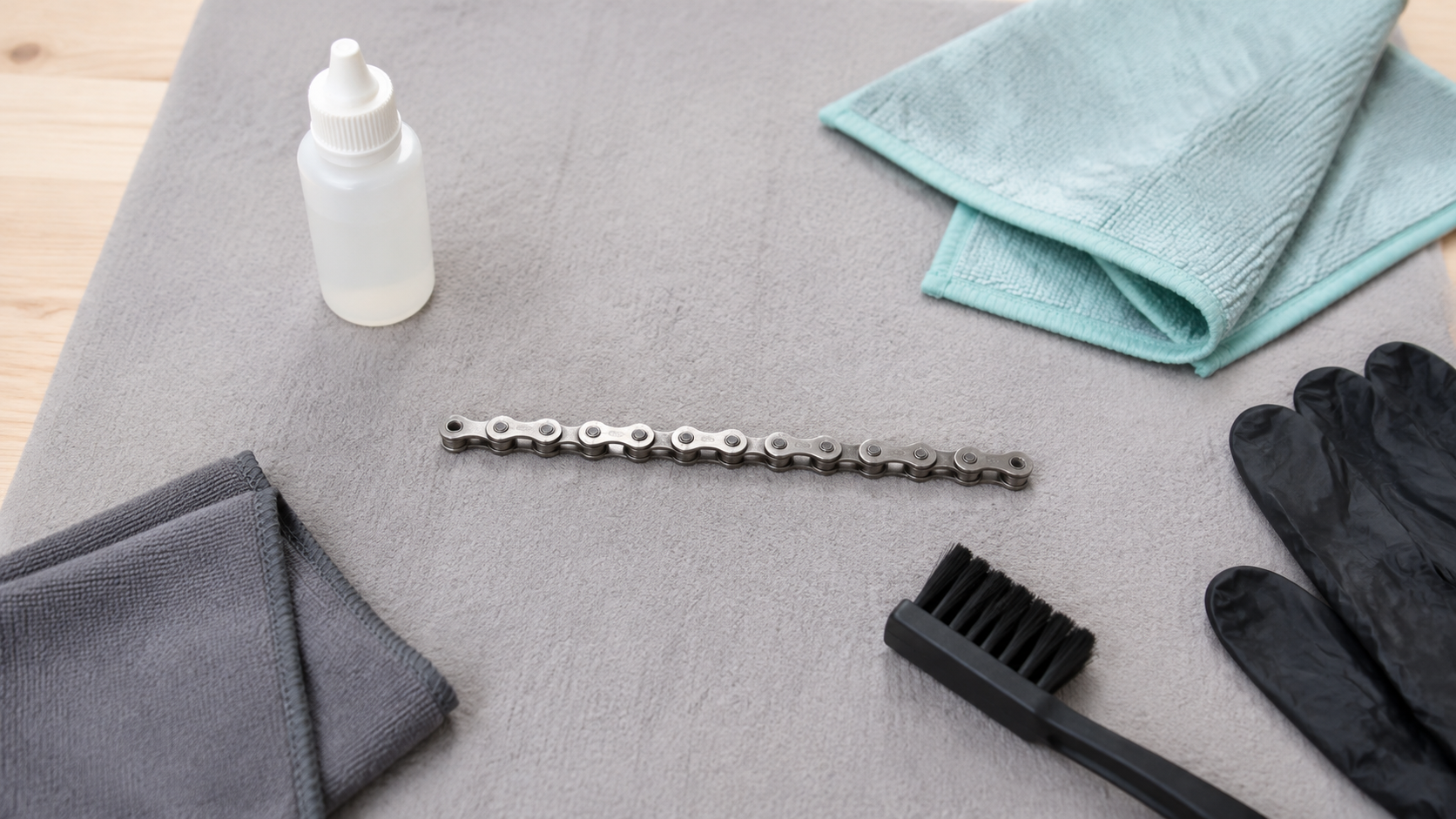
Oiling a bicycle chain correctly does not mean applying as much lubricant as possible. The chain must first be clean and dry. Then apply a small, controlled amount of bicycle-specific lubricant to the moving links or rollers; wipe off the excess from the outside. It is especially important that oil does not come into contact with brake discs, brake pads, or rim-brake surfaces.
Tools and care products
| You need | Task | Safety limit |
|---|---|---|
| Several clean, lint-free cloths | Remove coarse dirt, dry the chain, and wipe off excess | Never use cloths from the drivetrain on braking surfaces |
| Soft brush | Loosen stuck-on dirt | Keep fingers, sleeves, and brush away from the chainring and spokes |
| Neutral cleaner suitable for chains | Loosen the old layer of dirt | No aggressive acids or alkalis; follow the product instructions |
| Bicycle-specific chain lubricant | Lubricate the links and rollers | Choose a product suitable for the chain and weather conditions; no cooking oils |
| Protective mat and disposable gloves | Protect the floor and skin | Collect and dispose of used oil and cleaner in accordance with local regulations |
Check first: chain, belt, or wax?
These instructions apply to a conventional bicycle chain that, according to the manufacturer, is maintained with liquid chain lubricant. A toothed belt is not oiled. A waxed chain also requires its own cleaning and rewaxing process. If you do not know which system is installed, check the component designation or ask the workshop before applying any product.

Switch off the e-bike completely. Secure it so that it cannot tip over and the drive cannot start unintentionally. Turn the crank or rear wheel only slowly by hand and only when the bicycle is stable. Never reach into the sprockets, chainring, or derailleur while the chain is moving.
How to oil a bicycle chain: step by step
- Check the condition: Inspect the chain for cracks, bent links, heavy rust, and unusual jumping. According to the SHIMANO chain manual, deformation, cracks, or unwanted shifting should be referred to the place of purchase or a specialist workshop. Oil cannot repair mechanical damage.
- Shield the brakes: Use a controllable dropper bottle instead of uncontrolled spray mist. Cover the brake disc and brake caliper so that no maintenance fluid can reach them. The cover must not touch or get caught in the chain.
- Remove coarse dirt: Pull the stationary chain section by section through a dry cloth. For heavier dirt, use a neutral cleaner approved for the chain and a brush. SHIMANO names neutral cleaner followed by lubrication as a suitable procedure.
- Dry completely: Moisture dilutes the lubricant and can promote corrosion. Dry the chain, sprocket area, and chainring with a clean cloth and allow any remaining moisture to evaporate.
- Apply precisely: Apply the lubricant according to the product instructions to the inside of the lower section of the chain. Slowly turn the crank backward, provided the bicycle and its drivetrain allow this while switched off. Do not apply oil indiscriminately to the cassette, chainring, or derailleur pulleys.
- Allow it to penetrate: Follow the lubricant manufacturer's specified time. The ADFC recommends applying the oil to the joints, allowing it to penetrate for several hours or overnight, and then wiping it off thoroughly.
- Remove excess: Hold a clean cloth loosely around the chain and turn it slowly through. Only a very thin film should remain on the outside. Too much oil will attract dust and dirt again.
- Check the finish: Remove all covers. Make sure no liquid has reached the braking surfaces. First check the chain movement and shifting while stationary, then take a slow test ride away from traffic.
When does the chain need to be oiled again?
There is no weekly or mileage interval that applies to all bikes. Rain, dust, salt, cleaning, mileage, and the product used all affect the need. A dry or grinding chain, visibly dry joints, or thorough cleaning are reasons to check it. After salty slush, the ADFC recommends particularly frequent maintenance. This does not mean that you should blindly apply new oil to a dirty chain every day.
The goal is thin, clean lubrication. SHIMANO also summarizes the process as cleaning, applying a thin layer of oil, letting it soak in, and wiping it off. If the chain is already worn, skips under load, or individual links remain stiff, the cause must be identified first.
Mistakes you should avoid
- Keep applying oil to a dirty chain until a black paste forms.
- Spray lubricant while a brake disc or rim-brake surface is exposed nearby.
- Work on the chain, cassette, and brakes with the same dirty cloth.
- Use acidic rust removers, aggressive household cleaners, or cooking oil.
- Oil a toothed belt or mix liquid oil with a wax-based system.
- Work on the chain or put your fingers near moving gears while the e-bike is switched on.
If oil gets on the brake
Do not operate or put further pressure on the brake, so you do not spread the contamination. Do not ride off if the braking performance, noise, or pad condition is unclear. Bosch expressly points out that disc brakes are sensitive to grease and liquids. Follow the brake instructions or have the disc and pads professionally inspected. Contaminated pads cannot automatically be saved by wiping them off.
Frequently asked questions
Can I use universal oil or cooking oil?
No. Use a product approved for bicycle chains and your maintenance system. Household and cooking oils are not a controlled substitute and can attract dirt or leave unsuitable residues.
How much chain oil is the right amount?
Use as little as necessary, applying it specifically to each moving area and according to the product instructions. The key is to wipe off the excess on the outside after allowing it to soak in.
Does oiling help with a skipping chain?
Not reliably. Skipping can indicate wear, a stiff link, or an incorrect adjustment. End the test ride and have the drivetrain inspected if the problem persists.

Share:
Headphones and smartphones while cycling: What is permitted
Cleaning an E-Bike: Protecting the Electronics, Bearings, and Brakes