


For a typical pedelec, 25 km/h is not the maximum permitted riding speed, but the legal limit for motor assistance. You may ride faster using your own muscle power. However, if the control system is modified so that the motor continues to provide assistance above this limit or other statutory characteristics are no longer met, the bicycle is no longer an ordinary bicycle under traffic law. A seemingly minor modification can therefore affect the operating permit, insurance, driving licence, and the areas where the vehicle may legally be used.
Why 25 km/h is legally decisive
Section 1 (3) of the German Road Traffic Act describes the conditions under which a bicycle assisted by an electric motor is not considered a motor vehicle. The rated continuous power of the auxiliary drive may not exceed 0.25 kW. Assistance must decrease progressively as speed increases and must stop no later than at 25 km/h and when pedaling ends. A starting or walking assist function up to 6 km/h does not change this bicycle status.
The 25 km/h limit therefore applies to assistance, not to the speedometer as a general speed limit. An unmodified pedelec can roll faster downhill or through vigorous pedaling. Naturally, local speed signs, the duty to adjust your speed, and all other traffic rules still apply.
What constitutes e-bike tuning
In everyday use, “e-bike tuning” refers to modifications that alter the intended drive control. This particularly includes modifications after which the motor continues to provide assistance above 25 km/h, the assistance no longer decreases as intended, or the drive operates without the required pedaling motion. Whether the modification is made via an additional component, sensors, or software does not change the decisive effect.
This article deliberately does not provide any installation, programming, or circumvention instructions. The legal classification depends on the outcome of the modification and the approval of the complete vehicle. An accessory, smartphone app, or the mere technical possibility alone does not prove that operation in public traffic is permitted.
A bicycle can become a motor vehicle
If the vehicle no longer meets the pedelec criteria after the modification, it loses its statutory equal treatment with bicycles. The ADAC classifies a pedelec modified beyond 25 km/h assistance as a motor vehicle and identifies classification as a moped as one possible consequence. However, the vehicle class in the specific case must be determined based on the technical data and a valid approval.
A tuned pedelec does not automatically become a legal S-pedelec. A factory-approved S-pedelec is designed and approved as a complete vehicle for its class. A subsequent modification does not replace this approval, even if its speed or riding feel resembles that of an S-pedelec. The braking system, lighting, tyres, frame, electromagnetic compatibility and other requirements form part of the overall assessment.
What consequences are possible on public roads?
| Area | Standard pedelec 25 | Modified vehicle without pedelec status |
|---|---|---|
| Vehicle status | Treated like a bicycle if the criteria are met | May become a motor vehicle; the exact class must be clarified |
| Approval | No motor vehicle approval required solely because of the pedelec drive system | A valid operating permit or individual approval for the applicable vehicle class is required for public-road use |
| Insurance | No compulsory motor vehicle insurance if bicycle status is retained | Motor vehicle liability insurance for the applicable vehicle class is required for public-road use |
| Driving licence and helmet | No motor vehicle driving licence; wearing a bicycle helmet is strongly recommended | Requirements depend on the vehicle’s actual classification |
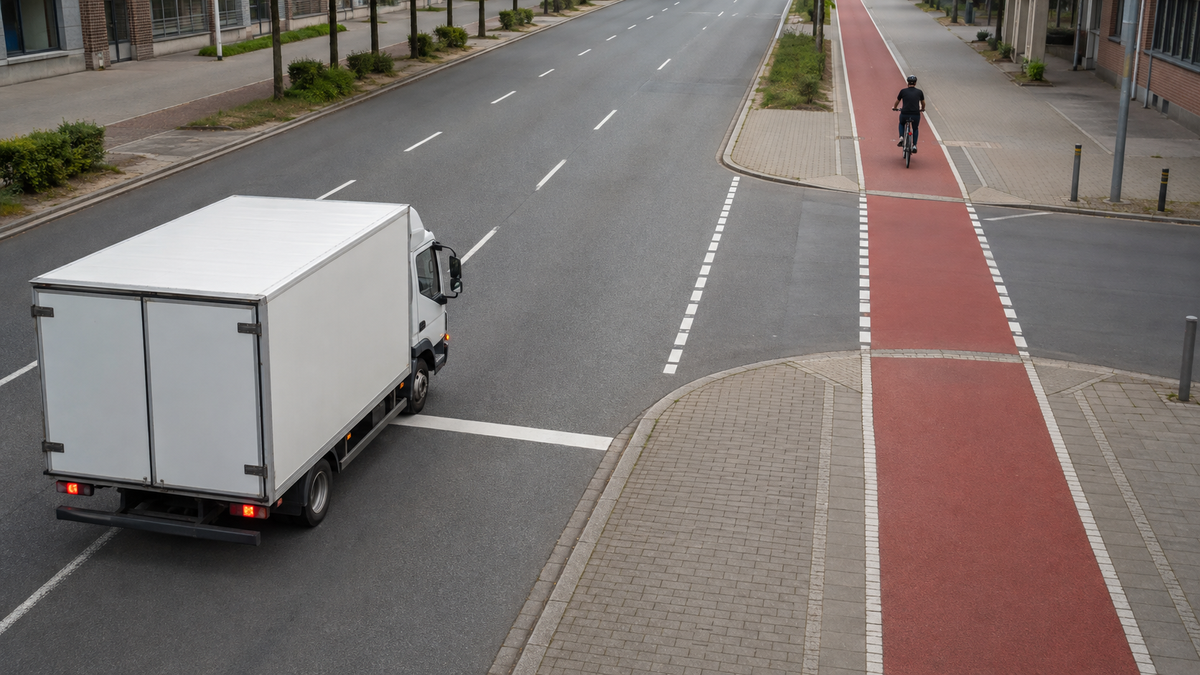
| Traffic area | Bicycle rules and signed cycle paths apply | As a rule, cycle paths may not be used by a moped in the same way as by a bicycle |
If a modified pedelec no longer falls under Section 1(3) of the German Road Traffic Act (StVG), the required approval for operation as a motor vehicle is generally missing. Section 19 of the German Road Traffic Licensing Regulations (StVZO) also describes when an operating permit that has already been issued expires following modifications, for example if the approved vehicle type changes or road users can be expected to face a hazard. Without the approval required for the specific vehicle, it may not be operated on public roads.
There may also be violations due to the absence of compulsory insurance or a driving licence. The Compulsory Insurance Act prohibits using a vehicle subject to compulsory insurance without the required third-party liability insurance. Depending on the individual case, not only warnings or fines but also criminal proceedings may be possible. There is therefore no fixed “e-bike tuning penalty”: the vehicle class, use, approval, insurance, driving licence, and the consequences of an incident determine the risk.
Private property is not automatically a law-free zone
A supermarket parking lot, an openly accessible company premises, or a private driveway may constitute public traffic space despite being privately owned if an unspecified group of people is actually allowed to use it. “Only on private property” is therefore not a reliable shortcut. The Compulsory Insurance Act expressly distinguishes between public roads and an enclosed or otherwise access-restricted area.
Anyone considering a technical modification exclusively outside public traffic must clarify in advance the owner's consent, access restrictions, insurance, and the site's safety rules. Liability and accident risks still exist there as well. To transport the modified vehicle to the site, it must not be ridden unchecked on public roads.
Technical risks involve more than just the motor
More assistance at higher speeds puts greater strain on the overall system. Stopping distances and impact energy increase, while the tires, brakes, frame, and drivetrain may still correspond to the original design. The ADFC warns of safety risks associated with drive-system modifications that are not properly coordinated. Software errors, incorrect speed displays, or unpredictable shutdowns can also make it more difficult to maintain control.

Warranty and statutory liability for defects are separate matters. A modification does not automatically void every statutory claim, but it may jeopardize claims for damage related to the modification. Manufacturer and insurance terms must be assessed on a case-by-case basis. Concealing a modification before sale is not a safe solution; modifications and known consequential damage should be fully disclosed.
Legal ways to improve your riding experience
- Have the tire pressure, brakes, bearings, chain or belt, and gears professionally inspected.
- Use the provided assistance levels and an appropriate gear ratio.
- Above 25 km/h, ride using your own power, provided that the route, traffic rules, and your abilities allow it.
- If you are short on time, plan a safe route instead of increasing motor assistance.
- If a higher assistance speed is needed permanently, consider a mass-produced, approved vehicle in the appropriate class, along with the related driving licence, helmet, insurance, and road-use requirements.
Before making any performance-related modification, ask the manufacturer and a recognized testing organization whether it can be approved for the specific complete vehicle. Information obtained before the modification is more meaningful than attempting to legalize a vehicle that has already been modified.
Frequently asked questions
Is it prohibited to ride a pedelec faster than 25 km/h?
No. The statutory limit applies to motor assistance. The bike may travel faster using muscle power or downhill, provided there is no local speed limit or the traffic situation does not require a lower speed.
Does a tuned pedelec automatically become a legal S-pedelec?
No. Technical similarity does not replace type approval or individual approval of the complete vehicle. The actual vehicle class and all associated requirements must be clarified.
Can e-bike tuning result in loss of insurance coverage?
It may require mandatory motor vehicle liability insurance and violate existing contractual terms. After an accident, disputes over coverage, recourse claims, or your own claims for damages may arise. Clarify the specific coverage in writing with your insurer.
What should I do with a used bike that may have been modified?
Do not use it in public traffic until the matter has been clarified. Have the software version, sensors, components, and vehicle documents inspected and documented by the manufacturer, a specialist workshop, or a testing organization.
Share:
Headphones and smartphones while cycling: What is permitted
Oil your bicycle chain: apply precisely and protect the brakes