


You don’t automatically need a complete sports outfit to cycle to work. What matters is whether you can move freely in your clothes and have a suitable opportunity to change at work. So plan your journey and workday first, and your clothing second.
Which solution suits your commute?
- Ride directly in everyday clothes: sensible if you can ride the route at a relaxed pace and your clothes neither restrict nor chafe. Check this while sitting and pedaling, not just in front of the mirror.
- Change individual items: A fresh top and a different pair of shoes may be enough if your trousers and the rest of your clothing work for both the journey and the office.
- Change completely: practical for more strenuous routes or when formal workwear is required. Check in advance where you can change and let your used clothes dry.
The ADFC does not consider special cycling clothing a prerequisite for short everyday journeys. On longer rides, technical clothing and somewhere to change can be helpful. A fixed kilometer limit is not very useful for making your decision: hills, speed, weather, and your personal sensitivity to heat vary.
Start with layers in the morning instead of dressing too warmly
Choose a combination you can adjust along the way: a comfortable top, a warm layer if needed, and an outer layer against wind or rain. The ADFC describes this layering principle as a way to regulate your temperature during the ride.
A closed, waterproof jacket can trap heat. Don’t put on everything in your wardrobe underneath it just in case. Check how warm you feel after the first few minutes and use any available ventilation. Stop in a safe place to remove or stow a layer.
Technical fabric can wick moisture away from your skin. However, it cannot prevent you from sweating. Even with electric assistance, there is no guarantee that your shirt will stay dry. Allowing some extra time means you can ride without rushing and arrive before your first appointment.
Shoes, trouser legs, and loose ends
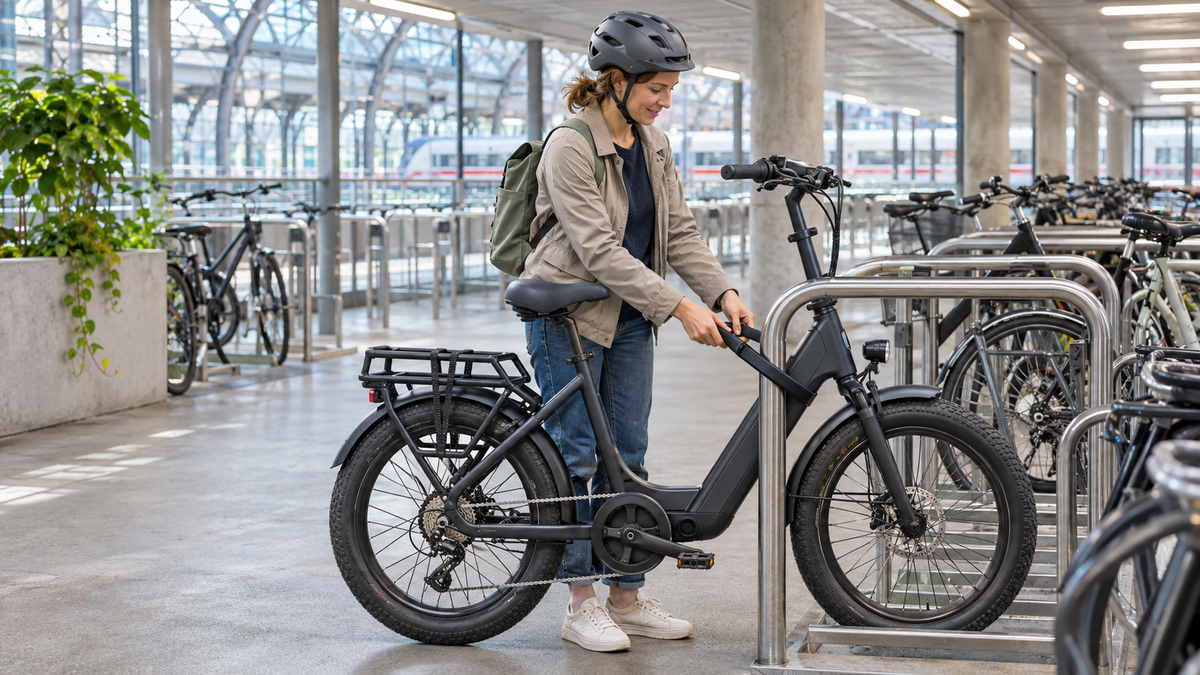
Your shoes should provide a secure grip on the pedals. If you need different shoes at work, take them with you separately or store them there. Check whether trouser legs, scarves, cords, or shoelaces could come close to moving bicycle parts. Secure any loose ends before setting off. Gazelle’s safety instructions also mention non-slip soles and clothing that cannot get caught in rotating parts.
In winter, suitable gloves and a thin, appropriate hat can complement your layers. Additional clothing under a helmet must not affect its secure fit. Also test whether you can operate the brakes and gears reliably while wearing your gloves.

A simple plan for the workplace
Ask about a dry place for spare clothes, a locker, and somewhere to change. The AOK lists changing facilities as practical support for people who cycle to work. A shower is helpful, but you don’t have to make your first relaxed test ride dependent on having one.
Pack what you need for that particular workday the evening before. Keep dry and already worn clothes separate. Don’t only check the morning temperature: the forecast for your journey home may include wind, rain, or a significantly different temperature.
Frequently asked questions
Can I cycle to work in jeans?
Yes, as long as they don’t restrict your movement and the seams don’t chafe. A short test ride tells you more than the label. If you experience discomfort, another item of clothing is a better choice than simply pushing through.
What can I do without a shower at the office?
Start at a relaxed pace, allow enough time to arrive, and take a change of top with you if needed. You can only determine how much spare clothing you need after assessing your actual commute.
Do I need to buy everything new for winter?
Not necessarily. First check the layers, gloves, and rain protection you already have. Add only what you are missing for the journey instead of following a blanket temperature-based packing list.
You can find more everyday topics about cycling to work on the Cyseekin E-Bike Blog.
Share:
Lake Constance–Königssee Cycle Route in 7 Days: From Lindau to Schönau
Adjust your bike helmet correctly: How to check the fit