

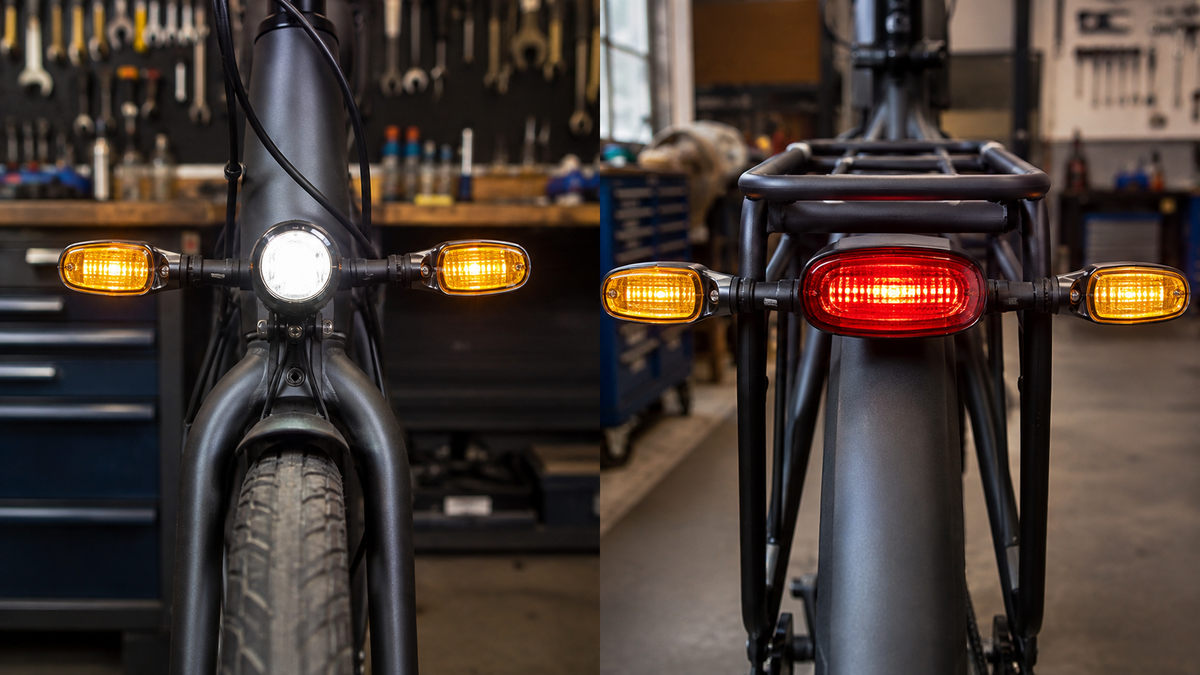
In Germany, bicycle turn signals may now also be used on ordinary single-track bicycles and pedelecs. However, what matters is not the word “StVZO” in a product title. Section 67 of the StVZO specifies concrete approval, installation, and operation requirements. Anyone wishing to retrofit a set should therefore check the documentation first and then the bicycle.
What Section 67 of the StVZO Actually Permits
Under Section 67 (5) of the StVZO, direction indicators operating toward the front and rear are permissible. The lights must be approved in accordance with UN Regulation No. 50 or No. 148. Installation is governed by UN Regulation No. 74, while the arrangement of the controls is governed by UN Regulation No. 60. This is more than a general statement such as “suitable for bicycles.”
For purchasing purposes, this means: Ask to see the specific approval and clear installation instructions. If this information is missing, it remains unclear whether only the individual light housing or the complete system has been documented for the intended use. A CE mark alone does not answer this question.
A Flashing Light Is Not Automatically a Direction Indicator
The StVZO distinguishes between these functions. Flashing white headlights and flashing red rear lights remain prohibited. An approved direction indicator that signals a change of direction with a yellow flashing light may, however, be permissible. The bicycle’s steady light remains a separate function.
Section 67 also requires lighting equipment to be securely mounted, protected against unintentional adjustment, ready for use, and unobstructed. Its effectiveness must not be mutually impaired. Direction indicators must not be assembled or combined with other lights. A decorative flashing function in a rear light is therefore not automatically a legal turn signal.
Think of the Front and Rear as a Complete System
The legislation refers to direction indicators operating toward the front and rear. A single light on the saddle or just two handlebar-end lights should therefore not be treated as a complete solution without appropriate documentation. Check which units belong to the approved system and whether they remain visible from the relevant viewing directions.
Panniers, baskets, child or cargo carriers, and riding posture can obstruct the lights. Load the bicycle as you actually ride it and view it from several metres away from the front, rear, and at an angle. The left and right indicators must be clearly distinguishable. Mounting them too close together or at an angle can make the signal unclear despite bright LEDs.
Operation Without Losing Control
The switch must be positioned where it can be reached as specified, without having to release the grip unsafely or look down for an extended period. The left and right indicators must be clearly operable. Clear feedback is useful so that an accidentally activated signal is noticed after turning. Whether automatic shutoff is available depends on the specific product.

With a wired system, route the cables so that they do not become taut or kink when steering, or come into contact with the tyres or brakes. Wireless solutions require a reliable connection and a charge level that can be checked before riding. On a pedelec, an electrical connection to the onboard power supply may only be made if the manufacturer and system documentation permit this combination. Improvised wiring can impair the lighting or drive electronics.
Turn Signals Do Not Change Your Duty to Look and Wait
Under Section 9 (1) of the StVO, a turning manoeuvre must be signalled in good time and clearly. A turn signal does not make checking over your shoulder, positioning yourself correctly, or paying attention to oncoming traffic and pedestrians unnecessary. The light signals an intention; it does not create right of way.
Do not assume that everyone will immediately recognise the small signal. Before manoeuvring, check whether your intention has been understood and reduce your speed if in doubt. If the indicator has failed, is obstructed, or is difficult to see in bright sunlight, give a clear hand signal if this can be done safely. If you cannot control the bicycle while doing so, stop in a suitable place and resolve the problem before continuing.
The Function Check Before Every Ride
- The left and right indicators respond to the correct switch.
- All intended front and rear units are flashing.
- The headlight and rear light continue to operate as steady lights.
- The lights are securely mounted and are not obstructed by luggage or clothing.
- Cables, brackets, and batteries are undamaged; wireless connections are stable.
- The indicators can be switched off safely after turning.
This brief test should be part of your departure routine, especially after transport, rain, charging, or modifications. If the system has failed, it is not a reliable direction indicator. Repair or replace it according to the manufacturer’s instructions instead of continuing to use only the supposedly brightest component.
Plan for Rain, Cold, and Transport
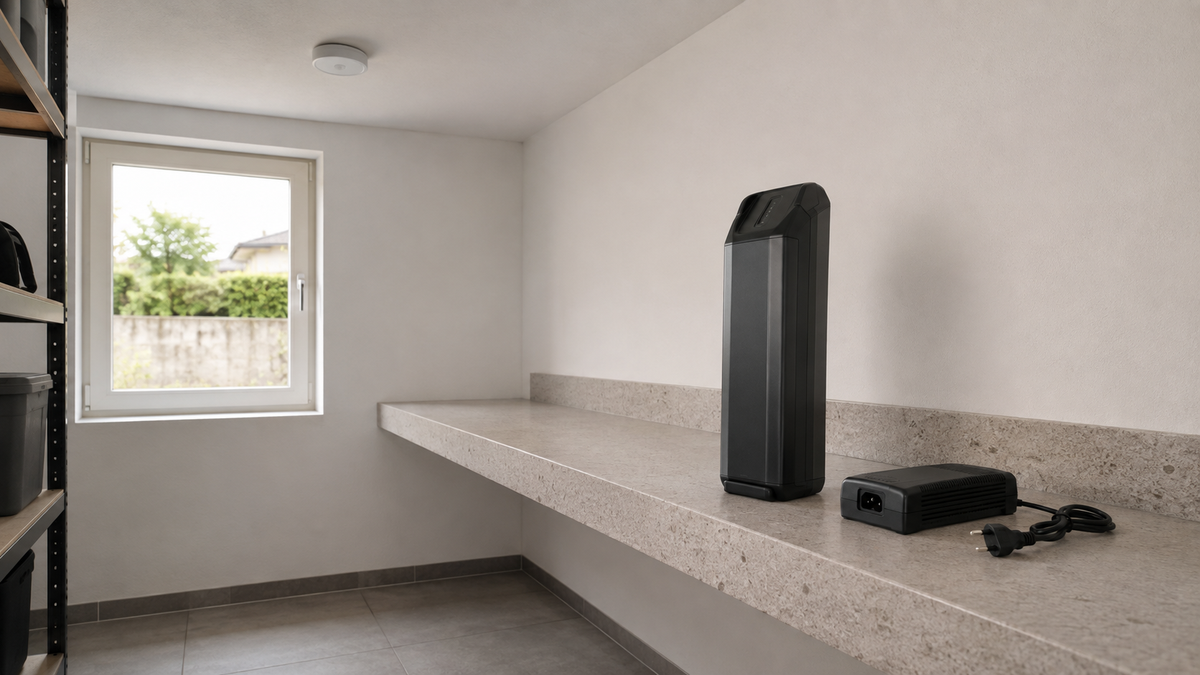
Approval for road use does not automatically indicate how a set will respond to pressure washers, extended storage, or a particular winter temperature. Follow the manufacturer’s protection and temperature specifications. After heavy rain, inspect seals and plug connections only from the outside; do not open the housing. Removable components must be dry and within the permitted temperature range before charging.
Brackets can twist on a rear carrier or in a train compartment. Remove detachable parts only as specified in the instructions, and check their alignment and function again after every transport. If a fall has affected the light, handlebar, or wiring, a brief flash is not sufficient proof of safety. Damaged mounts or housings must be professionally inspected before the next ride.
Retrofitting in Six Steps
- Check the approval and installation documents for the complete set.
- Measure the space required, sightlines, steering movement, and existing lighting.
- Clarify the power supply and compatibility with the bicycle.
- Attach all brackets exactly as instructed; keep friction surfaces and moving parts clear.
- Test the function first while stationary and then in an area free of traffic.
- Check again with a full everyday load to ensure nothing is obstructed or displaced.
If you do not have the tools needed for electrical work, torque settings, or safe cable routing, have a specialist workshop carry out the installation. This is particularly important with permanently integrated pedelec electronics. Proper installation protects not only the new set but also the steering, brakes, and existing lighting system.
Frequently Asked Questions
Are bicycle turn signals approved under the StVZO?
Yes, if the approval, installation, and operation meet the UN regulations specified in Section 67 of the StVZO. A simple advertising claim without the relevant documentation is not sufficient for verification.
May I install only two turn signals at the rear?
Section 67 describes direction indicators operating toward the front and rear. Therefore, only purchase and install a solution documented as a complete system, and follow its installation instructions.
Does a turn signal always replace a hand signal?
What matters is that your intention is recognisable in good time and clearly, and that you remain in control of the bicycle. Checking over your shoulder, positioning yourself correctly, and observing your duty to wait remain necessary regardless of the signal.
May my regular rear light flash?
No. Section 67 prohibits flashing rear lights and headlights. An approved direction indicator is a separate function distinct from these lights.
As of: 6 September 2026. The current wording of the StVZO and StVO, as well as the approval and installation documents for the system used, are authoritative.


Share:
Riding a bicycle without using your hands: What Section 23 of the German Road Traffic Regulations prohibits
Bicycle trailer lighting: rear light and reflectors in accordance with the German Road Traffic Licensing Regulations (StVZO)