

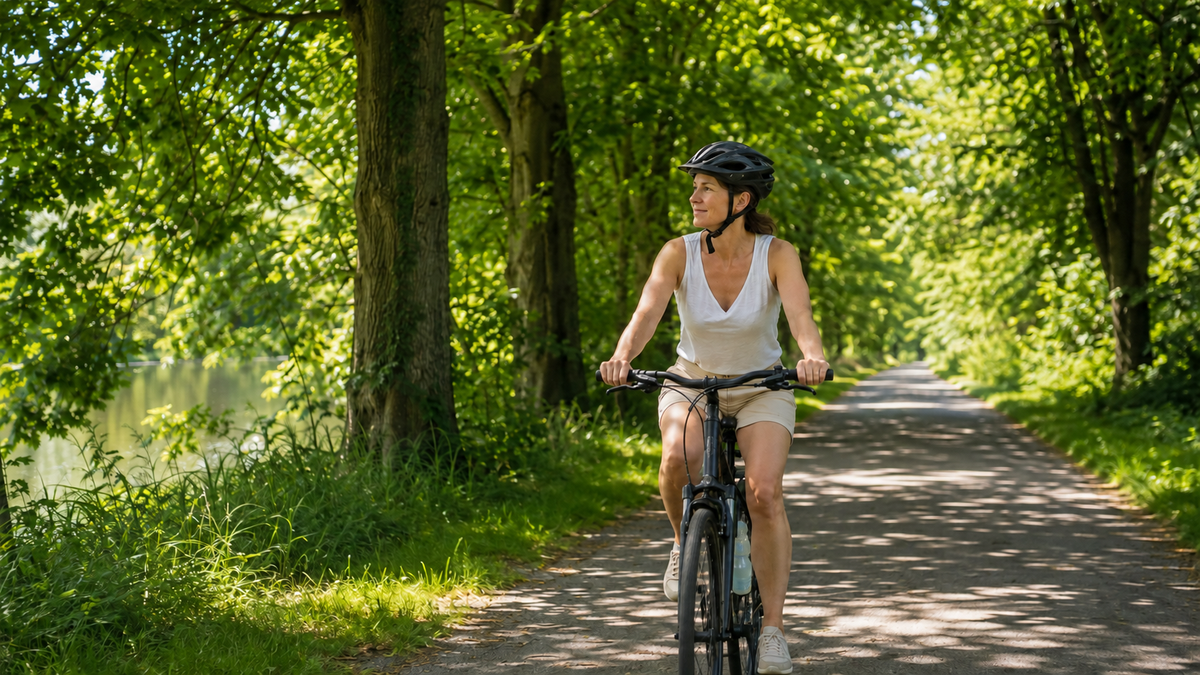
A blue sky does not make a bike ride harmless. In hot weather, working muscles produce additional heat while the body tries to release it through the skin and sweat. That is why a safe ride does not start with the question of your usual pace, but with the warning level, time of day, route and your willingness to turn back early.
Before setting off: check the heat load, not just the air temperature
First check the weather forecast and official heat warning for your starting point, route and return journey. The German Weather Service publishes information at hitzewarnungen.de. A warning is not a sports limit, but a signal to postpone the ride, shorten it significantly or skip it altogether.
In addition to temperature, direct sunlight, high humidity, a lack of wind, heated asphalt and the duration of exertion all matter. Even a cool morning departure can turn into a hot ride home. So check the hourly progression, not just the maximum temperature. If you have slept poorly, are ill or already feel unwell, do not set off on a strenuous ride.
The best time is often earlier—not faster
The Federal Institute for Public Health recommends adapting physical activity to the development of the heat, reducing duration and intensity, and using cooler morning or late evening hours. The highest temperatures of the day are often reached in the late afternoon. An early ride with a fixed end time is therefore usually easier to plan than a long tour with an open-ended return journey.
Set a cut-off time before you start. If it gets hot earlier than expected, the exertion feels unusually high or the expected cooling does not occur, turn back sooner. Postponing a workout does not mean losing a training day. The purpose of planning is to prevent overexertion, not to save the original number of kilometres at all costs.
A heat-friendly route has exit options
- Prefer shaded paths, parks, wooded sections and routes near water.
- Avoid long exposed climbs, large asphalt areas and heat-trapping urban canyons.
- Plan safe shaded places and reliable opportunities to refill your water.
- Choose loops or routes with rail connections so you can end the ride early.
- Tell someone who can be reached where you are going and when you expect to return, especially when riding alone.
The Federal Office of Civil Protection and Disaster Assistance advises scheduling physical activity, wherever possible, for the early morning or late evening and avoiding the blazing sun. For a bike ride, this means that shade is part of route quality. In hot weather, a shorter green route may be more sensible than a direct but sunny connection.
Adjust your pace according to how you feel
Start much more gently than you would on a moderate day. Avoid sprints, hard intervals and forcing a target average speed. Use easy gears and maintain a steady cadence. On a pedelec, assistance can reduce muscle effort; however, it does not eliminate heat stress and is no substitute for breaks or a shorter route.
Ride at a pace that still allows you to stay oriented, talk and make sound decisions. If a normally easy incline suddenly feels unusually difficult, your pulse feels noticeably high or your concentration drops, reduce your effort. Do not compare yourself with other riders: acclimatization, fitness, health and how you feel that day vary.
Drink without relying on a rigid litre formula
Take enough to drink with you and start early with small, regular sips instead of waiting until you are very thirsty. Actual requirements vary depending on your body, exertion, duration, humidity, diet, illnesses and medication. A blanket amount per hour is therefore not a safe recommendation for everyone.

During prolonged or heavy sweating, you lose minerals as well as fluid. The Federal Institute for Public Health names ordinary salted foods and sufficient water as possible foundations for replenishment. If you have medical requirements concerning drinking, salt or fluid intake, discuss the ride and your supplies with a doctor in advance. Never stop taking medication or change the dosage on your own because of the heat.
Clothing, UV protection and equipment
Wear lightweight, breathable clothing and a properly fitting bicycle helmet. A cap or loose cloth under the helmet must not impair its fit or ventilation. Unprotected skin needs suitable sun protection; sunglasses protect your eyes. UV protection remains important in the shade because radiation still reaches you there.
Pack for function rather than weight: a drink, phone, means of payment, basic puncture repair supplies and a lightweight cloth for cooling. Bottles must be securely positioned and accessible while riding without forcing risky movements. If you cannot drink confidently while riding, stop first. Check the brakes and tyre pressure before setting off as usual; heat is no reason to skip routine technical checks.
Plan cooling breaks in advance
Do not wait for symptoms. Stop more often than usual in a cool, shaded place, get off your bike and give your body time to release heat. The Federal Institute for Public Health refers to such interruptions as cooling breaks. Use them to drink and check yourself honestly: Do you feel stable, alert and coordinated, or are you merely determined to push through the plan?
While stopped, you can remove your helmet, loosen tight clothing and relieve your neck or forearms with a cool, damp cloth. Ice-cold applications are not necessary. The German Weather Service recommendations for dealing with heat name shade, rest, fluids and cautious cooling as the first measures for heat-related symptoms.
These warning signs mean the ride is over
Sudden dizziness, light-headedness, weakness, intense thirst or headache are not invitations to continue at a slower pace. Stop safely, move to a cooler environment, rest and drink cool—not ice-cold—water if you are awake and can swallow normally. Do not continue alone; arrange help or a ride home.
Nausea, cramps, vomiting, unusually red or very pale skin, elevated body temperature, confusion, apathy, impaired consciousness or circulatory collapse are alarm signals. The Federal Institute for Public Health advises seeking medical help or calling 112 in these cases. According to gesund.bund.de, drinks should only be offered to people who are fully conscious. If it can be done without putting yourself at risk, move those affected into the shade and stay with them until help arrives.
Even if milder symptoms subside, the ride is over. If dizziness, weakness or headache persist after rest and cooling, the Federal Institute for Public Health advises seeking medical advice. This procedure does not replace a diagnosis. If in doubt or if symptoms worsen rapidly, call 112 at an early stage.
Who needs to take extra care
Older people, children, pregnant women and people with pre-existing conditions may be at greater risk in hot weather. Certain medicines can affect heat tolerance or fluid balance. Anyone in one of these groups or unsure about their situation should discuss exertion and medication-related questions with a doctor’s office or pharmacy before a heatwave.
In a group, the pace should be determined by the person under the greatest strain. No one is left behind alone. Children cannot always reliably describe their needs and symptoms; for them, cancelling cautiously or taking a very short ride is often the better decision. An e-bike does not make an unsuitable time of day suitable.
After the ride
Finish your exertion in a cool place, continue drinking as needed and monitor how you feel. A hot ride home does not end when you park the bike. If symptoms persist or alarm signs occur, seek medical help. Make a note for your next ride of when heat, sun or a lack of shade became a problem, and adjust your start time and route accordingly.
Frequently asked questions
At what temperature should I stop cycling?
A single number cannot reflect exertion, humidity, sunlight, wind, duration and personal factors. Official warnings, how you feel and the availability of safe exit options are more important. If there is a heat warning or you feel unwell, postpone or cancel the ride.
Is the wind created by riding enough to cool me down?
The airflow from riding can feel pleasant, but it does not prevent overexertion. Its effect is also weaker during slow uphill riding, when stopped or with a tailwind. Plan shaded breaks regardless.
How much do I need to drink per hour?
A fixed amount does not suit everyone or every condition. Take enough supplies, drink early in small portions and follow any personal medical instructions. Intense thirst is already a signal to stop.
Can I continue normally with more motor assistance?
Assistance can reduce your own effort, but it does not eliminate ambient heat, UV exposure or fluid loss. Also reduce the duration and pace, plan breaks and stop if warning signs appear.
Conclusion
Cycling in hot weather becomes safer when the plan remains flexible: start earlier, ride in more shade, reduce the duration of exertion and keep exit options available. Drink early without relying on a rigid quantity formula and take breaks before symptoms develop. Dizziness, weakness or headache mean the ride is over; confusion, impaired consciousness or collapse require immediate help. On days like these, the best ride is not the longest one, but the one that is adjusted or cancelled in good time.
As of 6 September 2026. This article provides general prevention information and does not replace medical advice. Follow official warnings and individual medical instructions.
Share:
Headset loose? Check your bike for play safely
Crossing tram tracks by bicycle: angle, wet conditions, and a safe line