

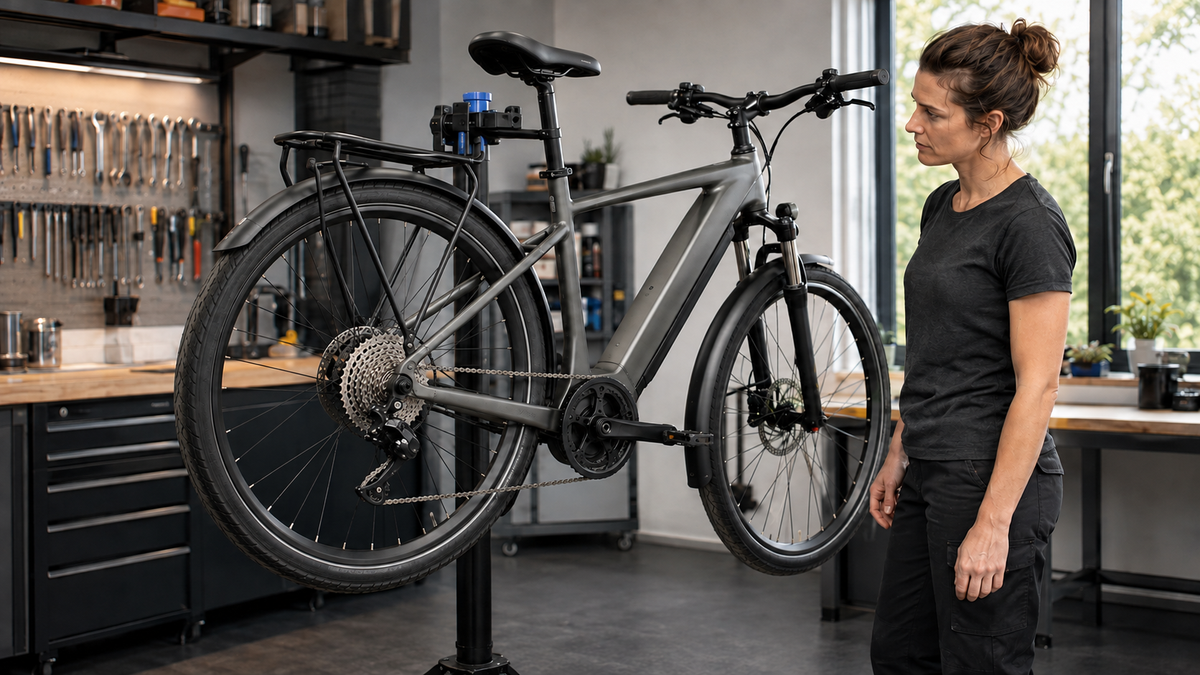
When a bicycle chain skips while pedaling, continuing to pedal forcefully is not a diagnosis. The brief loss of resistance can compromise balance and control, especially uphill or when starting off. First determine what is actually skipping: Is the chain unintentionally shifting onto an adjacent sprocket, slipping over the teeth, falling off completely, or is the drivetrain freewheeling even though the chain visibly remains in place?
Observation determines the troubleshooting approach
Note which gear you are in and what load the problem occurs under. Does the chain skip only on one sprocket, only when shifting, or in several gears? Did the problem occur after a crash, wheel removal, chain replacement, or transport? A clear description is more helpful than randomly turning adjustment screws.
A clicking noise does not automatically mean a skipping chain. The pedal, bottom bracket, cassette, freehub, or a loose axle connection can feel similar. If the crank suddenly continues turning without propulsion while the chain does not move over a tooth or into another gear, the freehub may be involved. This should be handled by a workshop rather than continuing to adjust the shifting.
Stop immediately if you notice these warning signs
- The chain is moving toward the spokes or between the cassette and spokes.
- The rear derailleur is visibly crooked or nearly touching the rear wheel.
- A chain link is broken, badly bent, or stiff.
- The cassette, chainring, axle, or wheel has noticeable play.
- The problem began directly after a crash or hard impact.
- The drivetrain locks up or pulls the chain between the frame and chainring.
In its dealer documentation for derailleurs, Shimano warns that damaged or skipping chains can break and cause a crash. If any of these signs appear, do not continue riding. Do not use motor power to free a jammed chain.
Before inspection: bring the drivetrain to a complete stop
Park the bicycle securely and switch off the electric assistance according to the operating instructions. For work on an e-bike, removing the battery may also be required. Keep fingers, clothing, and cloths away from the chain, chainring, cassette, and derailleur pulleys whenever the crank or wheel can move.
For a visual inspection, the rear wheel must be able to rotate freely and safely. An unsuitable stand, an inverted heavy e-bike, or a second person holding the bicycle up insecurely creates additional risks. If you do not have a stable work area, limit yourself to inspecting the external condition and have a specialist workshop perform the dynamic inspection.
Check for dirt, stiff links, and foreign objects
Heavy dirt can impair the movement of the chain links and derailleur pulleys. Inspect the stationary chain section by section. A stiff link does not bend as freely during rotation as the neighboring links. Twigs, wire, or fibrous material may be lodged in the derailleur. Remove foreign objects only when the drivetrain is completely stationary and without bending any components.
Clean a dirty chain using the approved maintenance method, dry it, and apply a small amount of lubricant. Oil on the brake rotor or brake pad must be avoided at all costs. Cleaning may solve a shifting problem, but it will not repair a crack, worn teeth, or a bent derailleur hanger.
Wear on the chain, sprocket, and chainring
As wear increases, the chain rollers and tooth profiles fit together less effectively. Under load, the chain can then climb onto the teeth and skip. The problem often appears first in frequently used gears. A new chain can also skip on a heavily worn cassette, even if the installation appears correct at first glance.
Measure chain wear only with a tool and limit approved for the specific system. In its official derailleur inspection instructions, SRAM specifies system-dependent chain gauges and refers to the cassette and chainrings when wear is present. Universal percentage values from a random guide may be too early or too late for a different shifting system.

When the chain moves sideways into another gear
Unintentional upshifting or downshifting is more likely to indicate indexing, cable tension, housing friction, derailleur hanger alignment, or mounting position than simple slipping over a tooth. First check that the rear wheel is seated correctly, the axle is secured, and the shift cable housing is fully seated at all stops. After wheel removal, an incorrectly installed axle alone can alter the alignment.
A bent derailleur hanger cannot be reliably aligned by eye. SRAM lists a crooked line between the upper derailleur pulley and cassette, or an adjustment that works in some gears but not others, as typical indications. Measurement requires an alignment tool. Do not turn the limit screws as a first solution, because incorrect adjustment can guide the chain into the spokes or frame.
Problems after replacing components
If the skipping begins directly after replacing the chain, cassette, chainring, or derailleur, check compatibility and installation using the exact model numbers. The number of gears alone is not sufficient. The chain type, connecting link or riveted connection, direction of travel, chain length, and approved component combinations must match the system.
Some drivetrains specify chain gap, derailleur position, and B-gap precisely. The SRAM Eagle Transmission documentation shows by example that an incorrect chain length, an incorrect chain gap, or worn components can cause skipping under load. These values cannot be transferred to other systems.
A safe test ride instead of a stress test
After approved cleaning or a minor, clearly documented adjustment, first test the bike with the assistance switched off or set to a low level. Choose a flat, open area and remain seated. Shift through the gears one at a time without pedaling at full force at the same time. A steep climb, standing pedaling, or heavy traffic is not a suitable testing environment.
If the chain skips again, end the test. Repeated slipping can place additional strain on the teeth, chain, and your balance. Record the gear, load, and noise for the workshop. A short video may help, but record it only from a safe position and never while riding the bicycle yourself.
When a specialist workshop should take over
- The derailleur hanger, derailleur, or frame may have been bent in a crash.
- A new chain skips on the old cassette.
- The freehub slips or the cassette has noticeable play.
- The chain threatens to run into the spokes or frame.
- Compatibility, chain length, or the wear limit is unclear.
- The problem persists after cleaning and visual inspection.
Bring the model designations and information about recently replaced components. The workshop can check alignment, wear, and torque values using the appropriate tools. This prevents a minor adjustment error from becoming a damaged drivetrain through further attempts.
Frequently asked questions
Why does a new bicycle chain skip?
Often, the new chain no longer meshes correctly with worn-in sprockets. Other possibilities include an incorrect chain length, incompatible components, or incorrect adjustment. The specific combination must be checked.
Could insufficient chain lubricant be the cause?
A dry or dirty drivetrain can run poorly. Lubrication does not repair wear, bent components, or incompatibility. Wipe off excess oil and keep it away from the brakes.
Should I adjust the cable tension?
Only if you are certain that the chain is indexing poorly sideways and your system’s instructions describe the procedure. With genuine skipping under load, correcting the cable tension may miss the actual problem.
Can I continue riding with a skipping chain?
No, if it slips under load, is damaged, moves toward the spokes, or the drivetrain locks up. Even with a recurring minor problem, an inspection before the next demanding ride is advisable.
As of: September 6, 2026. Installation values, wear limits, and compatible replacement parts are determined by the current instructions for the drivetrain system installed.


Share:
Cycling During Thunderstorms: Check Warnings and Seek Shelter in Good Time
E-bike batteries on airplanes: capacity limits and safe alternatives