

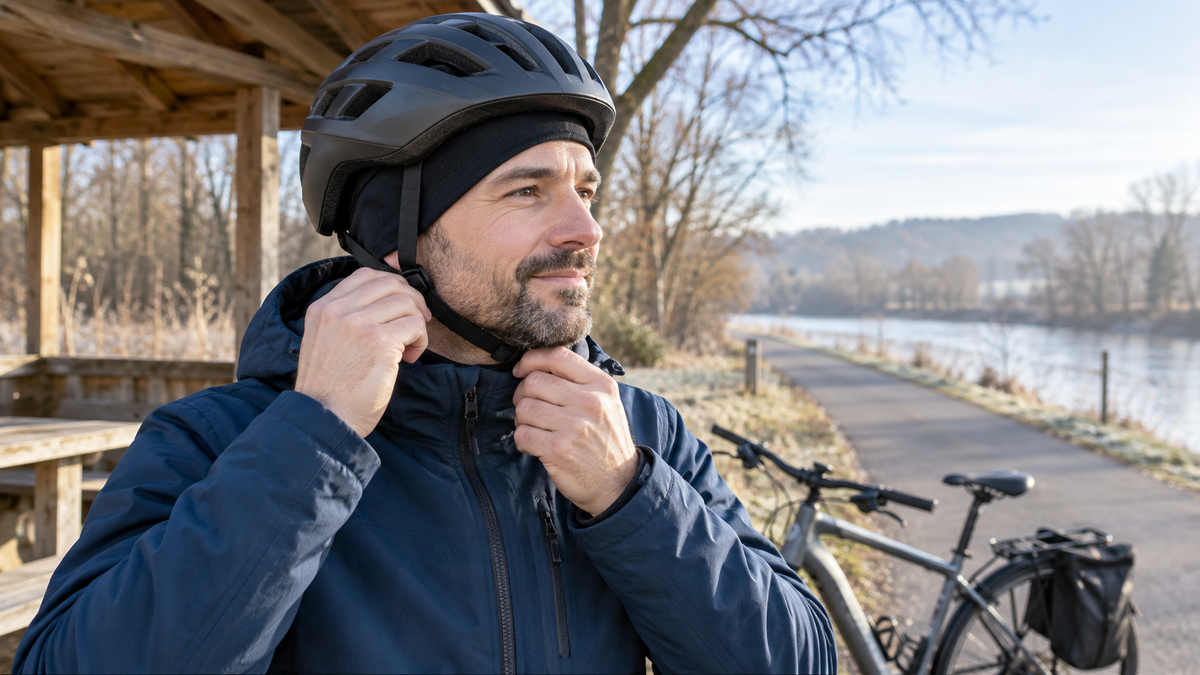
A hat under a bicycle helmet can work in winter if it is thin, fits the helmet, and does not change its fit. Simply pulling any wool hat underneath is not a good solution: the extra thickness can lift the helmet, create pressure points, or make it more likely to slip.
So first check the helmet manufacturer’s instructions and readjust the fit, sizing ring, and straps with the chosen headwear. If the helmet does not remain level and stable, do not ride with this combination.
Why a thick hat under a bicycle helmet is a problem
A bicycle helmet is designed to sit directly and evenly on the head. The ADFC recommends a thin, insulating hat made of technical fabric for winter and explains that a thick wool hat is unsuitable. The ADAC also warns against wearing thick winter hats under a helmet because the helmet can slip on them. So the problem is not the idea of a warm layer itself, but a combination that changes the intended fit.
Even a few extra millimeters can matter if the helmet is already adjusted tightly without a hat. The helmet may sit higher on the forehead, its position at the back of the head may change, and the strap splitters may no longer be where they were previously adjusted.
There is therefore no blanket assurance that every thin hat is compatible with every helmet. Helmet shape, head shape, adjustment system, and manufacturer approvals vary. Each combination must be checked individually.
Which headwear can be worn under a helmet
| Option | Potential benefit | Check before riding |
|---|---|---|
| Thin skullcap | Keeps you warm with little added bulk and can reduce wind exposure around the forehead and ears. | Manufacturer’s instructions, level fit, pressure points, adjustment range, and straps. |
| Thin neck gaiter | Depending on the model, can be worn as a thin layer over the head or ears. | No thick folds, knots, or protruding ends under the helmet. |
| Headband | Covers the ears and forehead while leaving the top of the head uncovered. | The edge and seams must not lift the helmet or create pressure points. |
| Thick wool or pom-pom hat | Keeps you warm while stationary, but takes up a lot of space. | Do not plan to wear it under a bicycle helmet as a standard solution; choose another way to keep warm. |
| Helmet cover | Can keep out wind or precipitation without sitting between the head and the padding. | Check the fit with the specific helmet, the manufacturer’s instructions, and unobstructed visibility and operability. |
The ADFC also mentions helmet rain covers as an outer solution against rain, snow, and drafts, and recommends testing them with your own helmet. The instructions from the specific manufacturer still apply.
Step 1: Read the helmet and manufacturer’s instructions
Start with the user manual, not the adjustment dial. Check whether the manufacturer provides guidance on hats, liners, winter padding, visors, or covers. Use only accessories and combinations that do not conflict with the instructions. Don’t remove or move any fixed padding just to make room for a thicker hat.
If you no longer have the instructions, look up the exact model name on the manufacturer’s website. If the fit is unclear, a specialist retailer can assess it; bring along the winter hat you plan to wear.
Step 2: Put on the hat smoothly, without folds
Put on the thin hat so that no folded edges, knots, or thick seams lie under the contact areas. Don’t pull it down so far that it restricts your vision or peripheral vision.
If the hat slips backward when you put on the helmet or develops folds, take both off and start again. Trying to “press out” folds by tightening the helmet further can create uncomfortable pressure points.
Step 3: Position the helmet level and adjust the size ring
The ADAC describes a proper fit as follows: The helmet sits level on the head, its front edge is about two finger-widths above the eyebrows, and it does not slip to the right, left, or back when you move your head. This guideline does not replace the model-specific instructions, but it is a useful check.
First open the size adjustment ring only as much as necessary, position the helmet as intended, then tighten the system evenly. The helmet should sit securely without causing painful pressure points. If it can only be secured by tightening it uncomfortably, the helmet-and-hat combination probably doesn’t fit.
Step 4: Recheck the side straps and chin strap
The ADFC explicitly points out that the strap must be adjusted when wearing a hat under the helmet. According to the ADAC instructions, the side straps should form a triangle under the ears. The chin strap should fit snugly without restricting breathing or speaking. The ADAC gives about 1.5 centimeters of slack as a guideline.
Make sure no hat edge is caught under the side strap guide and that the straps aren't twisted. If a scarf or high jacket collar presses against the buckle, reassess that combination too.
If you wear the helmet without a cap liner in summer and with one in winter, don't assume the fit will remain the same. A quick fit check after each layer change is a good idea.
Step 5: Check stability, visibility and comfort
Stationary check
With the adjustment system fastened, first gently shake your head from side to side. The helmet should not move freely. Tilt your head and check that it stays in place above your forehead. Open your mouth, turn your head to both sides, and watch for pressure, reduced hearing or a restricted field of vision.
Short test ride without rushing
If everything looks fine during the stationary check, take a short ride in a quiet area. Check whether the wind shifts the hat or a cover and whether the glasses, helmet and ear covering work together. End the test ride if the helmet slips, causes significant pressure points or impairs your vision. You won't make an unsuitable combination fit by getting used to it.
Common problems and what to do
- Helmet sits noticeably higher: Try a thinner head covering or choose another winter option recommended by the manufacturer.
- Helmet shifts when you shake your head: Readjust the sizing ring and straps according to the instructions; if the problem persists, don't use this combination.
- Pressure on the forehead or temples: Check the hat for folds and seams. Don't compensate by overtightening.
- Ear flaps block ambient sounds: Choose different coverage and avoid unnecessarily limiting your awareness in traffic.
- Glasses press or fog up: Check the arms, hat brim and helmet position together; keep your vision clear.
The manufacturer's instructions also apply to caring for the padding and straps. Our article How to clean a bike helmet: Care for the shell, padding and straps gently explains why harsh cleaners and improvised modifications should be avoided.
Alternatives when a hat and helmet don’t fit together
If even a thin liner hat compromises the fit, a headband may be an alternative, provided it fits smoothly under the helmet. A suitable helmet cover can block wind from the outside. Some helmet models offer pads or accessories designed for colder months. Use these only as directed by the manufacturer.
A larger helmet is not automatically the right solution. It must also fit your head shape without an extra layer and sit securely within its intended adjustment range. If you’re choosing a winter helmet, bring the thin head covering you plan to wear along to try it on. For information about the law and choosing a helmet, see the guide to bicycle helmet requirements in Germany.
Frequently asked questions about wearing a hat under a bicycle helmet
Can any thin hat be worn under any bicycle helmet?
No. Even a thin hat can affect the fit because of its seams, material, or cut. Check the manufacturer’s instructions and readjust the helmet and straps with that specific hat on.
Why shouldn’t I wear a thick wool hat under my helmet?
The ADFC and ADAC point out that a thick hat can compromise a snug fit or make the helmet more likely to slip. Instead, use a thin, suitable winter option.
Do I really need to readjust the straps in winter?
Yes, as soon as an extra layer changes the position. The ADFC specifically recommends adjusting the straps. Also check the adjustment ring, level fit, and position of the side straps.
Is a helmet cover better than a hat?
It serves a different purpose: A cover can block wind and precipitation from the outside, but it does not necessarily warm your ears and forehead. Test it with your specific helmet and follow the manufacturer’s instructions.
Conclusion: Stay warm only after rechecking the helmet fit
A thin hat under a bicycle helmet can be a practical winter solution. However, it is suitable only if the helmet manufacturer and fit allow it. Put the hat on without folds, position the helmet level, and check the adjustment ring, side straps, and chin strap again.
If the helmet doesn’t stay stable or creates pressure points, choose a thinner head covering, a suitable headband, or an outer solution designed for this purpose. Warmth is useful, but it must not come at the expense of the helmet’s intended position.

Share:
EU Battery Passport 2027 for E-Bikes: What Buyers Really Need to Know
E-bike fall check: Check the lights, brakes, tires, and battery in 15 minutes