

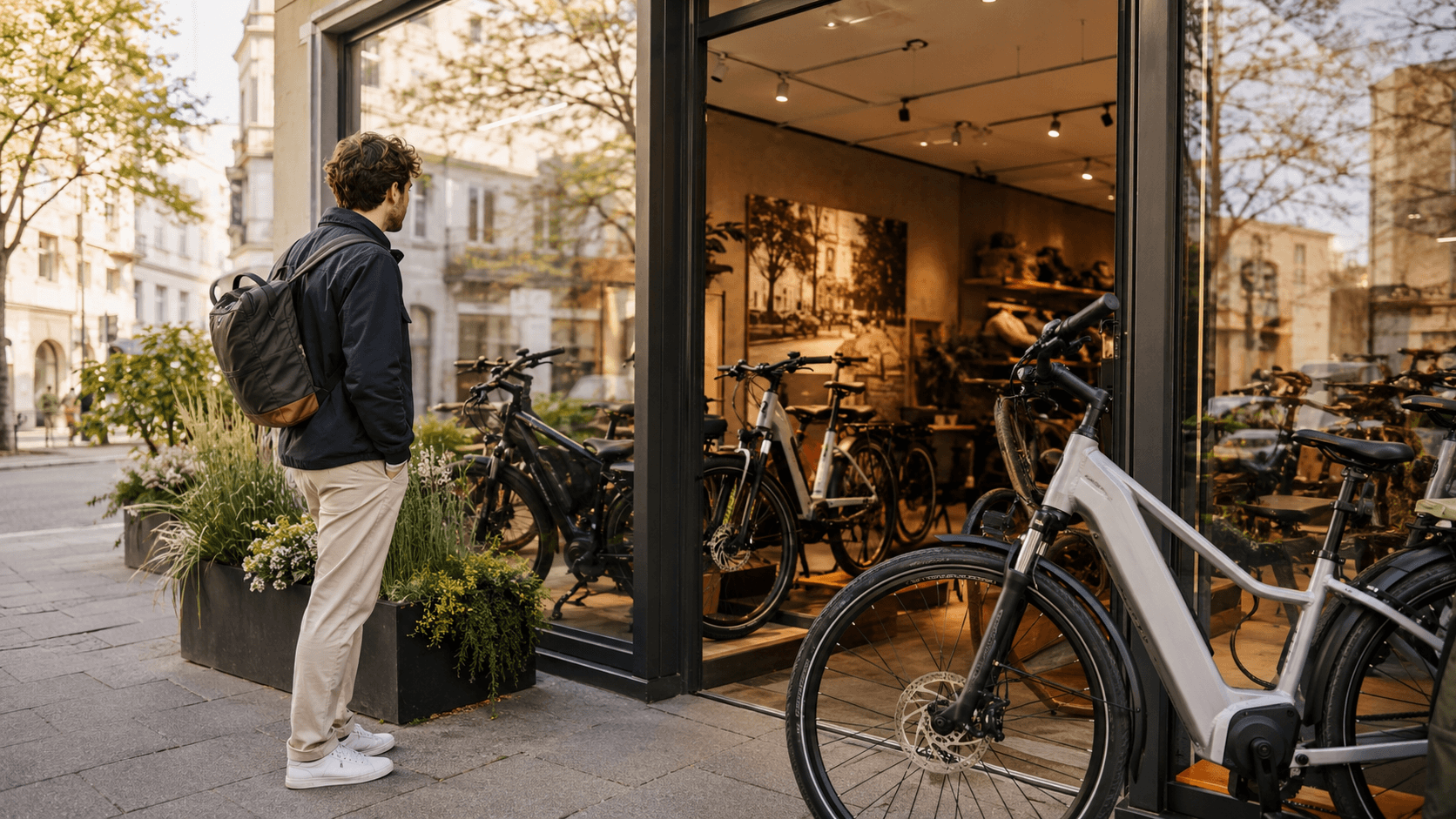
A Saturday at the bike shop: How I set out to find which e-bike really suits my everyday life
That Saturday, I hadn't actually planned to buy an e-bike. I was just out in the city center, wanted to run a few errands, and then stopped in front of a bike shop. Several e-bikes were displayed in the window—and suddenly I wondered: If I really used an e-bike every day, what would I pay attention to?

Actually, I only wanted to make a quick trip into town
It was one of those ordinary Saturdays: a few errands, a short trip through the city center, and perhaps a coffee on the way back. Nothing special. That's precisely why the moment in front of the bike shop felt so real.
I stopped in front of the shop window because the e-bikes there didn't look like products meant purely for leisure. They looked more like something you could genuinely use every day: for commuting, shopping, getting to the train station, or taking a relaxed ride at the weekend.
So I went inside. Not with the intention of making an immediate decision, but simply to get a feel for what an e-bike would need to do for my everyday life.
I looked at things differently in the store than online
Online, it's easy to compare numbers: battery capacity, motor, range, weight, and price. But in the store, I first paid attention to completely different things. How high is the step-through? Can I easily keep the bike upright? Does the handlebar feel relaxed? Is there enough room for a bag or a small amount of shopping?
That was the biggest difference for me: In person, you don't just look at the technical specifications. You automatically imagine small everyday situations.
Not the biggest number, but the most convenient solution
The longer I stayed in the store, the clearer it became: In everyday use, the e-bike with the most impressive specifications does not automatically win. Much more important is whether it makes your daily routine easier.
A few things stood out to me in particular. A low step-through frame feels very comfortable during short stop-and-go trips in the city. Wider tires provide a smoother ride on uneven paths. A sturdy luggage rack or front basket immediately changes how practical a bike feels. And a compact design makes a big difference when you do not have much space at home.


My everyday questions instead of a list of technical specifications
I did not make a classic list of pros and cons in the store. Instead, I tried to compare each e-bike with my normal weekly routine. That helped me more than any individual technical specification.
| Everyday situation | My question in the store | What became important to me |
|---|---|---|
| Short trips around the city | Would I also choose this bike for a trip of just two or three kilometers? | Easy handling, a quick start, and uncomplicated parking. |
| Shopping | Can I conveniently carry a bag, backpack, or a few groceries? | Storage space, stability, and a secure stance when loading. |
| Commuting | Does the riding position feel comfortable even for regular trips? | Comfort, lights, extra range, and reliable brakes. |
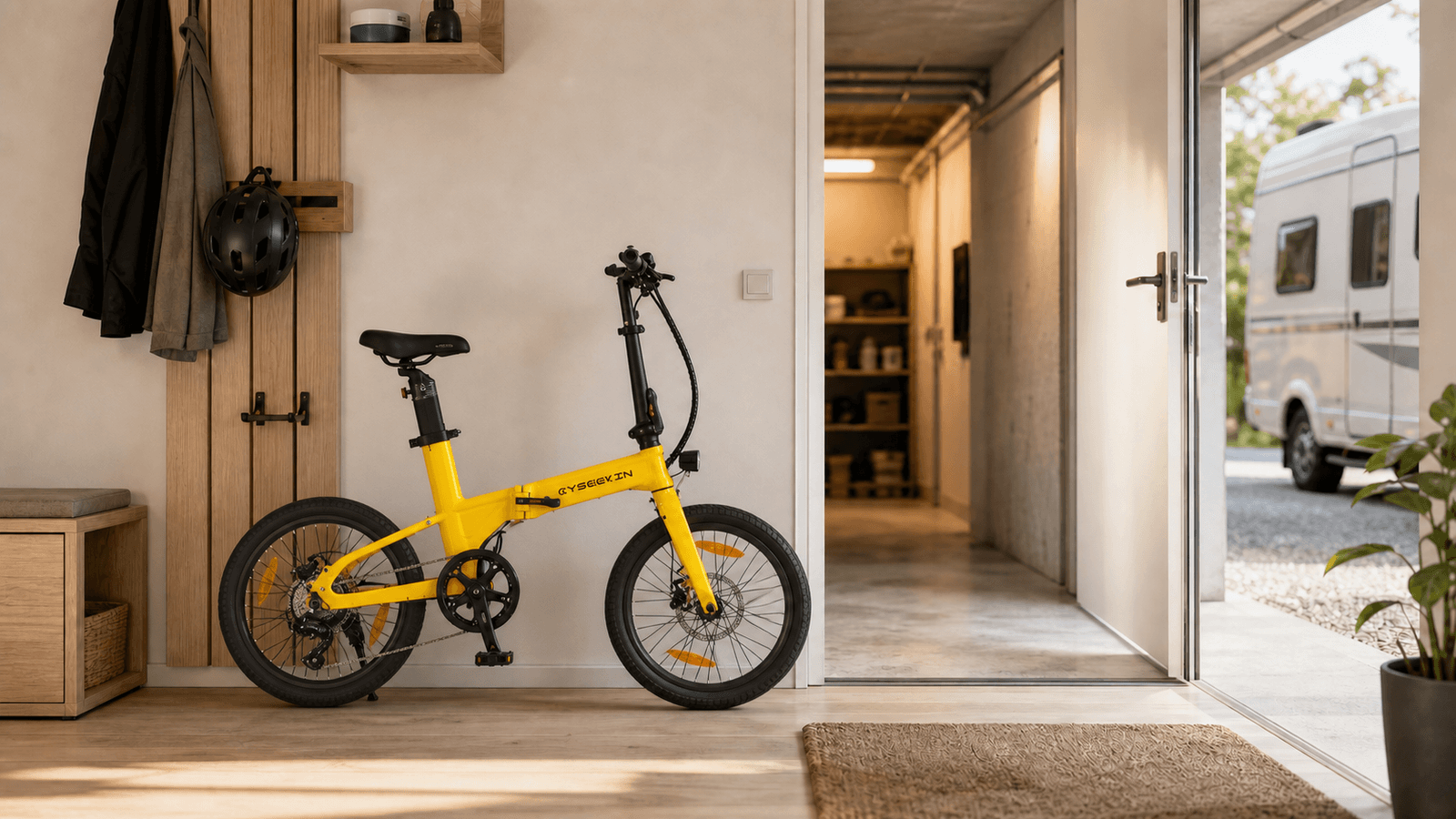
| Living in the city | Can I actually store the bike sensibly at home? | Compact design, a folding function, or a weight that is easy to control. |
| Typical routes | How does the bike handle curbs, wet paths, or cobblestones? | Tire width, stability, and a secure riding experience. |
Why I suddenly started paying more attention to compact e-bikes
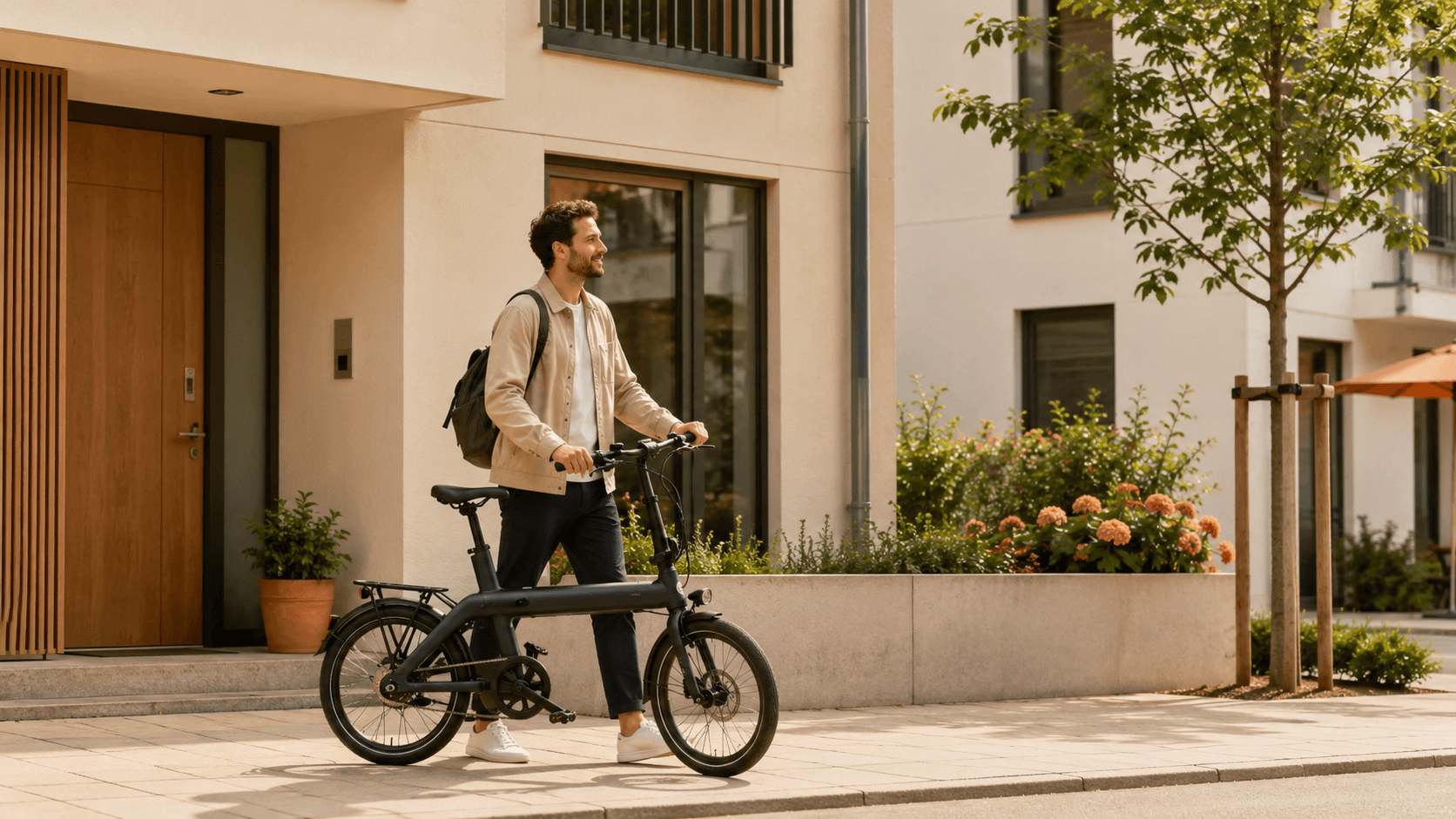
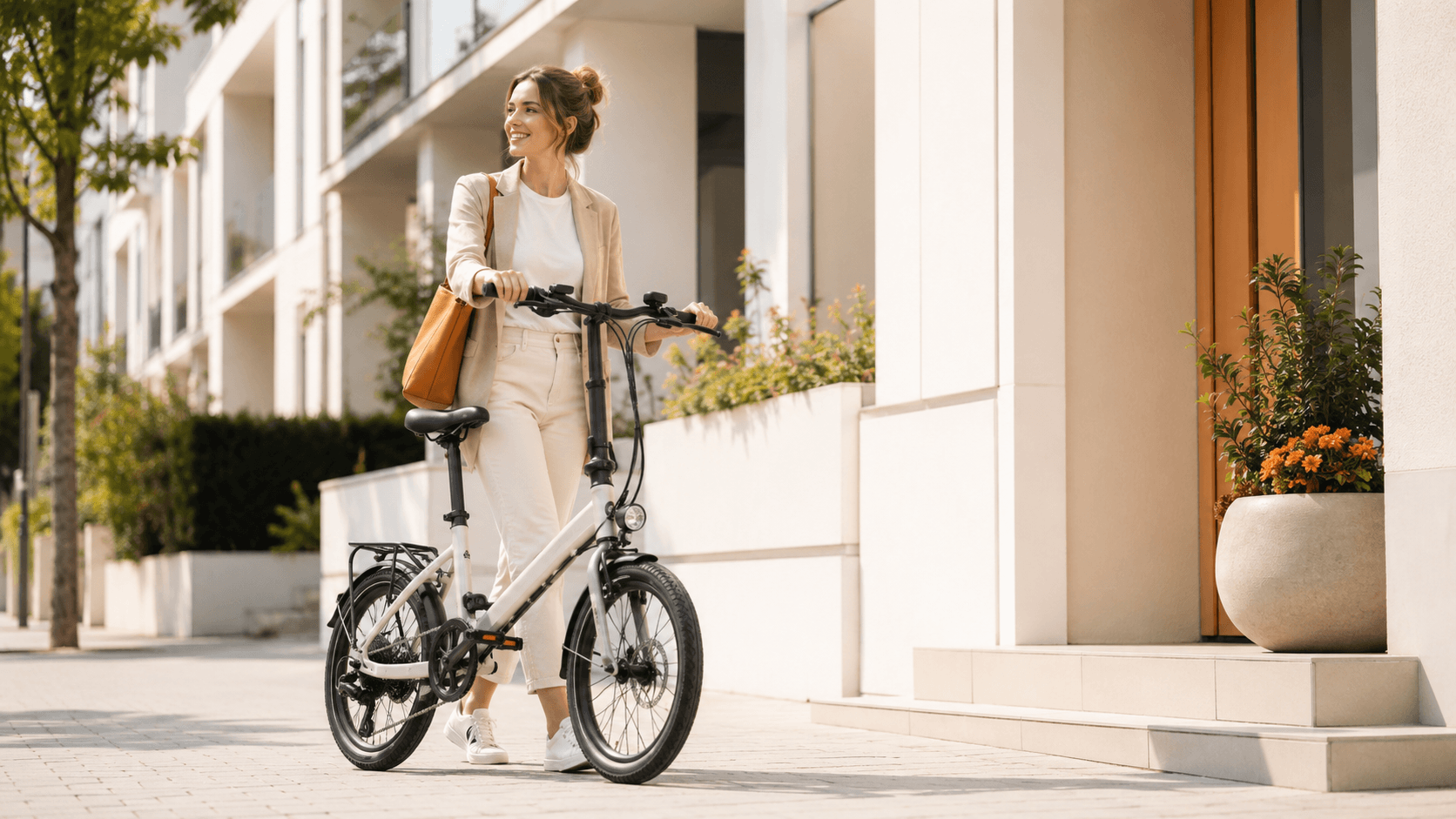
Before visiting the store, I probably would have first looked for a classic city e-bike. But in the store, I realized that compact models are often underestimated in everyday use. They feel less bulky, are easier to maneuver, and fit better in situations where space matters.
Especially in many cities, space is limited. Not every apartment has a large garage. Not every basement is easy to access. And not every route consists of wide, perfect bike paths. That is why I found models interesting that seem practical without being oversized.
At home, I compared options online more deliberately
After visiting the bike shop, I no longer searched randomly at home. Suddenly, I had clearer questions in mind: a low step-through, compact dimensions, suitability for everyday use, storage space, good lighting, reliable brakes, and a service area that isn't difficult to find.
That brought me back to the Cyseekin E-Bike Online Shop, where I compared the models not just by their specifications, but by everyday situations.
Service Suddenly Became Part of the Decision for Me
Before my visit, I probably would have compared the model, price, and range first. Afterward, however, I thought about it differently. An e-bike is a technical product for everyday use. If I use it regularly, I also want to know how assistance, repair information, and points of contact are organized.
That’s why, in addition to the models, I also looked at the Cyseekin Service & Repairs section. This has become an obvious part of the decision for me. Not because I immediately expect a problem, but because a good everyday bike should also come with clear support after the purchase.
The Moment That Changed My Perspective
At first, visiting the store was just a spontaneous stop along the way. By the end, however, I had a much clearer idea of what I would expect from an e-bike. It’s not about collecting as many features as possible. It’s about finding a bike that fits your own life.
For me, that means I want an e-bike that I don’t just use at weekends. I want one I’ll also choose when I need to quickly go to the supermarket, when I ride to work in the morning, or when I still have an errand to run in the afternoon.


My personal checklist after that Saturday
If I were choosing an e-bike for my everyday life today, I wouldn’t start by looking at the longest technical specification list. I would begin with these questions:
- Would I spontaneously choose this e-bike for short trips too?
- Can I easily park or store it at home?
- Is getting on and off comfortable enough for frequent stop-and-go riding?
- Can I conveniently carry groceries, a backpack, or a bag?
- Does the bike feel stable when riding slowly?
- Is the battery easy to charge in everyday use?
- Is there clear information about service, repairs, and support after purchase?
- Does the e-bike fit my everyday life, not just an ideal weekend ride?
My conclusion: An e-bike is more than just a means of transport
My spontaneous visit to the bike shop showed me that an e-bike is much more than a technical purchase. It changes small decisions in everyday life: Do I take the car or make a quick trip by bike? Do I go straight to the supermarket or combine the trip with a short ride? Do I use the bike only on weekends, or will it become part of my week?
That is exactly why I would not choose an e-bike based on numbers alone today. I would ask whether it fits my routine. My home, my journeys, my shopping, my commute, and my weekends.
Compare Cyseekin E-Bikes for Your Everyday Life
Whether compact, folding, comfortable, or offering more storage space: Find the model that suits your journeys.
View Cyseekin E-Bikes →Further Content on Cyseekin
FAQ – Choosing an E-Bike for Everyday Use
What should I consider first when choosing an e-bike for everyday use?
Start with your everyday needs: distance, storage space, shopping, commuting, charging options, and the comfort you want. Technical specifications are important, but they should match these requirements.
Does a compact e-bike make sense for the city?
Yes, especially if space is limited or the bike often needs to be pushed, parked, or stored. Compact models can be very practical for everyday use.
Which Cyseekin model is suitable for shopping and commuting?
The Cyseekin C20 Mini Cargo is particularly interesting for shopping, commuting, and practical everyday trips, as it combines compact dimensions with greater carrying capacity.
When does a folding e-bike make sense?
A folding e-bike is worthwhile if you have limited storage space, want to take the bike in your car, or are looking for a flexible solution for short trips around the city.
Why is post-purchase service important?
An e-bike is used regularly and contains both electrical and mechanical components. Clear service and repair information helps you use the bike safely and reliably over the long term.
Share:
Hydraulic vs. Mechanical Disc Brakes: Which Is Better for E-Bikes?
Women's E-Bike Price: What Is Affordable, What Is Really Good?