Cyseekin E-Bike Blog

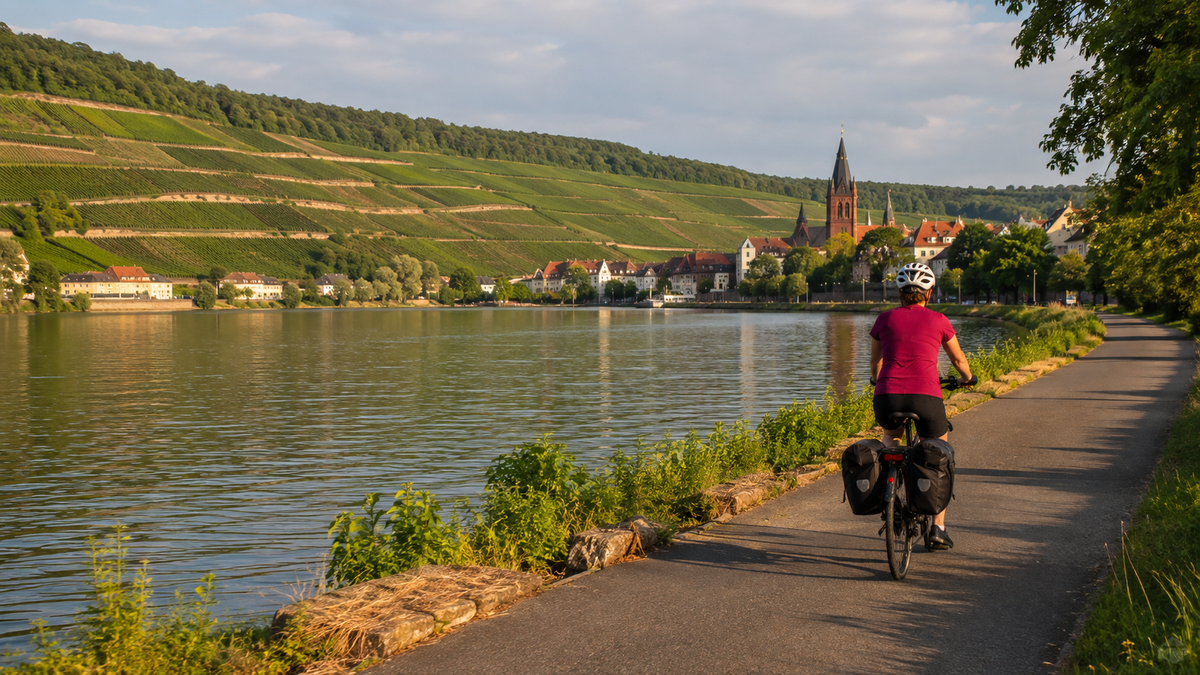
Radreisende Person auf einem Uferweg mit Fluss, Weinbergen und Stadt im Hintergrund.

Main Cycle Path in 6 days: from Würzburg to Mainz
A relaxed week on the Main Cycle Route: around 267 kilometers from Würzburg to the mouth of the Main near Mainz, with official daily stages, train planning, GPX, accommodation, and charging tips.

Read moreabout Main Cycle Path in 6 days: from Würzburg to Mainz

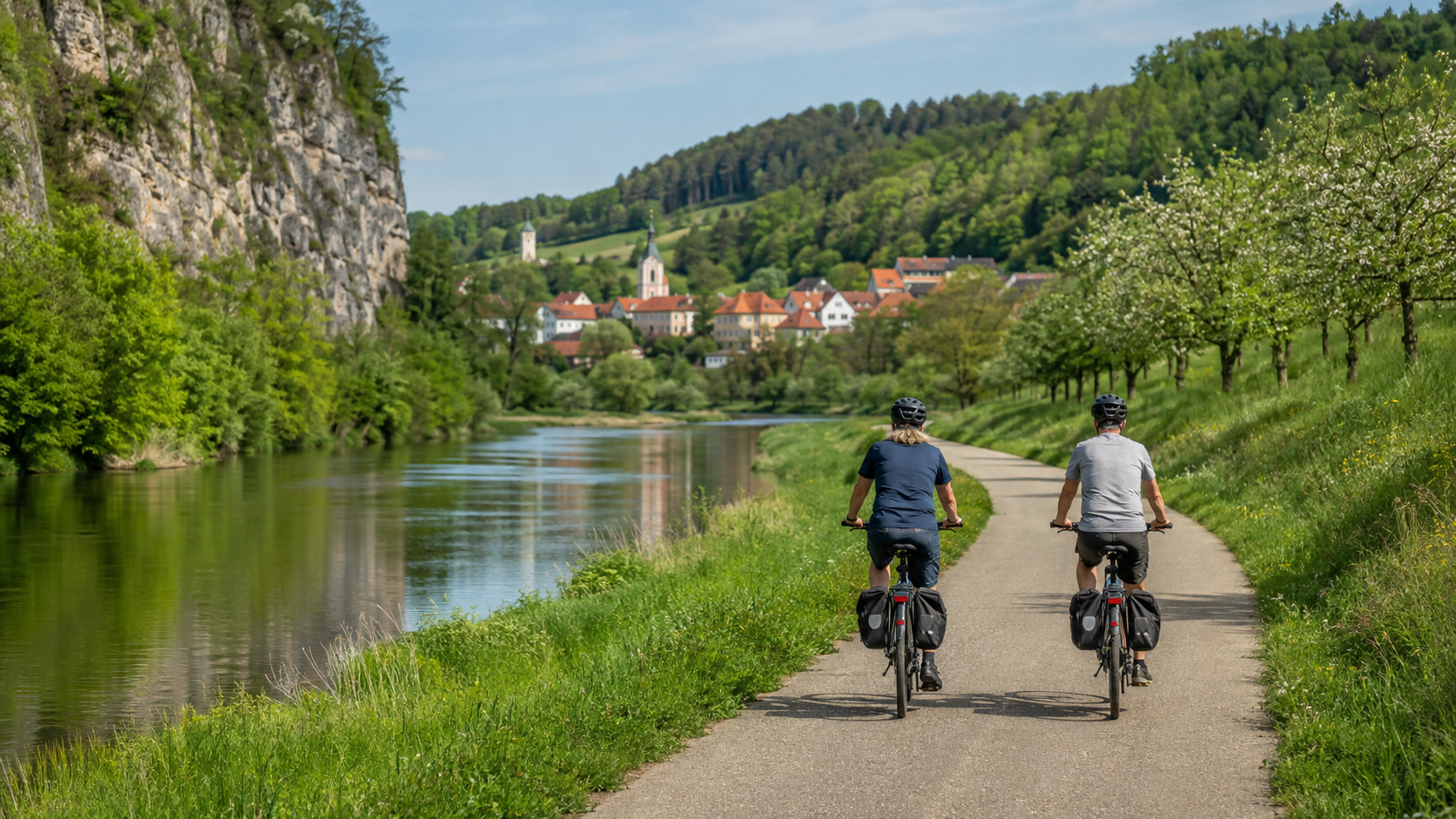
Zwei Radreisende auf einem Flussradweg zwischen Wiesen und bewaldeten Hängen.

Kocher-Jagst Cycle Route in 6 Days: Circular Tour Starting in Aalen
Around 335 kilometers along the Kocher and Jagst rivers: six official stages starting in Aalen, with honest information on elevation gain, train connections, charging stops, and the detours in 2026.

Read moreabout Kocher-Jagst Cycle Route in 6 Days: Circular Tour Starting in Aalen

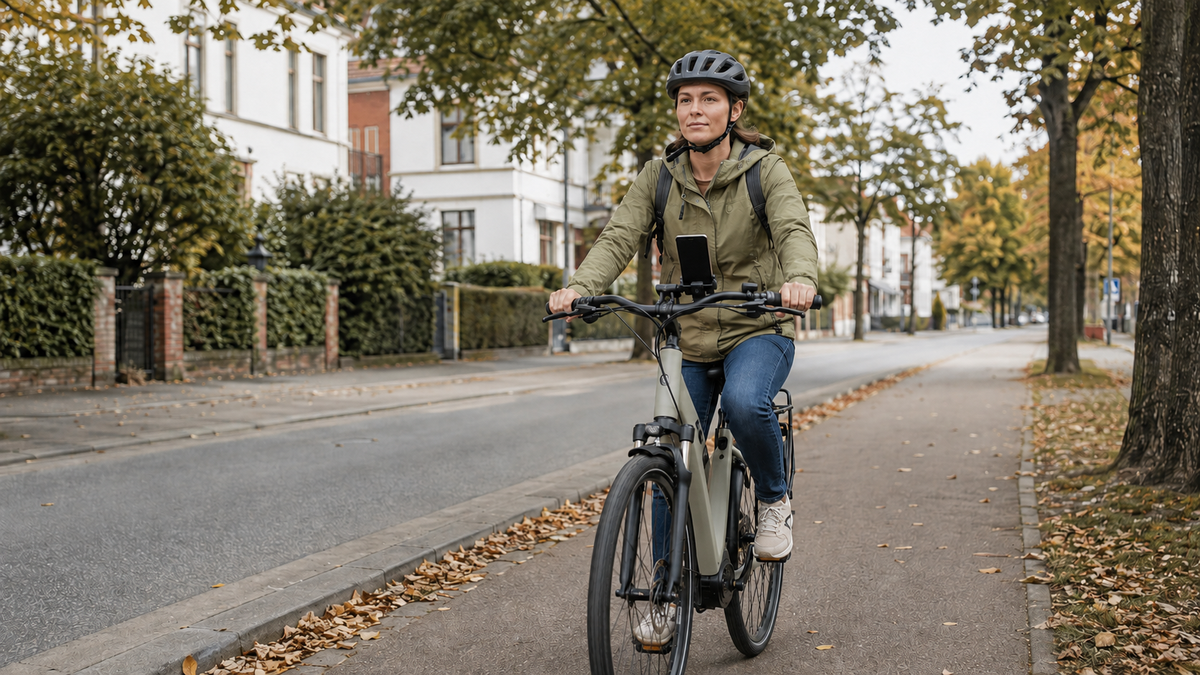
Aufmerksame Radfahrerin mit befestigtem Smartphone und beiden Händen am Lenker

Headphones and smartphones while cycling: What is permitted
Headphones are not categorically prohibited, but holding a phone in your hand is clearly problematic. Section 23 of the German Road Traffic Regulations explains listening, voice control, and taking a brief glance.

Read moreabout Headphones and smartphones while cycling: What is permitted

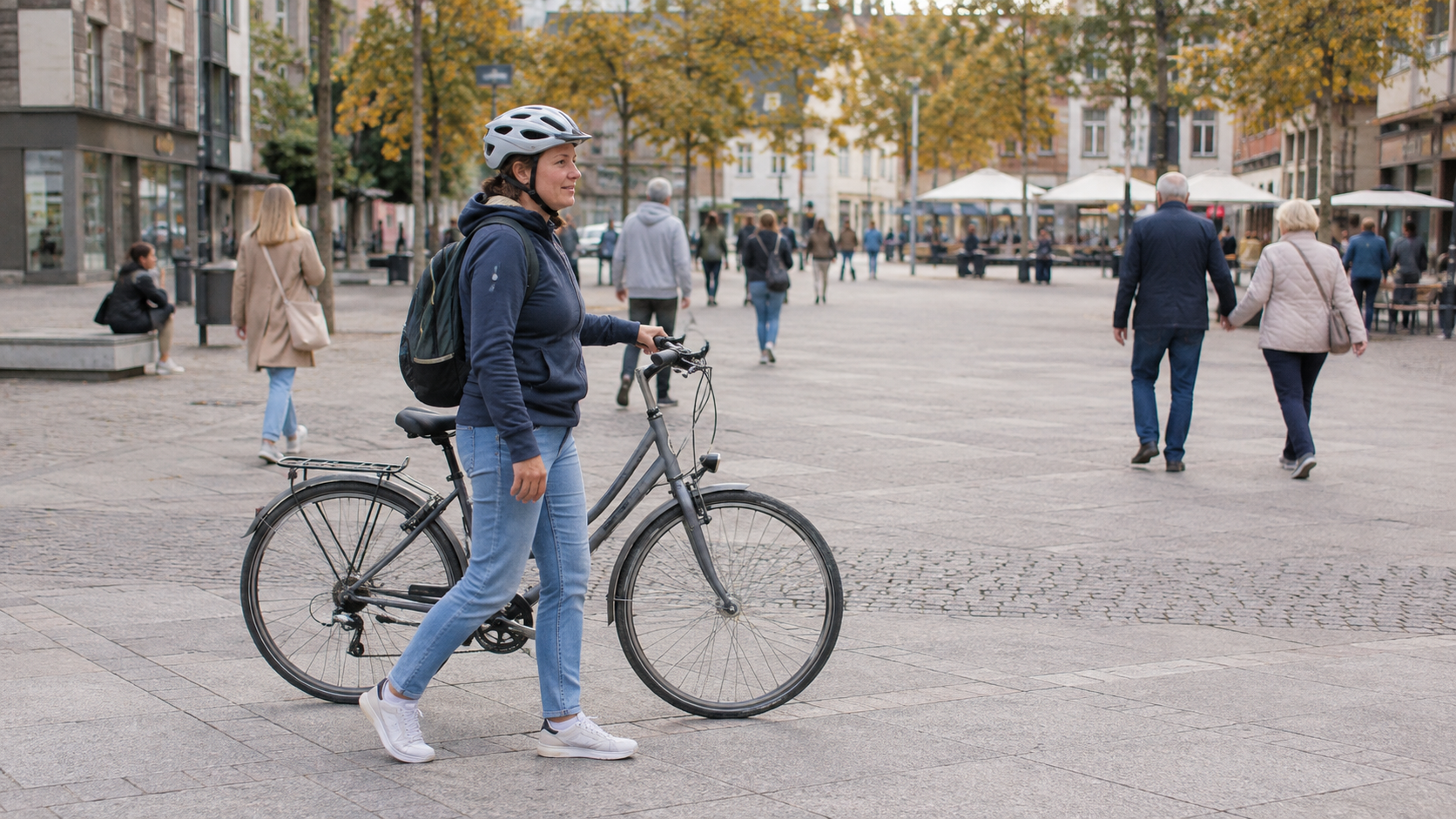
Person schiebt ein Fahrrad am Eingang einer Fußgängerzone

Cycling on the sidewalk and in pedestrian zones: When is it allowed?

Cycling on sidewalks and in pedestrian zones is only permitted in clearly defined situations. Find out what “Bicycles permitted,” walking speed, and the rules for children mean.

Read moreabout Cycling on the sidewalk and in pedestrian zones: When is it allowed?
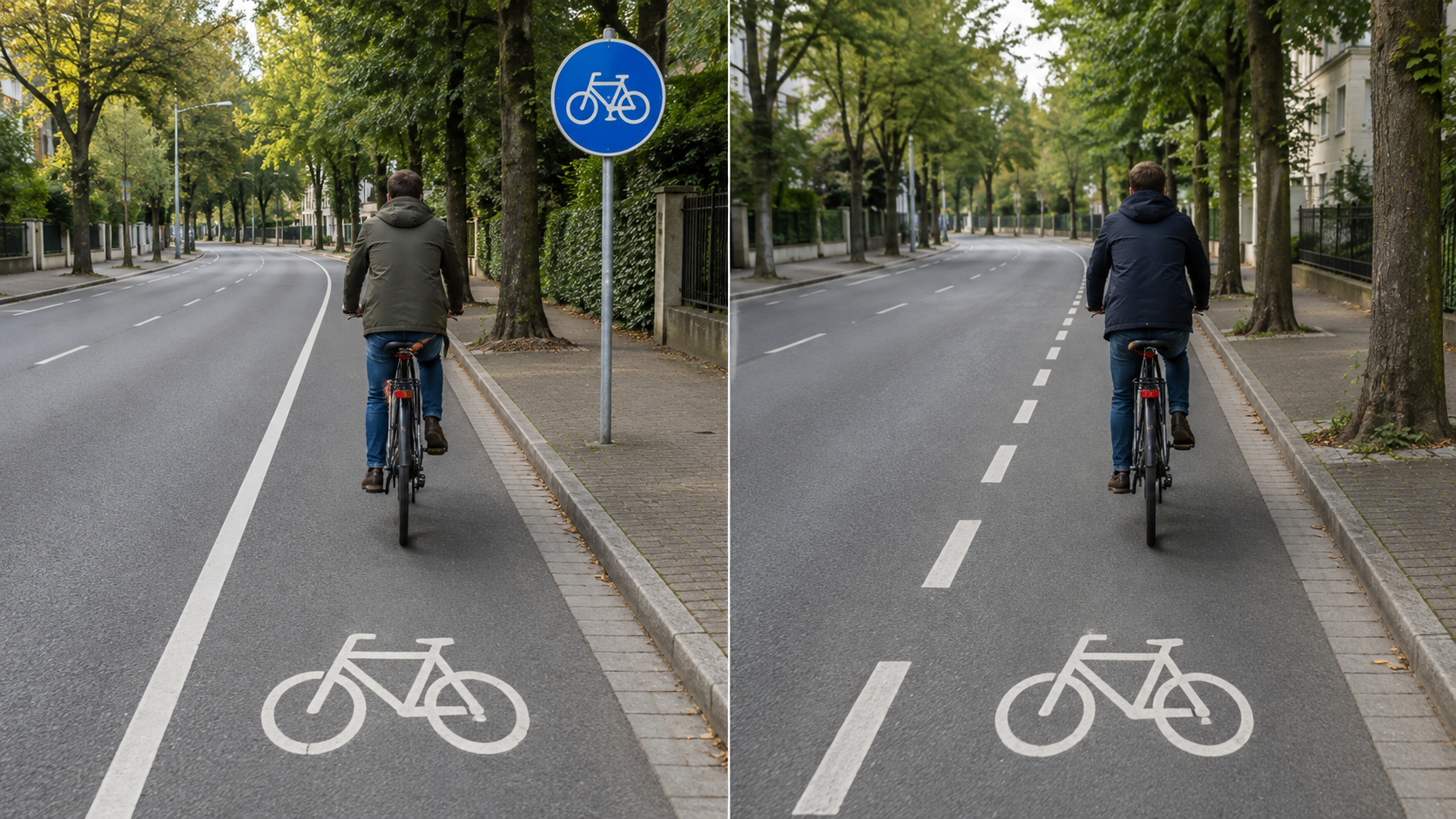
Geteilte Ansicht mit Radfahrstreifen, Zeichen 237 und Schutzstreifen mit gestrichelter Linie

Bike lanes or advisory bike lanes: rules and differences

Solid or dashed line? Learn how to distinguish bike lanes from advisory bike lanes and understand usage rules, motor vehicle exceptions, and lateral clearance.

Read moreabout Bike lanes or advisory bike lanes: rules and differences
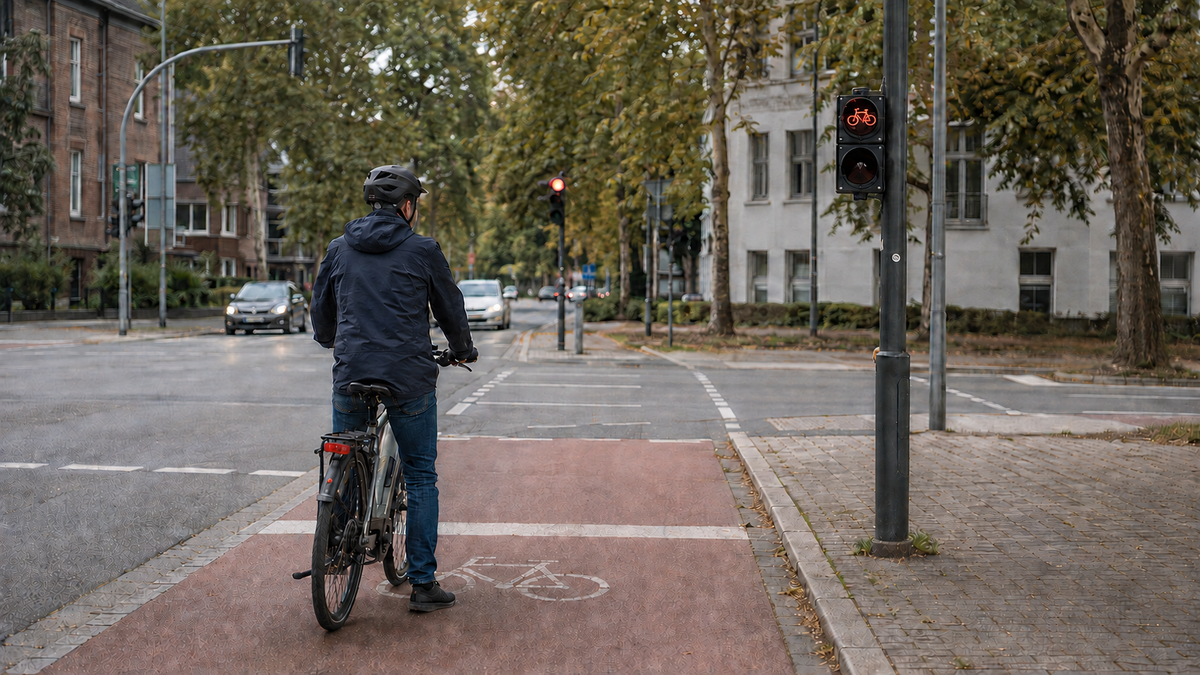
Radfahrende Person wartet vor einer Fahrradampel an der Haltlinie.

Which traffic light applies to bicycles? How to read cycle path signals correctly
Road traffic light, bicycle traffic light, or combined signal? Here’s how to identify the correct light signal on the cycle path and avoid mistakes when green phases are offset.

Read moreabout Which traffic light applies to bicycles? How to read cycle path signals correctly

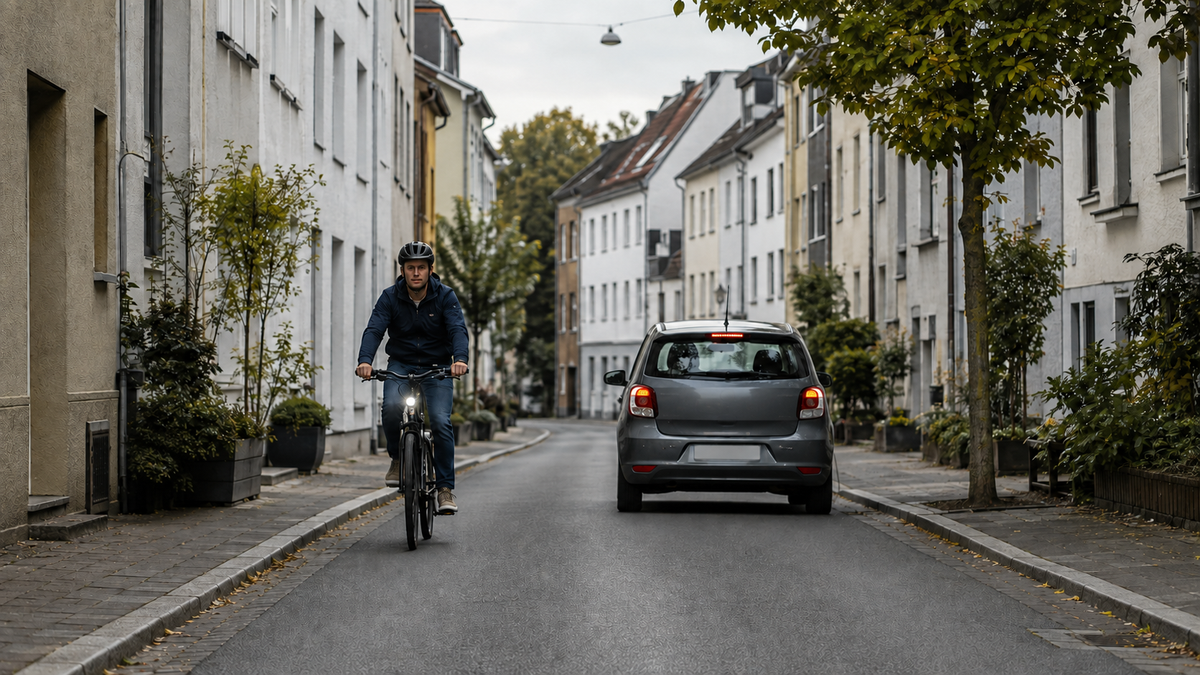
Radfahrende Person und Auto begegnen sich mit Abstand in einer geöffneten Einbahnstraße.

One-way street by bicycle: Ride against the direction of traffic only if permitted
You may cycle against the direction of one-way traffic only when it is clearly permitted. This is how to read the supplementary signs and behave at priority intersections, when facing oncoming traffic, and at bottlenecks.

Read moreabout One-way street by bicycle: Ride against the direction of traffic only if permitted

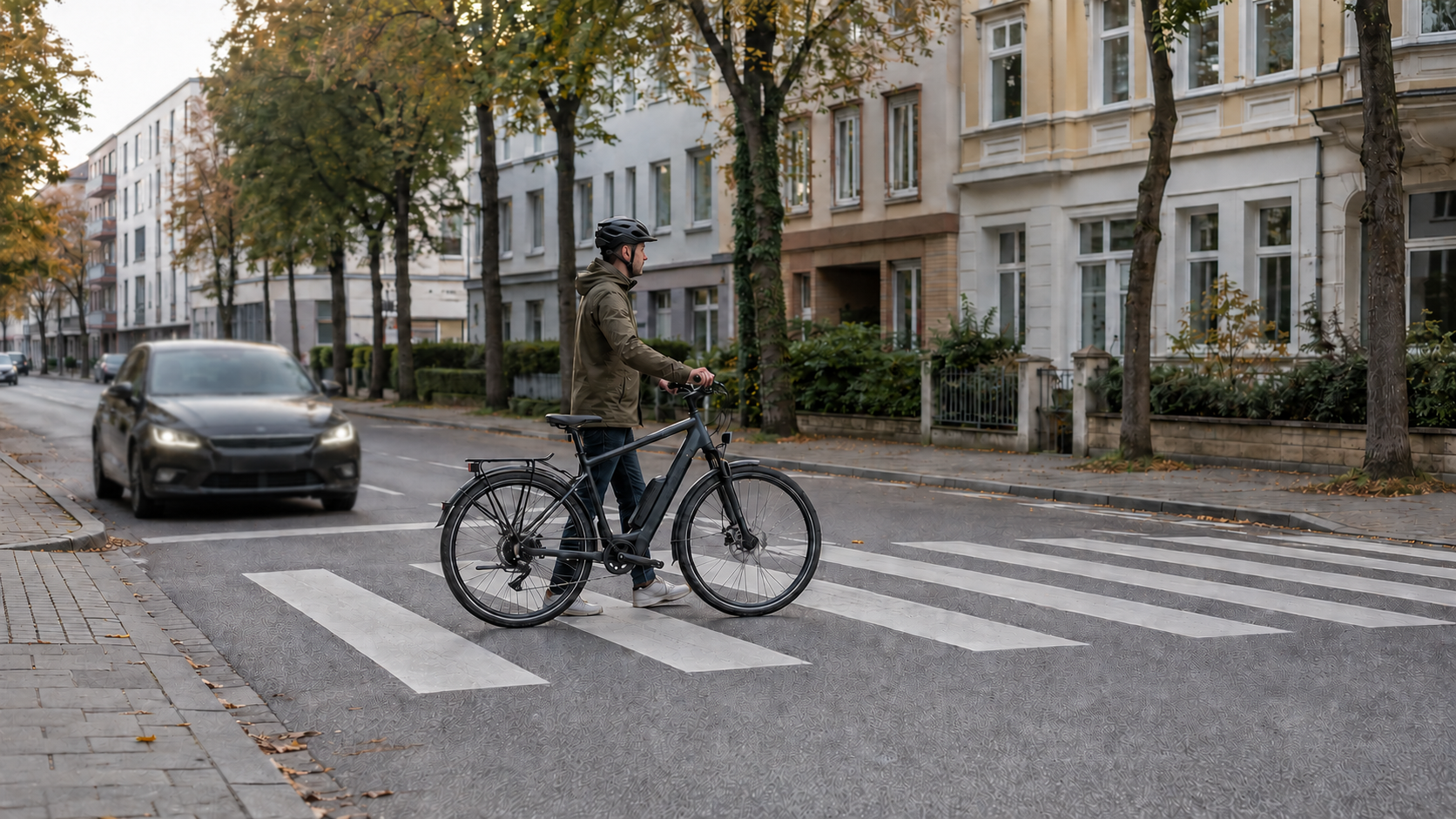
Eine Person schiebt ihr E-Bike über einen Zebrastreifen, während ein Auto wartet.

Crossing a zebra crossing by bike: Understanding right of way correctly

Riding is possible, but does not give you right of way: When you should dismount and walk your bike across a zebra crossing, and which rules apply for crossing safely.

Read moreabout Crossing a zebra crossing by bike: Understanding right of way correctly

Zwei Personen lesen eine Prüfunterlage neben einem Pedelec mit geschlossenem Motor.

E-bike tuning: Why 25 km/h is legally decisive

25 km/h limits motor assistance, not your own speed. Why tuning can change the bike’s legal status, approval, and insurance coverage.

Read moreabout E-bike tuning: Why 25 km/h is legally decisive